Aliyev Secures Strategic Expansion in the Balkans
To fully understand the significance of the current phase, however, it is essential to trace the evolution of relations over the past two decades - beginning with the presidency of Boris Tadić and even earlier.
Following the breakup of Yugoslavia and the consolidation of Serbia’s statehood, contacts between Baku and Belgrade gradually intensified. In the early 2000s, during the presidency of Milan Milutinović and later throughout the political transition under Vojislav Koštunica, the foundations of a pragmatic dialogue were laid. The two countries shared similar positions on issues of sovereignty and territorial integrity, which created a durable political basis for future rapprochement. Even at that stage, mutual understanding on international law principles formed an important pillar of trust.
A qualitative breakthrough occurred during the presidency of Boris Tadić (2004-2012). This period witnessed the systematic institutionalization of bilateral contacts. Intergovernmental commissions became more active, and agreements were concluded in the fields of economy, investment, infrastructure, and humanitarian cooperation. Serbia consistently supported Azerbaijan’s territorial integrity in international forums, while Baku demonstrated a comparable stance regarding Serbia’s position on Kosovo. Political trust deepened, creating the groundwork for a strategic partnership.
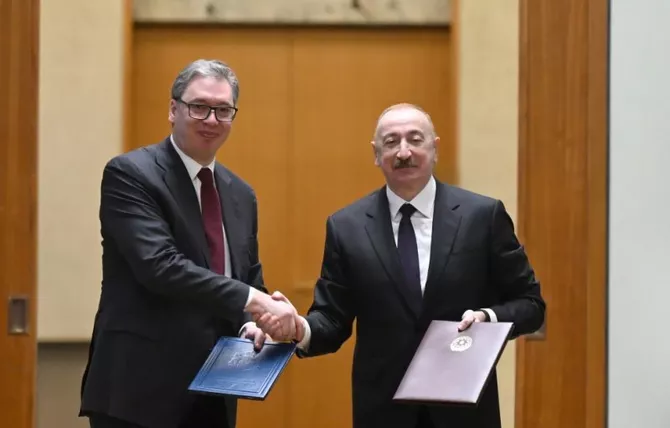
Photo: Azertac
Under President Tomislav Nikolić (2012-2017), relations gained additional momentum. A formal agreement on strategic partnership was signed, and economic cooperation expanded significantly. Azerbaijani companies became involved in infrastructure projects in Serbia, and Baku contributed to restoration initiatives and regional development efforts. During this period, bilateral relations evolved from primarily political solidarity to tangible economic engagement.
With Aleksandar Vučić first serving as Prime Minister and later as President, cooperation entered a new phase characterized by pragmatism and long-term strategic planning. Serbia increasingly viewed Azerbaijan as a key partner in energy diversification, particularly amid shifting dynamics in Europe’s energy architecture. Collaboration expanded in defense, transport, agriculture, and cultural exchange. Thus, over the past 15 years, Azerbaijani-Serbian relations have steadily strengthened, yet the current stage is distinct in that cooperation is becoming fully institutionalized and structurally embedded.
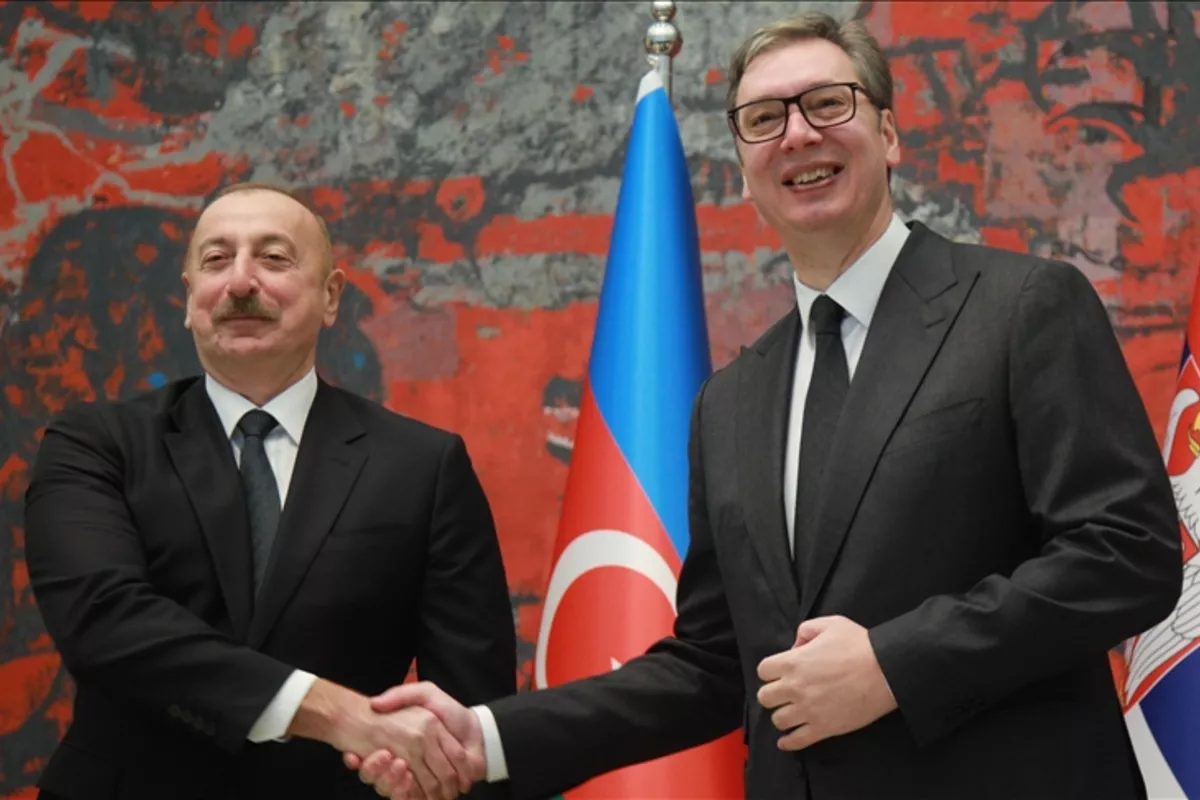
In Belgrade, the first meeting of the Azerbaijan-Serbia Strategic Partnership Council was held - a new format of regular high-level political dialogue. In practical terms, this represents the creation of a coordination mechanism designed to synchronize foreign policy, economic, and energy initiatives of both countries.
The visit resulted in the signing of a comprehensive package of intergovernmental agreements and memorandums covering a wide range of sectors. A key document was the agreement on cooperation in the energy sphere, including the design, construction, and operation of a gas-turbine power plant in Serbia. This builds upon ongoing discussions about increasing Azerbaijani gas supplies to Serbia to approximately one billion cubic meters per year. For Belgrade, this represents a significant step toward strengthening energy security and diversifying supply sources; for Baku, it signals further expansion of its presence in the European energy market.
Additional agreements were signed in the areas of food security, economic cooperation, media and communications, cultural exchange (with a 2026-2030 cooperation program), sports collaboration, and compulsory health insurance. The visit therefore extended beyond strategic and energy matters to encompass a substantial humanitarian dimension, reflecting a shared intention to elevate relations to the level of sustainable intersocietal ties.
The launch of a direct Belgrade-Baku flight also carries symbolic and practical importance. For ordinary citizens, this is perhaps the most tangible and positive outcome of deepening bilateral relations. The direct air link is expected to stimulate tourism, business activity, and trade, facilitating mobility and strengthening mutual societal interest.
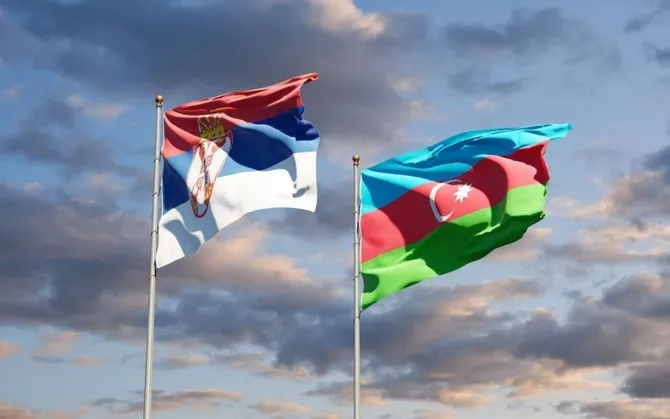
Photo credit: Flickr
Amid the transformation of Europe’s energy landscape, Serbia - while not a member of the European Union but closely engaged with Brussels - seeks stable and reliable energy sources. Azerbaijan, in turn, continues to solidify its position as a predictable gas supplier to Europe and is expanding its engagement in the Balkans. President Ilham Aliyev’s visit to Belgrade demonstrated that Azerbaijan views Serbia not merely as a partner, but as an important element of its broader European strategy. Belgrade likewise emphasizes that strategic partnership with Baku is built upon mutual respect for sovereignty and territorial integrity - principles both countries consistently uphold in international affairs.
The February 15, 2026 visit has consolidated the transition of Azerbaijani-Serbian relations into a phase of mature strategic partnership. From the gradual rapprochement during the Tadić era to the institutional coordination of the Vučić period, bilateral ties have evolved from political solidarity to a comprehensive strategic architecture. From energy and infrastructure to defense cooperation and direct air connectivity, cooperation has become multidimensional, institutionalized, and long-term. If 15 years ago the focus was on building trust, today Baku and Belgrade are constructing a resilient framework of interaction capable of withstanding both regional and global geopolitical shifts.