The Saratoga Foundation website has posted an article highlighting the TRIPP project and the role of connectivity in reshaping the Armenia-Azerbaijan normalization process.
The Caspian Post republishes the article by Vasif Huseynov, Vasif Huseynov, Head of Department at the Baku-based Center of Analysis of International Relations (AIR Center).
The unveiling of the TRIPP Implementation Framework has not only accelerated the Armenia-Azerbaijan normalization process but has also triggered visible reactions from regional powers whose influence over South Caucasus connectivity is being recalibrated. While the project is framed as an economic and infrastructural initiative anchored in sovereignty and reciprocity, it directly affects long-standing geopolitical balances in a key crossroads of Eurasia. Among regional actors, Russia and Iran have emerged as the most vocal critics or skeptics of TRIPP, reflecting broader concerns over diminishing leverage, U.S. involvement, and shifting regional alignments.
The Russian response has been characterized less by outright opposition than by an attempt to secure a place within a process Moscow can no longer block. On December 16, 2025, Mikhail Kalugin, Director of the Fourth CIS Department at Russia’s Foreign Ministry, publicly stated that Russia was ready to consult with Armenia regarding possible participation in the TRIPP project. Acknowledging that the Armenian-American initiative still required detailed study, Kalugin nevertheless argued that “there are sufficient grounds for Russian participation,” pointing to Russia’s existing role in managing Armenia’s railways through its subsidiary South Caucasus Railways, Armenia’s membership in the Eurasian Economic Union, and the presence of Russian border guards along key sections of the proposed route. His conclusion - “It is clear that our partners cannot do without Russia” - was quite telling. It reflected an understanding in Moscow that while Russia lacks the capacity to prevent TRIPP, it seeks to preserve relevance amid a rapidly changing regional environment shaped by the war in Ukraine, weakened leverage in the South Caucasus, and the unprecedented personal involvement of U.S. President Donald Trump in advancing the project.
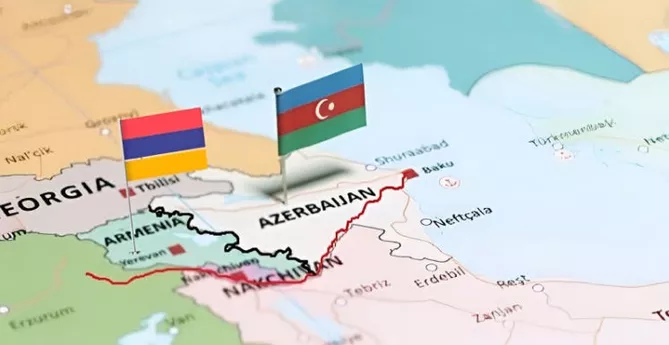
Photo: Shutterstock
Armenia, however, has moved quickly to close the door on Russian participation in TRIPP itself. On January 14, 2026, Foreign Minister Ararat Mirzoyan stated unequivocally that “the framework of TRIPP is already quite clear,” signaling that the project's parameters leave little room for renegotiation or additional stakeholders. While stressing that Yerevan does not seek to exclude Russia politically and acknowledging Moscow’s existing footprint in Armenia’s infrastructure, Mirzoyan made it quite clear that Russia would not participate in TRIPP as a managing or operational partner. Armenian officials have instead suggested that any future cooperation with Russia could only occur in adjacent or parallel projects, not within the U.S.-Armenian framework that underpins TRIPP.
Moscow has countered this position by invoking its control over Armenia’s railway network. Russian officials have argued that since Armenian railways are operated by South Caucasus Railways under a 2008 concession agreement with Russian Railways, Russian participation in TRIPP would be logical and even necessary. The response from Yerevan, however, has been well-thought-out. Armenian Prime Minister Nikol Pashinyan has publicly called on Russia to fulfill its existing obligations by restoring several key railway sections inside Armenia, including the Ijevan-Gazakh, Yeraskh-Nakhchivan, and Gyumri-Kars lines. Armenian officials have openly acknowledged that Russian Railways is in no financial position to undertake such investments.
By early 2026, Russian Railways was facing a deep financial crisis, with debts exceeding 4 trillion rubles (more than $50 billion), severe budget cuts, declining freight volumes due to sanctions, and mounting losses in its Armenian subsidiary. Against this backdrop, Pashinyan has increasingly framed the issue in legal terms, signaling that Armenia may reclaim control over its railways if promised investments are not delivered. The 2008 concession agreement, which transferred management but not ownership to the Russian side, provides Armenia with a legal pathway to terminate or revise the arrangement should Russia fail to meet its contractual obligations. In this sense, Yerevan appears to be using Russia’s financial weakness to lay the groundwork for restoring its sovereign control over the country’s strategic infrastructure.
Iranian Reaction to TRIPP
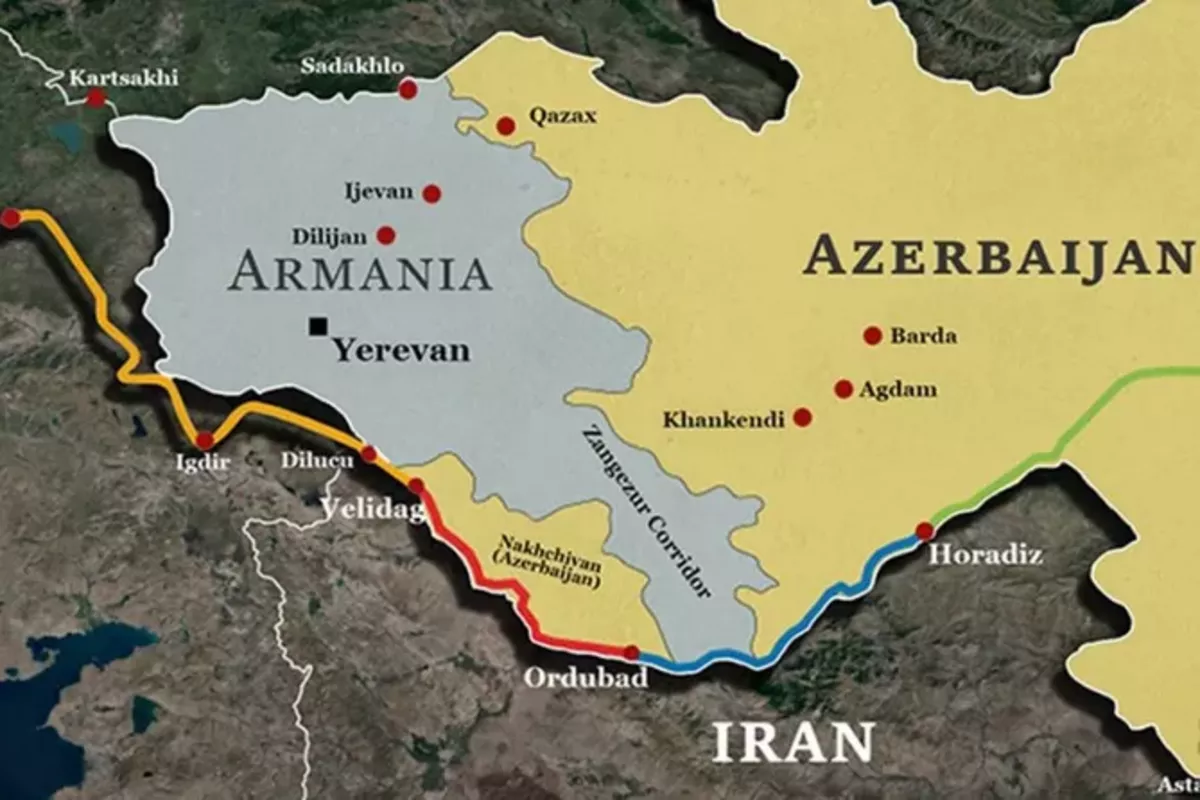
Iranian reaction to TRIPP has been more consistently negative. From the outset, Iranian officials have portrayed the project as a geopolitical threat rather than an economic initiative. On December 17, 2025, Ali Akbar Velayati, senior adviser to Iran’s Supreme Leader, criticized TRIPP during a meeting with the Armenian ambassador, equating it with the much-contested “Zangezur corridor” and declaring Tehran “firmly opposed” to the U.S. initiative. Velayati argued that the route could facilitate a NATO presence near Iran’s northern border, posing security risks not only to Iran but also to southern Russia. Although Armenian officials have repeatedly stressed that TRIPP operates under Armenia’s full sovereignty and does not involve extraterritorial arrangements, Iranian skepticism has persisted, reflecting Tehran’s broader unease with increased U.S. involvement in the South Caucasus and the shifting transit dynamics emerging along its northern frontier.
Concerns about external interference have also been echoed domestically within Armenia. In January 2026, Armenia’s Foreign Intelligence Service published its annual assessment, warning that hybrid threats against Armenia were likely to intensify in the run-up to the June 2026 parliamentary elections. While the report did not explicitly name Russia, it referred to “states with the goal of maintaining and expanding their influence in the region” as likely sources of malign activities aimed at sabotaging peace initiatives, including TRIPP. The intelligence assessment also highlighted key risks such as disinformation campaigns, cyber operations, and economic pressure designed to undermine public support for normalization and connectivity projects-an indirect but clear reference to Moscow’s often-used toolkit in the post-Soviet space.
Russian Soft Power in Armenia
This report came on the heels of concrete evidence of an expanded Russian soft-power and information campaign targeting Armenia. In late 2025, Russian media reported that the Kremlin had allocated roughly 13 billion rubles (around $165 million) from the presidential administration to finance a project aimed at strengthening Russia’s influence abroad, with Armenia identified as the primary focus ahead of the 2026 parliamentary elections. The initiative is being overseen by Sergei Kiriyenko, First Deputy Chief of Staff of the Russian Presidential Administration, who, according to earlier reporting, had been explicitly tasked with advancing Russian interests in Armenia “through soft power” as Yerevan’s leadership continued to drift westward.
While officially described as “informational rather than electoral,” the project reportedly involves Kremlin-linked structures such as Rossotrudnichestvo and RT and is widely understood to seek the erosion of public support for Prime Minister Nikol Pashinyan and Armenia’s normalization agenda. The intelligence concerns outlined by Yerevan were further underscored in January 2026 by incendiary statements from Kremlin propagandist Vladimir Solovyov, who openly suggested that Russia could justify a “special military operation” against Armenia should it continue to move beyond Moscow’s perceived zone of influence.
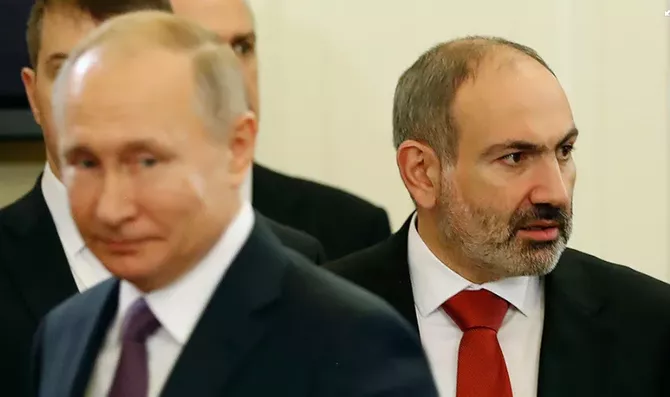
Photo: Getty Images
Support from Türkiye
Not all regional actors, however, have reacted with suspicion. Türkiye has emerged as one of the strongest supporters of TRIPP and the broader Armenia-Azerbaijan normalization process. On January 15, 2026, Turkish Foreign Minister Hakan Fidan endorsed the project, emphasizing its significance for the Middle Corridor and regional connectivity. He confirmed that he had held extensive discussions with Azerbaijani Foreign Minister Jeyhun Bayramov on the TRIPP framework and that President Recep Tayyip Erdoğan had been fully briefed. Fidan also reiterated Ankara’s commitment to the signing of a final peace agreement between Armenia and Azerbaijan and stated that the political will exists in all three capitals-Baku, Ankara, and Yerevan-to normalize relations. In this context, the reopening of the Armenia-Türkiye border, closed since 1993, is increasingly seen as a realistic prospect once the peace treaty is finalized.
Outlook
The geopolitical shock waves caused by TRIPP will continue to reverberate throughout the greater Caspian region. Taken together, external reactions to TRIPP underscore the project’s transformative potential. For Russia and Iran, it represents a challenge to established patterns of influence and control; for Türkiye, it offers an opportunity to anchor peace in connectivity and regional integration. For the two directly involved countries, Armenia and Azerbaijan, TRIPP constitutes a unique historic opportunity for achieving a lasting peace in the region. Both countries seem determined to advance the peace agenda while seeking to neutralize external threats. The support of the United States and the direct involvement of President Trump are critical factors that further insulate the process from external spoilers and will remain a major influence on the transformational changes unfolding in the South Caucasus.