Ankara to Hold Key Talks and Boost Relations During Uzbek President’s Visit
The 4th Türkiye-Uzbekistan High-Level Strategic Cooperation Council Talks In Ankara Will Focus On Expanding Trade, Investment, And Education Opportunities Between The Two Countries.
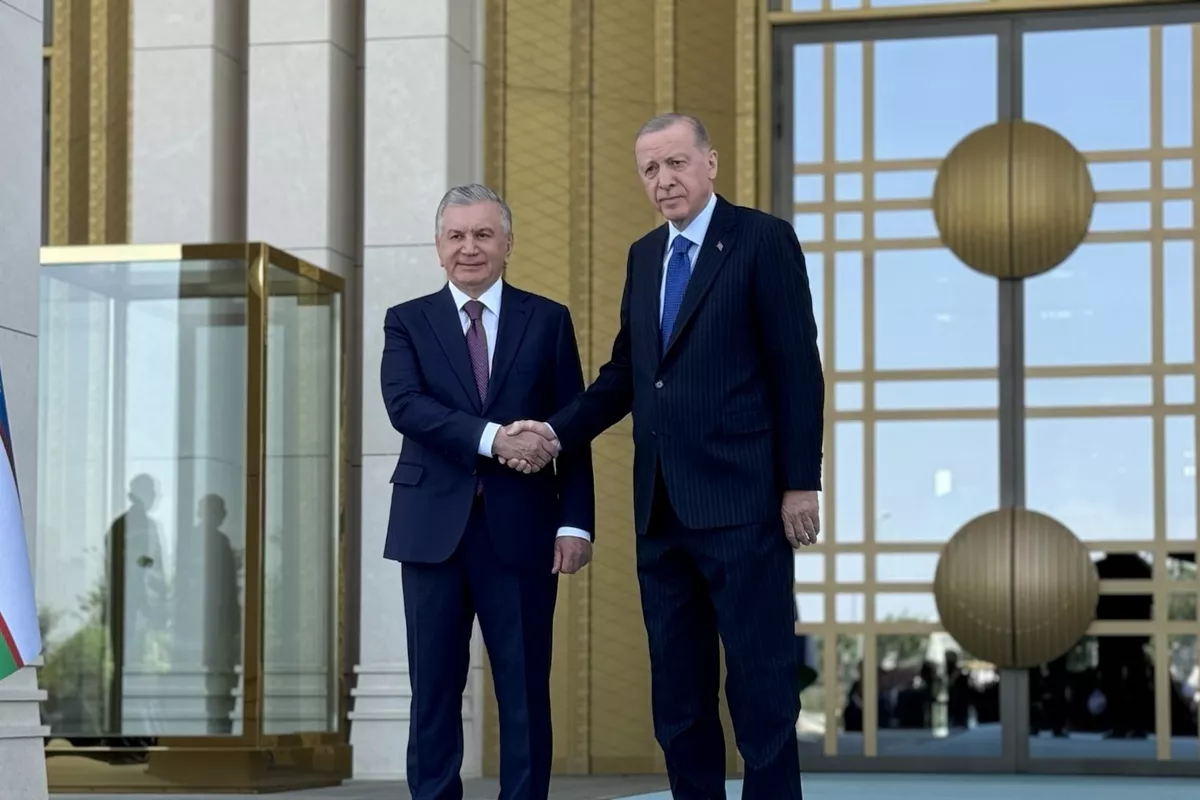
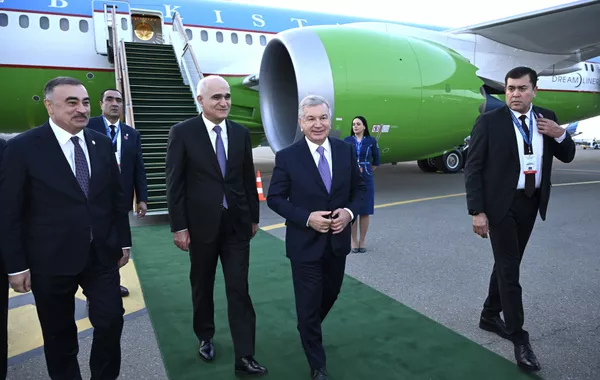
Uzbek President Shavkat Mirziyoyev is set to arrive in Türkiye on Thursday for an official visit as Ankara hosts the fourth meeting of the Türkiye-Uzbekistan High-Level Strategic Cooperation Council, officials said, The Caspian Post reports, citing Turkish media.
The visit comes amid deepening political, economic and cultural ties between the two countries, which describe each other as close partners linked by shared history, language and cultural heritage. Turkish and Uzbek officials are expected to review bilateral cooperation and discuss ways to expand coordination on the regional and global levels.
Türkiye’s capital will host the council meeting, co-chaired by President Recep Tayyip Erdoğan and Mirziyoyev. The forum has become a central mechanism for advancing cooperation in trade, investment, education, defense, energy and transportation.
Speaking to Sabah newspaper, Osman Mesten, head of the Türkiye-Uzbekistan Parliamentary Friendship Group, said the visit reflects the momentum in bilateral relations and the transformation underway in Uzbekistan in recent years, underlining that the reforms launched under Mirziyoyev have reshaped the country’s economy, governance and education system.
Mesten noted that Uzbekistan today differs significantly from a decade ago, pointing to reforms carried out under what Uzbek authorities describe as the “New Uzbekistan” vision. He said the reform agenda has produced visible changes across society, driven by economic liberalization, increased foreign investment and institutional restructuring.
According to Mesten, Mirziyoyev’s address to Uzbekistan’s Parliament in December 2025 signaled that 2026 would be a pivotal year in the country’s reform trajectory. Uzbekistan adopted its “Uzbekistan 2030” development strategy two years earlier, setting a target of reaching $160 billion (TL 6.95 trillion) in gross domestic product by 2030. Officials now say that figure could be reached as early as 2026, with a revised target of $240 billion under consideration.
Education has been a cornerstone of the reform program, Mesten said. Preschool enrollment, which stood at about 27% in previous years, has surpassed 78%, while higher education enrollment has risen from roughly 8% in 2017 to nearly 50% today. Uzbek authorities say further expansion is planned in 2026, including new international education initiatives.
As part of Mirziyoyev’s visit, officials are expected to attend a groundbreaking ceremony for the first Uzbek school to be established abroad. Turkish officials say the project reflects growing people-to-people ties and expanding cooperation in education.
Uzbekistan is also preparing to open the Uzbekistan Islamic Civilization Center, a flagship cultural project announced during Mirziyoyev’s early years in office. The center is expected to showcase the country’s Islamic and scientific heritage using modern exhibition technologies. A central feature will be the display of the Mushaf of Uthman, widely regarded as one of the oldest known copies of the Quran.
Mirziyoyev has previously said the center aims to highlight the historical contributions of scholars from the region to global civilization and to promote respect for Uzbekistan’s cultural legacy.
Economic ties between Türkiye and Uzbekistan have expanded steadily in recent years. The bilateral trade volume currently stands at about $3.1 billion, with both sides aiming to reach $5 billion in the medium term. Türkiye ranked third among foreign investors in Uzbekistan in 2025, with investments totaling approximately $2.6 billion, according to official figures.
More than 2,000 Turkish companies operate in Uzbekistan, contributing to employment, industrial output and infrastructure development. Turkish officials say investor confidence has been strengthened by Uzbekistan’s regulatory reforms and its efforts to improve the business environment.
Historical and cultural links remain a central theme in bilateral relations. Turkish officials often point to the shared legacy of scholars and religious figures who traveled from the region historically known as Transoxiana to Anatolia, leaving a lasting influence on intellectual and spiritual life.
The visit will also include the opening of the “Uzbekistan Neighborhood” in the southern Turkish province of Hatay, built following the devastating earthquakes of Feb. 6, 2023. The housing project was constructed at the instruction of Mirziyoyev as part of Uzbekistan’s post-earthquake assistance to Türkiye.
Officials on both sides say the visit and the council meeting are expected to further consolidate cooperation, underscoring what they describe as a long-standing partnership rooted in shared values and mutual support.
Last year, Ankara and Tashkent celebrated the 33rd anniversary of diplomatic ties, with relations upgraded to a high-level strategic partnership and bilateral trade.
Türkiye was the first country to recognize Uzbekistan in 1991, establishing diplomatic ties a year later by opening an embassy. Uzbekistan similarly opened a diplomatic mission in Ankara in 1993.