Source: Getty Images
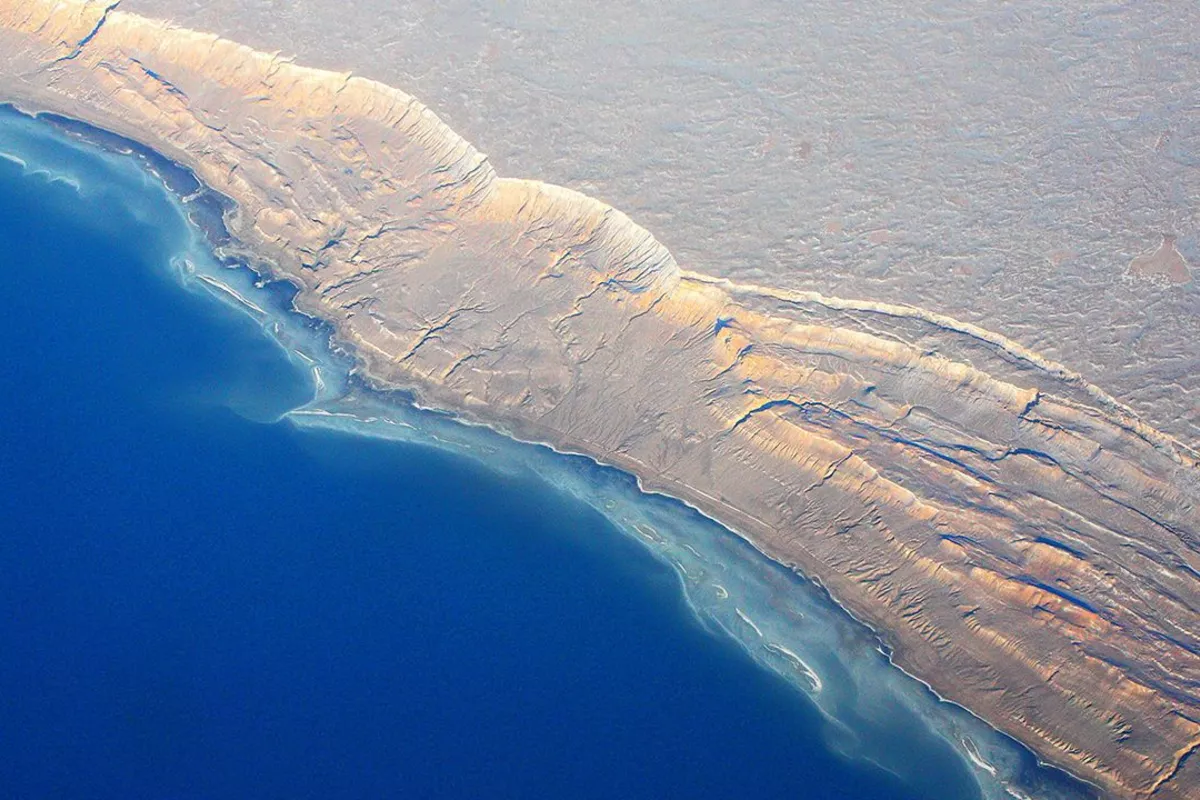
Russian scientists have presented the findings of a large-scale study on the shrinking surface area of the Caspian Sea, revealing that over the past three decades the sea has lost an area comparable in size to Albania.
According to the Scientific Russia portal, the researchers analysed Landsat satellite data to develop updated hypsometric curves linking water levels to the sea’s surface area, The Caspian Post reports.
The new dataset is expected to improve estimates of surface-area loss, evaporation rates, and projections of future declines in the Caspian Sea’s water level.
The study found that the Caspian Sea’s water level has been decreasing at an average rate of approximately 10 centimetres per year since 1995.
By 2025, the water level had fallen by nearly three metres, reaching minus 29.4 metres and dropping below the previous historic low recorded in 1977.
During the same period, the sea’s surface area shrank by 28,644 square kilometres, representing a loss of 7.4% compared with its 1996 extent. The area lost is roughly equivalent to the size of Albania.
The research also included an assessment of the Kara Bogaz Gol Bay.
The declining water level has already had significant consequences. The shallowing of the Volga-Caspian shipping canal, along with ports across the Caspian basin, has complicated maritime navigation, while the retreating shoreline continues to move farther away from coastal communities.
According to the researchers’ forecasts, the Caspian Sea’s level could decline by an additional two to 21 metres by the end of the 21st century.
The scientists emphasised that producing accurate forecasts requires precise calculations of the Caspian Sea’s water balance, which depend on reliable estimates of the sea’s surface area-a critical factor in determining evaporation rates.
The authors of the study also noted that although a reduction in surface area would normally be expected to slow evaporation and moderate the pace of water-level decline, satellite altimetry data indicate the opposite trend.
Between 2020 and 2024, the rate of sea-level decline accelerated to 22.7 centimetres per year, compared with an average annual decrease of 8.16 centimetres during the 2005-2019 period.
According to the researchers, these findings suggest that year-to-year fluctuations in the Caspian Sea’s water balance currently have a greater impact on water-level changes than morphometric factors.
Share on social media