Türkiye Gears up for Key NATO Summit as Major Actor
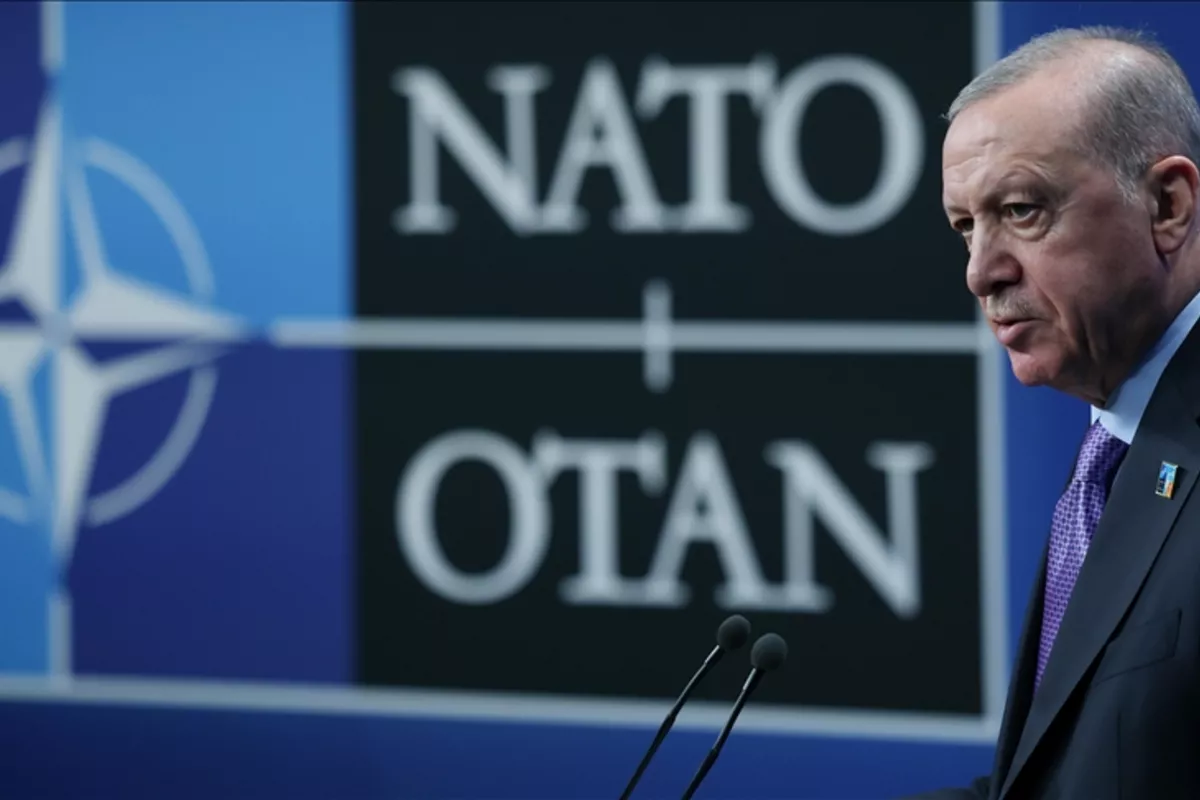
As NATO considers future defense strategies in a world marked by conflicts, Türkiye is preparing to host the alliance's leaders this summer, with Ankara undergoing significant changes to accommodate the thousands of guests expected for the summit.
A key partner of NATO, Türkiye will host the leaders’ summit of the alliance for the second time in more than two decades. Heads of state and top figures from member countries will be in the capital Ankara for the summit scheduled to be held on July 7-8. Some 6,000 participants are expected to attend the event.
Preparations are underway in the Turkish capital for the event, where alliance leaders will likely discuss its future as conflicts proliferate across the world, forcing them to bolster defense expenditures.
A series of panels are being held in NATO member countries as preparation for the summit, with the first one held in Spain. In Ankara, authorities renovate Etimesgut military airport, which will be the main transport hub for guests. Airport’s runways are being expanded, the Sabah newspaper reported on Sunday, while a guest house will be constructed to accommodate delegations.
The presidential complex and a congress hall in the capital will be the main venues of the summit. A press center is being set up at the complex where heads of state will hold news conferences. The Presidency of Defense Industries will also host a defense forum on the margins of the summit, at the ATO Congressium hall.
Türkiye this year marks the 74th anniversary of its admission to NATO and boasts the second biggest army of the alliance. It is the only country in NATO’s “southern flank” with a sizeable military power and a gateway to the Middle East and wider Asia. Security of the Black Sea also largely depends on Türkiye, especially amid the Russia-Ukraine conflict which threatens maritime security.
In the last summit in The Hague last year, NATO members agreed to spend
Some 5% of their GDP in defense expenditures by 2035. Ankara will be the stage where the first progress reports on this massive investment drive are measured. A NATO report last week showed military spending rose by a fifth year-on-year in 2025 to $574 billion.
US President Donald Trump has repeatedly sought higher defense spending by the alliance's 32 member states, pushing Europe to take primary responsibility for its own security. With the increase by NATO's European members and Canada, all allies are now devoting more than 2% of gross domestic product to military spending, a goal set in 2014 for 2024, a NATO report said.
In presenting the report, NATO Secretary General Mark Rutte said he expected "Allies to show they are on a clear and credible path towards the five percent" when they hold their next summit in Ankara.
The headline target breaks down as 3.5% on core defense spending and 1.5% on a looser range of areas such as infrastructure and cybersecurity. Only three countries met the 3.5% goal last year, Poland, Latvia, and Lithuania.
All NATO countries increased their military spending last year, but three saw a slight drop in the share of spending relative to their GDP. The United States went from 3.30% in 2024 to 3.19%, the Czech Republic from 2.07% to 2.01%, and Hungary from 2.21% to 2.07%.
July’s summit will also be the venue for support to Ukraine where member countries will likely review and update their commitments to help the country.
For Türkiye, the summit will additionally serve as a platform to promote its flourishing defense industry. In the past two decades, the country evolved from a mere buyer of defense technologies to an exporter of everything defense related, from unmanned aerial vehicles to naval platforms, air defense technologies etc.
Türkiye seeks to expand its role in NATO as a power broker and the summit will cement it. It emerged as a key mediator in Russia-Ukraine conflict and nowadays work for a peaceful resolution to US-Israel-Iran war. Moreover, the country aims to integrate itself more to security architecture of Europe which makes the bulk of NATO member states. Recently, Ministry of National Defense has announced that Ankara applied for establishment of a multinational corps. Türkiye showcased this ambition when it joined alliance’s biggest exercise Steadfast Dart in February, dispatching 2,000 military personnel to the exercise in Germany, along with locally-made weapons systems.
Although it has started courting NATO’s traditional rivals more in recent years, Türkiye is firmly aligned with the alliance, as its leaders repeatedly confirmed. Türkiye’s membership is viewed as winning a reliable ally in NATO’s southern wing in terms of air, land and maritime defense.
Türkiye’s strategic location makes it the first defense against threats and risks in the region for NATO. In the Balkans, Türkiye is the top contributor to the alliance’s Kosovo Force (KFOR), which maintained command of the forces between 2023 and 2024. It currently holds deputy command of the force, while it was the top contributor to the reserve battalion in Kosovo to ensure the security of the Balkan country and the region.
It is also a top contributor in terms of personnel to NATO’s Iraq mission, which was founded in 2018 to provide consultancy and training to Iraqi security forces.
In NATO’s military exercises, Türkiye is a prominent actor. It also commands NATO’s permanent maritime task group and a task group against naval mines.
Türkiye also hosts critical NATO facilities, including Allied Land Command, which is located in the western city of Izmir, and Rapid Deployable Corps, which is based in Istanbul. In the capital, Ankara, it hosts the Centre of Excellence for Defence Against Terrorism (COE-DAT) and the Partnership for Peace Training Center. Istanbul hosts the NATO Maritime Security Centre of Excellence (MARSEC COE).
See the original article here