Can the US–Iran Deal Survive a New Israel-Hezbollah War?
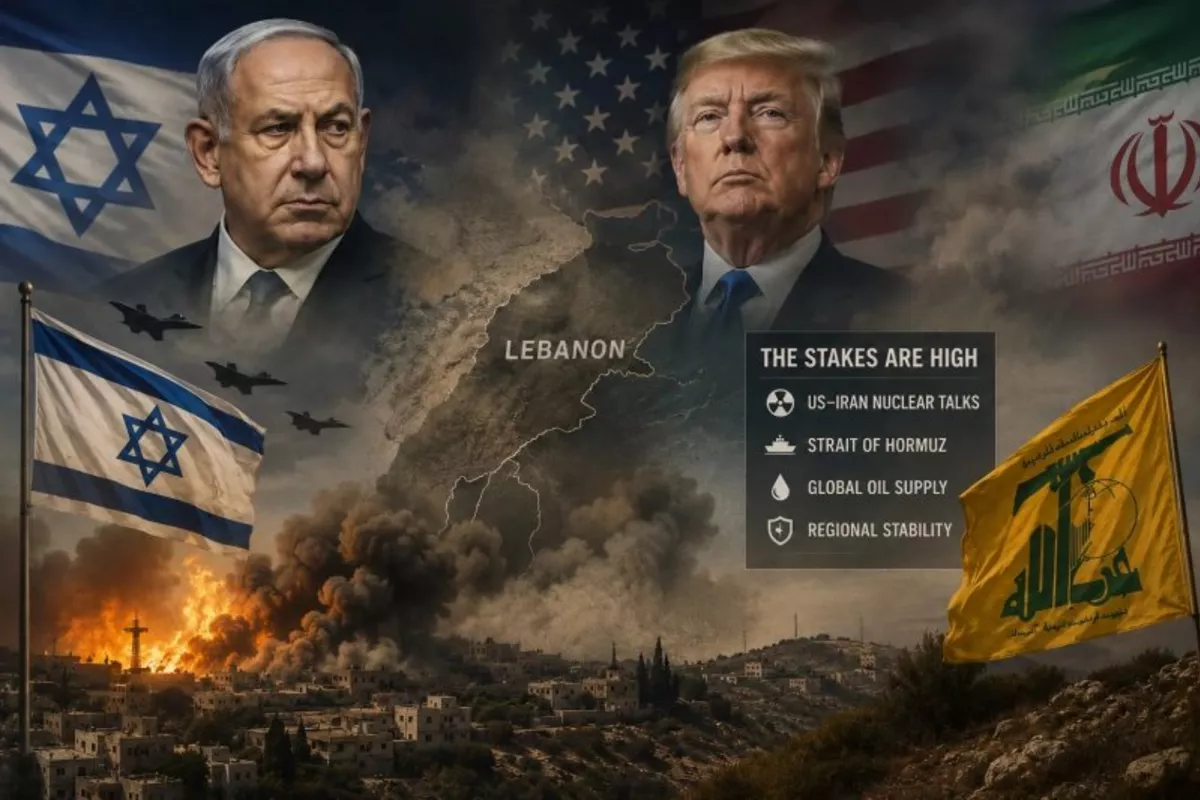
The fragile ceasefire between Israel and Hezbollah has become the first serious test for the newly signed US-Iran de-escalation framework. What looked only days ago like a possible diplomatic breakthrough is now hanging by a thread.
The fighting in southern Lebanon, the uncertainty around talks between Washington and Tehran, and the future of navigation through the Strait of Hormuz have merged into one crisis. This is no longer just another round of confrontation on the Lebanese-Israeli border. It is a regional stress test with global consequences.
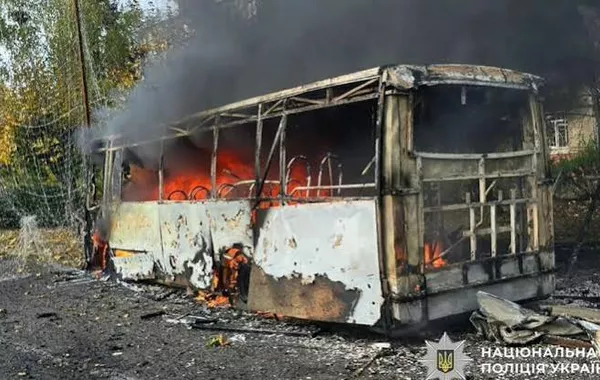
According to Reuters, Israel and Hezbollah agreed to implement a ceasefire starting at 4 p.m. local time on Friday after a dangerous flare-up in southern Lebanon. The agreement was reportedly reached with the involvement of US and Qatari mediators, while Iran also played a role in facilitating the arrangement. But within hours, the ceasefire already looked fragile. Lebanese state media reported new Israeli strikes and drone attacks in the south, including in the Nabatieh area. Reuters said at least five people were killed despite the newly declared truce.
This is exactly why the current moment is so dangerous. A ceasefire that collapses in the first 24 hours is not just a military problem. It creates a political chain reaction. Hezbollah is Iran’s most important regional ally on Israel’s northern front. Israel sees Hezbollah’s military infrastructure in southern Lebanon as an unacceptable security threat. Iran views Lebanon as one of its main pressure cards in any negotiation with the United States. The US, meanwhile, needs calm on all fronts if it wants to move from a temporary understanding with Tehran to a more durable agreement.
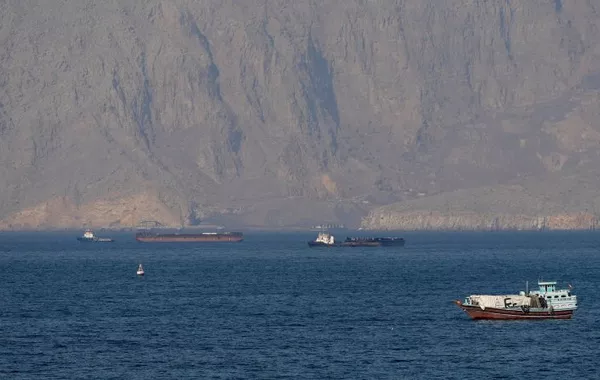
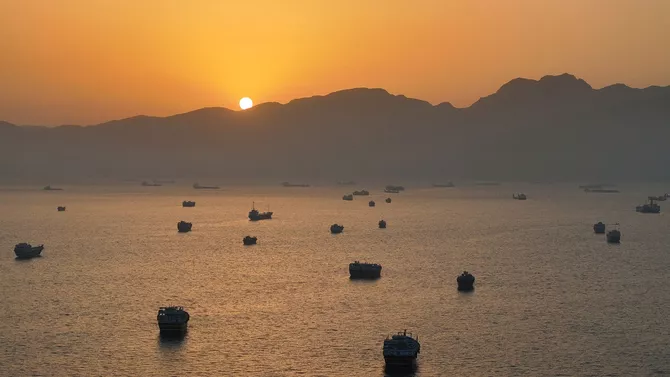
The timing could hardly be more sensitive. Washington and Tehran have only just signed an interim framework aimed at reducing the risk of a wider regional war. The deal was expected to create conditions for further negotiations on Iran’s nuclear programme, sanctions relief, oil exports and maritime security. One of its most important elements is the reopening and stabilisation of traffic through the Strait of Hormuz, the narrow waterway through which a huge share of global energy trade passes.
Credit: Reuters
The numbers explain why the world is watching Hormuz so closely. According to the US Energy Information Administration, around 20 million barrels per day of oil and petroleum products passed through the Strait of Hormuz in 2024, equal to roughly 20% of global petroleum liquids consumption. For Asian economies, the importance is even greater: China, India, Japan, South Korea and other import-dependent countries rely heavily on Gulf energy flows. A serious disruption in Hormuz would not remain a Middle Eastern issue. It would affect fuel prices, shipping insurance, inflation expectations and financial markets from Asia to Europe.
This is why the Lebanon front matters far beyond Lebanon. If Israel and Hezbollah return to open conflict, Iran will come under pressure from its allies and hardliners at home not to continue talks with Washington. Israel, for its part, may argue that no regional agreement is credible if Hezbollah retains the ability to strike across the border. The US will then face a difficult choice: pressure Israel to show restraint, pressure Iran to control Hezbollah, or risk seeing the entire de-escalation process collapse before it begins.
The humanitarian situation in Lebanon also adds pressure. Months of fighting have already weakened a country that was suffering from economic crisis long before the latest war. Southern Lebanon has seen repeated displacement, damaged infrastructure and heavy pressure on local communities. Every new strike increases the risk that civilians will again flee northward, while Lebanon’s fragile institutions struggle to respond. In Israel, communities near the northern border also remain under security pressure, with residents demanding guarantees that Hezbollah will not be able to return to forward positions.
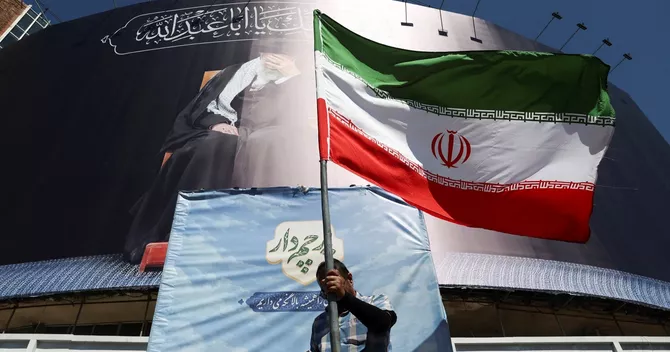
The diplomatic track is equally complicated. Reports say planned US-Iran talks in Switzerland were disrupted by the renewed Israel-Hezbollah violence. That matters because the interim deal was never supposed to be the final solution. It was a bridge. The next phase would have to address much harder questions: the scale of Iran’s nuclear activities, the future of sanctions, the release of frozen assets, oil waivers, regional militias and security guarantees for Israel and Gulf states. Without calm in Lebanon, every one of these files becomes harder to negotiate.
Credit: NBC news
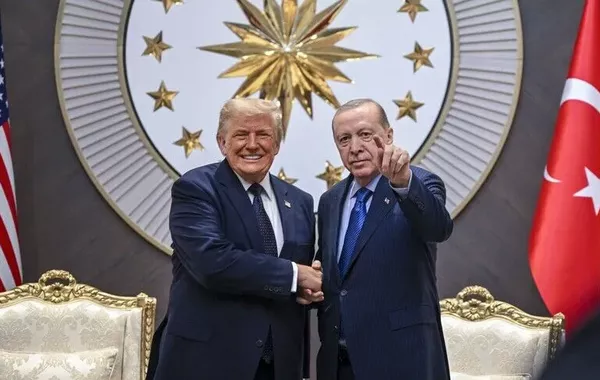
For President Donald Trump, the stakes are also political. A successful US-Iran deal would allow him to present himself as the leader who stopped a regional war, reopened Hormuz and reduced pressure on energy markets. But if the Lebanon ceasefire fails, critics will argue that the agreement was signed without enough enforcement mechanisms. In that case, the deal could become not a symbol of strength, but proof that the Middle East cannot be stabilised through a memorandum alone.
For Iran, the calculation is no less delicate. Tehran needs sanctions relief and restored oil revenue, especially after months of pressure and economic disruption. But it also does not want to appear as if it has abandoned Hezbollah or accepted Israeli freedom of action in Lebanon. That is the central contradiction: Iran wants the economic benefits of de-escalation, but its regional influence is built partly on armed allies who operate outside formal state control.
Oil markets have so far reacted with cautious optimism whenever there are signs of diplomacy. Prices eased after the announcement of the US-Iran framework, reflecting hopes that Hormuz would remain open and Iranian exports could resume more normally. But markets can reverse quickly. If tankers face new risks, if insurers raise premiums, or if shipping companies delay routes through the Gulf, the price effect could be immediate. Even the perception of instability in Hormuz is enough to influence Brent crude, Asian refiners and global inflation forecasts.
For the South Caucasus, the crisis has a direct strategic meaning. Azerbaijan is not a party to the conflict, but it sits near the wider geopolitical map affected by the Iran file, energy security, Türkiye’s regional role and transport corridors linking Asia and Europe. If Hormuz becomes unstable, interest in alternative routes, including the Middle Corridor, may grow. If the US-Iran deal survives, the region may see a different kind of competition: more diplomacy, more trade, and possibly more attention to connectivity between the Caspian, Türkiye and Europe.
The next 48 hours will be critical. If the ceasefire holds, Washington and Tehran may return to the negotiating table and try to turn a fragile pause into a structured diplomatic process. If it fails, the US-Iran deal may lose momentum almost immediately. In the Middle East, ceasefires often fail not because nobody wants calm, but because too many actors benefit from ambiguity.
That is why the Israel-Hezbollah ceasefire is more than a local truce. It is the first real test of whether the US-Iran framework can survive contact with the region’s hardest reality: one agreement cannot stabilise the Middle East unless every front is brought under control.
By Samir Muradov