Since June 2026, Türkiye has launched one of the most ambitious tax regimes in its region. Law No. 7582 provides a 20-year exemption from Turkish income tax for qualifying new tax residents on income earned abroad. The initiative was introduced by President Recep Tayyip Erdogan in spring 2026, approved by parliament in May, signed by the president on June 3, and published in the Official Gazette, Resmî Gazete, on June 4.
At first glance, this may look like another tax incentive for foreigners. In reality, however, it reflects a much broader strategy. Türkiye is trying to position itself in the global competition for mobile human capital - entrepreneurs, investors, highly qualified specialists, executives, owners of intellectual products and people with international sources of income.
The central feature of the new economy is that money increasingly moves together with people. An entrepreneur can run businesses in several countries, receive income in dollars or euros, hold assets abroad, and still choose to live where it is more convenient, safer and more financially attractive. For this reason, states today are competing not only for factories, ports and direct investment, but also for the people capable of generating economic activity around them.
Türkiye is targeting precisely this group. The new regime exempts foreign-sourced income of qualifying new residents from Turkish income tax for up to 20 years. At the same time, income earned inside Türkiye remains taxable. In other words, Ankara is not abandoning taxation of its domestic economy. It is creating a special channel to attract external capital, external income and internationally mobile individuals.
This distinction is important. Türkiye is effectively telling potential residents: if your income is generated outside the country, but you are ready to live, spend, invest and conduct part of your economic activity here, we are prepared to offer you long-term tax predictability.
The economic calculation is clear. Even if the state does not tax the foreign income of such residents, it still benefits from their spending. A new resident rents or buys housing, uses banks, healthcare, schools, universities, legal and consulting services, restaurants, transport, insurance and everyday services. Money earned outside Türkiye begins to circulate inside the Turkish economy.
The scale of Türkiye’s existing service economy shows why this strategy may work. In 2025, Türkiye earned about $65.2 billion from tourism, while the number of visitors exceeded 63.9 million. This means the country already has a vast infrastructure for serving external demand - from aviation, hotels and healthcare to real estate, restaurants, education and financial services.
But a tourist comes for several days or weeks. A new tax resident may stay for years. This is the key difference. Tourism creates short-term consumption, while residency creates long-term demand. If even a small share of international entrepreneurs, investors and wealthy professionals choose Türkiye as a base for life and business, the effect on the domestic market could be much deeper than ordinary tourism.

Credit: visit-turkey.info
There is also another important context. In 2025, Türkiye attracted around $13.1 billion in foreign direct investment, an increase of more than 12% compared with the previous year. For a country seeking to strengthen its position as a regional investment center, tax policy toward new residents becomes an additional instrument. It can work not instead of traditional investment flows, but alongside them.
Wealthy residents are often followed by companies, family offices, start-ups, legal and financial advisers, educational projects, service businesses and new professional networks. One entrepreneur may relocate part of a team. One investor may bring partners. One family office may start working with local banks, lawyers, developers and consultants. This creates a multiplier effect that goes far beyond individual consumption.
Türkiye’s migration scale also matters. In 2025, the country hosted about 1.15 million foreign nationals with various types of residence permits. This means Türkiye is already a major center of attraction for foreigners. The new tax regime could change not only the quantity but also the quality of this inflow by attracting more people with high incomes, international businesses and investment potential.
The tax reform may also support the real estate market, which has become increasingly sensitive to foreign demand in recent years. In 2025, foreigners bought around 21,500 housing units in Türkiye - the lowest figure in several years. After the peak of interest linked partly to the Russia-Ukraine war and relocation trends, demand from foreign buyers began to decline. The new tax regime could become one of the instruments to partially revive interest in Turkish real estate, especially among those considering not just buying an apartment, but relocating more fully.
However, this is also where the first serious risk appears. An influx of wealthy residents could increase pressure on housing prices and rents, especially in Istanbul, Antalya, Izmir and other popular cities. For local citizens, this is a sensitive issue. Ankara therefore needs to avoid a situation in which tax attractiveness for foreigners is seen as worsening housing affordability for Turkish citizens.
The second risk concerns administration. A law can be powerful only if its application is clear, fast and predictable. A potential resident needs to understand what documents are required, how the absence of Turkish tax residency in the previous three years is verified, how the status is obtained, which income is considered foreign-sourced and which is Turkish-sourced, how banks will work with such clients, and what reporting obligations remain.
If the system becomes overburdened with bureaucracy, the effect may be weaker than expected. But if Türkiye ensures transparent administration, digital procedures and coordination between tax, migration and banking authorities, the new regime could become a real competitive advantage.
The third risk is social and political. Any incentive for foreigners can raise domestic questions: why is the state creating special conditions for new residents while local businesses and citizens continue to pay taxes under ordinary rules? Ankara’s answer should be economic rather than ideological: the purpose of the regime is not to grant privileges to foreigners, but to attract external income that otherwise would not enter the Turkish economy at all.
That is why this policy must be explained correctly. Türkiye is not exempting income that would already have been earned inside the country. It is trying to attract income, capital and consumption that could otherwise go to Dubai, Lisbon, Milan, London, Tbilisi or other jurisdictions. In this sense, the issue is not lost tax revenue, but competition for a new economic flow.
From a geoeconomic perspective, Ankara’s move looks especially logical. Türkiye is located between Europe, the Middle East, the South Caucasus, Central Asia and the Mediterranean. It has a large domestic market, a developed aviation network, a powerful construction sector, strong tourism infrastructure and growing financial ambitions, including the Istanbul Finance Center. The new tax regime complements this broader architecture.
In effect, Türkiye is trying to move from the model of a “country for tourism and real estate” to the model of a “country for life, capital and the management of international income.” This is a higher level of competition. A tourist spends money and leaves. A resident builds long-term ties. An investor forms assets. An entrepreneur creates networks. A family office brings financial flows. This is the kind of economy states are now competing for.
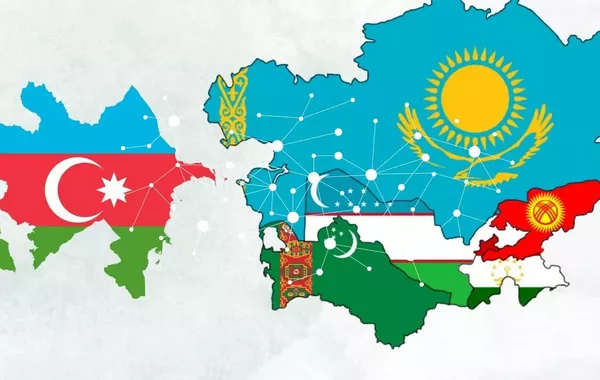
Against this background, the policy of some neighboring countries looks particularly revealing, as migration regulation in several places is moving in the opposite direction and becoming more restrictive. Of course, Türkiye is a large country with a population of more than 85 million, a major market and developed infrastructure. But for small and medium-sized states, the conclusion should not be the opposite. It should be even more obvious: if a country cannot compete by market size, it must compete through the quality of its rules, the speed of its decisions and the attractiveness of its regime.

Credit: atlanticcouncil
In the 21st century, migration policy is no longer only about border control. It is becoming an instrument of economic strategy. States need to distinguish between uncontrolled migration and the targeted attraction of people who bring capital, knowledge, connections, entrepreneurial experience and new demand. Smart policy does not mean opening the door to everyone. It means understanding whom the country wants to attract and what conditions it is ready to create for them.
Türkiye’s new tax regime should be viewed precisely in this context. It is not a technical amendment to tax legislation and not simply a privilege for wealthy foreigners. It is an attempt to turn residency into an economic asset.
If Ankara manages to ensure transparent implementation of the law, protect the interests of local citizens and integrate the new regime into a broader investment strategy, the effect could be significant. It will be measured not only by the number of new residents, but also by the volume of consumption, investment, real estate transactions, banking operations, new companies, professional networks and business activity that Türkiye is able to attract.
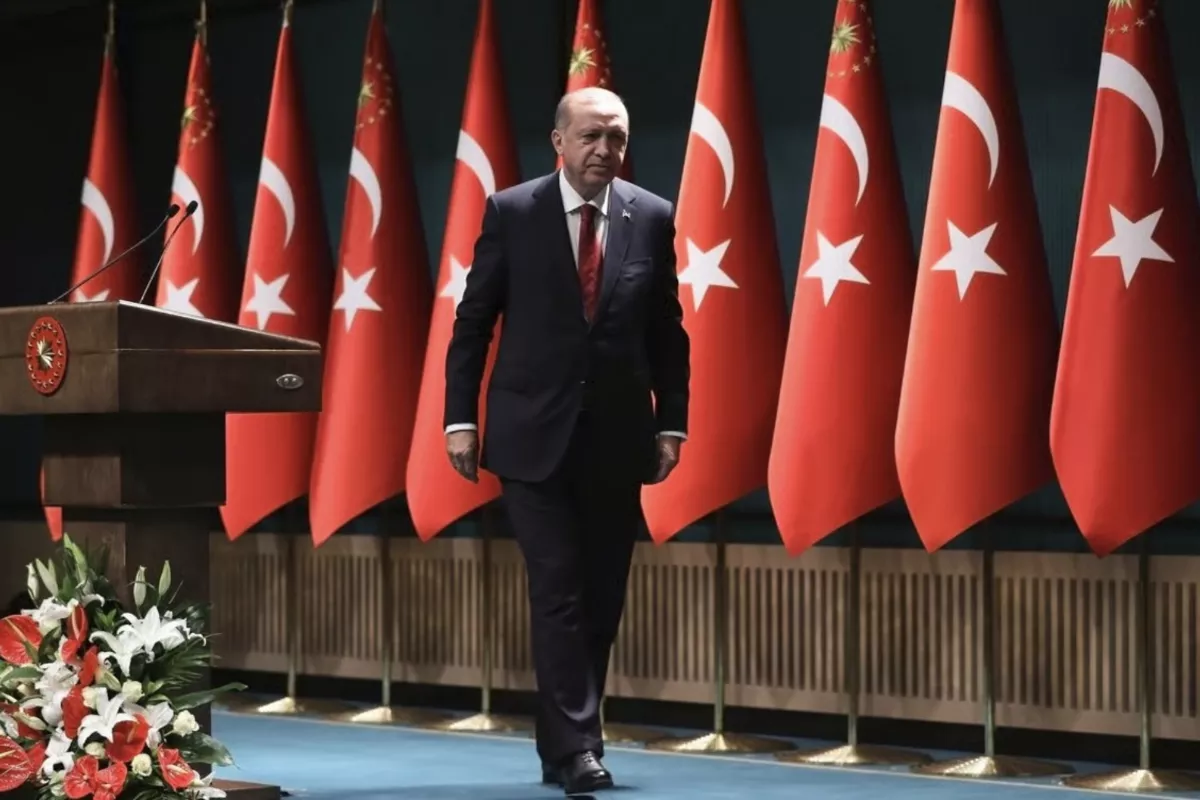
That is why Law No. 7582 can be seen as one of Türkiye’s most interesting economic decisions in recent years. Erdogan has made a strong move not simply because he offered foreigners a tax incentive. He has made a strong move because he identified the key direction of global competition: in the new economy, the winner is not necessarily the state that taxes everything immediately, but the one that knows how to attract people, capital and long-term opportunities.