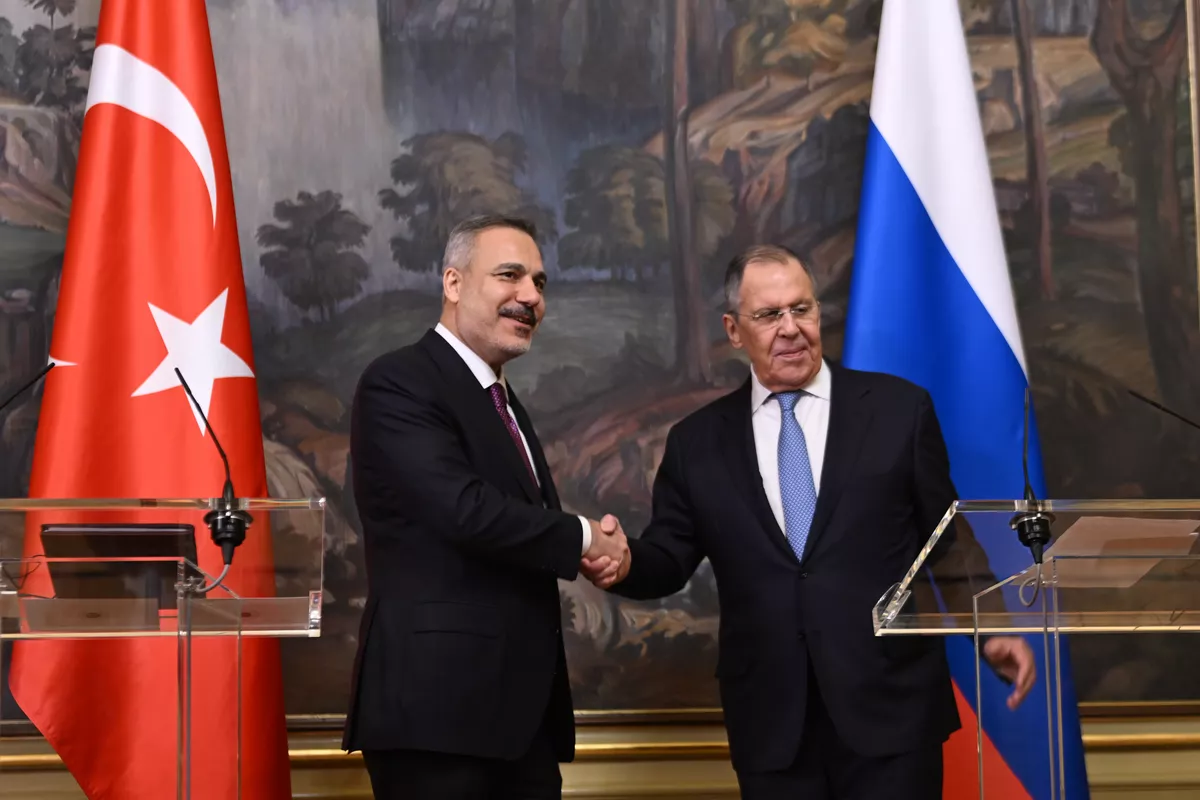
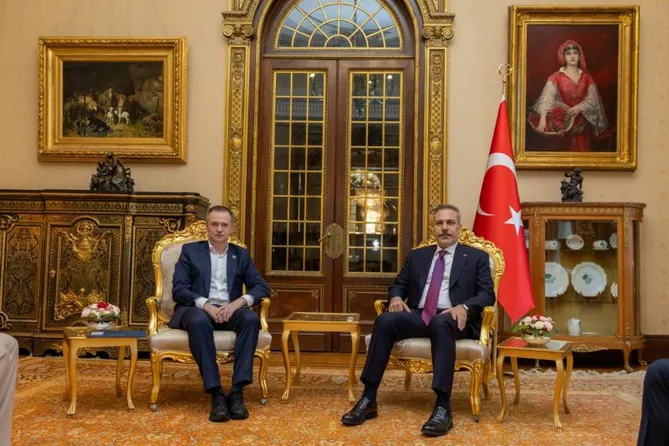
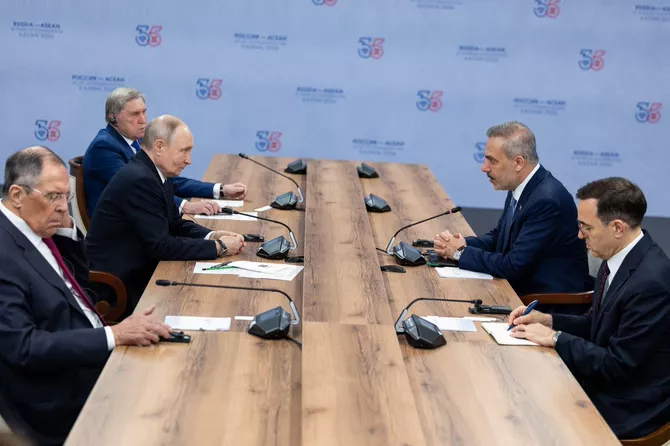
Turkish Foreign Minister Hakan Fidan’s visit to Russia on June 16-17 was an event that went far beyond a routine diplomatic trip. Formally, the agenda focused on talks with Sergey Lavrov, a meeting with Vladimir Putin, the war in Ukraine, security in the Black Sea and the situation in the South Caucasus. However, the real political intrigue of the visit lay elsewhere: Fidan publicly confirmed that he had held separate meetings with the heads of three key Russian security and intelligence agencies - FSB Director Alexander Bortnikov, SVR chief Sergey Naryshkin and GRU head Igor Kostyukov.
At first glance, such a set of meetings may look unusual for a foreign minister. But in Fidan’s case, it is entirely logical. Before becoming foreign minister, he spent many years heading Türkiye’s National Intelligence Organization, MIT, and was one of the key architects of President Recep Tayyip Erdoğan’s security and foreign policy line. In Moscow, therefore, Fidan was not acting merely as a diplomat, but as a representative of the part of the Turkish state that knows how to speak directly with power structures.
AA Photo
The main conclusion from this visit is clear: Ankara and Moscow were discussing not only public diplomacy, but also closed-door security issues. When a minister meets Lavrov, it is diplomacy. When he meets Putin, it is high-level politics. But when Bortnikov, Naryshkin and Kostyukov appear on the agenda, it means the conversation is about real risks, operations, intelligence assessments and possible crisis scenarios.
One of the central topics was most likely security in the Black Sea. Ahead of the visit, Reuters reported that Fidan was expected to discuss the war in Ukraine, maritime security and the situation surrounding attacks on tankers near the Turkish coast. Türkiye has found itself in an extremely sensitive position: it maintains relations with both Moscow and Kyiv, but cannot allow the war in Ukraine to directly threaten its ports, trade routes or energy infrastructure.
That is why Fidan stated in Moscow that Ankara expects Russia to avoid any steps that could harm Türkiye’s interests in the Black Sea. He also reaffirmed Türkiye’s readiness to once again host talks between Russia and Ukraine. This is an important point: Ankara does not want to be a passive observer. It wants to remain a mediator, but at the same time it insists that its red lines be taken into account.
The meeting with FSB chief Alexander Bortnikov may have focused primarily on counterterrorism, influence networks, the security of Russian and Turkish facilities, and possible threats in the Black Sea and Syria. For Moscow, the FSB is not only an internal security agency; it also has influence over a wide range of issues related to counterintelligence, border security and the prevention of sabotage. For Türkiye, which simultaneously faces the Kurdish issue, the Syrian track, terrorism risks and instability along maritime routes, direct contact with the FSB has practical significance.
The meeting with Sergey Naryshkin, head of the Foreign Intelligence Service, was probably linked to the broader regional picture. The SVR deals with foreign policy and strategic assessments. For Ankara, Russian assessments of Ukraine, Iran, the Middle East, the South Caucasus and Western actions in the region are now extremely important. Türkiye wants to understand not only what Moscow says publicly, but also how it evaluates developing crises behind closed doors.
The meeting with Igor Kostyukov, the head of the GRU, deserves special attention. This is military intelligence. Here, the range of topics could have been even more sensitive: Ukraine, the Black Sea, military infrastructure, drones, Syria, Iran, the South Caucasus and the risk of direct incidents. If diplomacy answers the question of what the sides are ready to say, military intelligence answers the question of what the sides are actually preparing to do. This is why contact with the GRU shows that Ankara wanted not only political assurances, but also an understanding of Russia’s military intentions.
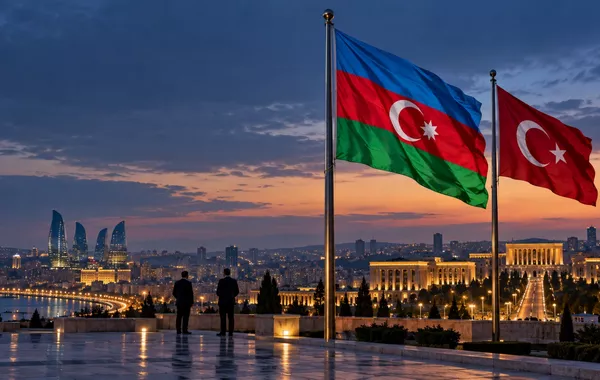
The South Caucasus was most likely another important part of the talks. Ahead of the visit, Reuters reported that Fidan was expected to discuss the region, including the Armenia-Azerbaijan peace process and the possible impact of these developments on the normalization of relations between Türkiye and Armenia. For Ankara, the South Caucasus is not a peripheral issue, but a strategic bridge to Azerbaijan, the Caspian Sea and Central Asia. For Moscow, it is a space where it is trying to preserve influence after the weakening of its positions in Armenia and amid Türkiye’s growing role.
This is where Fidan’s meetings with Russian security officials become especially meaningful. The talks may have concerned not only the diplomatic “3+3” format, but also the real balance of power: how far Western presence in Armenia may go, how Moscow views Yerevan’s rapprochement with the EU and the United States, what risks it sees around the Zangezur route and how the security of future transport links can be ensured. Türkiye does not want the South Caucasus to become a new arena of confrontation between Russia and the West, because such a scenario would damage both Turkish interests and the Azerbaijani-Turkish strategic partnership.
Another possible layer of the talks was Iran and the Middle East. Against the backdrop of tensions around Iran, the Strait of Hormuz, Lebanon and Israel, Türkiye is closely monitoring the actions of all major players. Russia maintains channels of influence in Tehran, Damascus and other regional centers. Therefore, Fidan may have discussed with Russian structures not only Ukraine or the Caucasus, but also a broader question: how Moscow would act in the event of further escalation in the Middle East.
AA photo
Energy was another likely topic. In March, Fidan had already discussed energy security with Lavrov, including Blue Stream and TurkStream, amid Russian claims about attempted attacks on infrastructure linked to gas supplies. In the current environment, energy routes are not just an economic matter, but an element of national security. Türkiye wants to become an energy hub, but a hub cannot function without security guarantees for pipelines, ports, tankers and maritime routes.
Thus, Fidan’s visit demonstrated a new model of Turkish diplomacy. This is no longer classical diplomacy of statements, protocol and joint press conferences. It is diplomacy in which the foreign minister speaks directly with the power centers of another major state. For Türkiye, this is particularly characteristic: Ankara conducts a multilayered policy in which the foreign ministry, intelligence service, military, energy sector and presidential vertical operate as a single system.
For Russia, the meeting with Fidan was also important. Moscow understands that Türkiye remains a NATO member, but at the same time it is not an ordinary Western ally. Ankara has not fully joined the anti-Russian line, it maintains channels with the Kremlin, plays the role of mediator on Ukraine and at the same time competes with Russia in the Caucasus, Syria and Central Asia. This makes Fidan a convenient interlocutor for Moscow: he understands the language of intelligence, power balance and regional deals.
The main intrigue is that publicly the sides said very little. The official Turkish account of the visit highlighted Fidan’s meeting with Lavrov and the joint press conference, while the Kremlin reported Putin’s meeting with the Turkish minister. But the mention of Bortnikov, Naryshkin and Kostyukov reveals the true scale of the trip. This was not simply a visit by a foreign minister to Moscow. It was Ankara’s attempt to compare notes with Russia’s security establishment on several crises at once.
Ultimately, Fidan came to Russia not for elegant diplomatic wording, but for answers. What will happen in the Black Sea? How far is Moscow ready to go on the Ukrainian track? How does Russia view the South Caucasus after the changes in Armenia? What are the risks around Iran and Syria? Where do Moscow’s real red lines lie? And most importantly, can situations be avoided in which Russian actions directly affect Türkiye’s interests?
That is why this visit may prove more important than it first appears. Meetings with the heads of three Russian intelligence and security agencies show that Türkiye is not merely watching the crises around it. It is trying to manage risks by speaking directly with those in Moscow who are responsible not for words, but for actions.