U.S. Turns to Central Asia To Combat China’s Rare Earth Dominance
The United States is vulnerable to Chinese control over critical mineral supply chains. To reduce its dependence on Beijing, Washington is increasingly looking to Central Asia.
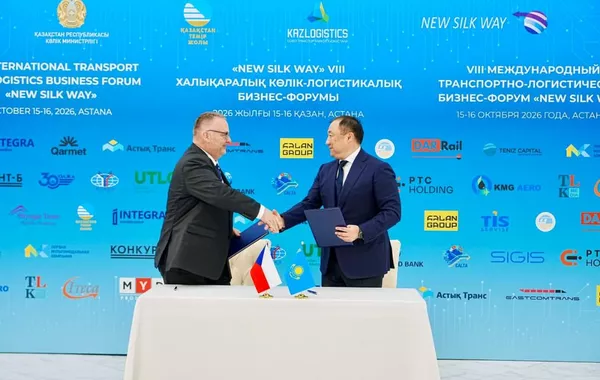
On June 10, U.S. special envoy Sergio Gor met with representatives of all five Central Asian countries for their first in-person Critical Minerals Dialogue in Astana, Kazakhstan. The summit immediately preceded the Astana Mining and Metallurgy Conference, which featured a record number of U.S. participants, including more than 20 companies and government officials, among them Assistant Secretary of Commerce David Fogel, The Caspian Post reports via Foundation for Defense of Democracies.
This increased U.S. presence in a region traditionally dominated by Russia and China comes as part of a broader Trump administration push toward closer collaboration with resource-rich Central Asia, comprising Kazakhstan, Kyrgyzstan, Tajikistan, Turkmenistan, and Uzbekistan. Since 2025, the United States has discussed a range of financing arrangements for the region - including a $700 million Letter of Interest in financing Kazakh tungsten extraction. Officials from the United States and Kazakhstan characterized this week’s events as the push to move tentative agreements toward implementation.
China Exercises Dangerous Control Over Critical Minerals Supply Chains
China overwhelmingly controls supply chains for critical minerals - key inputs to everything from defense technologies to phones. It dominates both mineral supply and processing. A 2025 International Energy Agency assessment determined that China led refining for 19 of 20 considered minerals, on average controlling roughly 70 percent of that market. In some cases, China exercises significantly more influence - producing 80 percent of tungsten, 85 percent of processed cobalt, and 99 percent of primary gallium.
China uses that control as political leverage. In 2024, Beijing blocked certain mineral exports, including gallium, amid trade frictions with Washington. State-linked companies have also manipulated markets to push out competition - such as by driving nickel profits down almost 50 percent at one point only to instigate an almost 400 percent price surge at another. On June 3, the United States approved $2 billion in Development Finance Corporation funding intended in part to finance supply chain security, some of which could be used to support critical minerals projects in Central Asia.
Central Asia Presents a Resource-Rich Alternative
Although Central Asian countries have established resource extraction industries, the region contains some of the world’s most significant underdeveloped deposits of critical minerals. A decade ago, the U.S. Geological Survey identified 384 Central Asian deposits of rare metals and rare earth elements alone, and the countries involved have since announced new mineral development efforts and deposits. They are also undertaking reforms to appeal to foreign investors, such as the partial introduction of English common law.
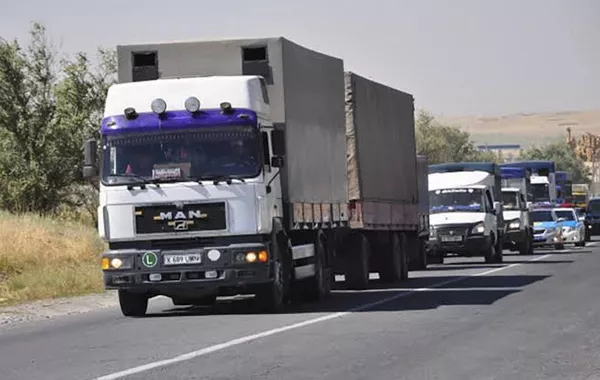
However, U.S. efforts to invest face many hurdles yet to overcome. These jurisdictions carry elevated risk of sanctions evasion, corruption, human rights concerns, and political and legal unpredictability. For example, though Kazakhstan allows the use of English common law in some cases, officials announced in May that they would not enforce a ruling against Gazprom released from a Kazakh court employing English common law. Central Asia also lacks some of the logistical and processing infrastructure to facilitate large-scale, sustained investment, extraction, and transit efforts, with shipments west across the Caspian facing capacity limits. Despite significant discussion, planned investment lags.
The U.S. Must Balance Risk and Opportunity
Investment in Central Asia holds promise for reducing U.S. dependence on China-driven supply chains and for providing the region an alternative to partnership with Beijing and Moscow. However, investment must also balance tremendous geopolitical risk and include enhanced due diligence. U.S. public and private investors should precondition proposed investments on a baseline of regulatory oversight and financial transparency for project-related transactions.
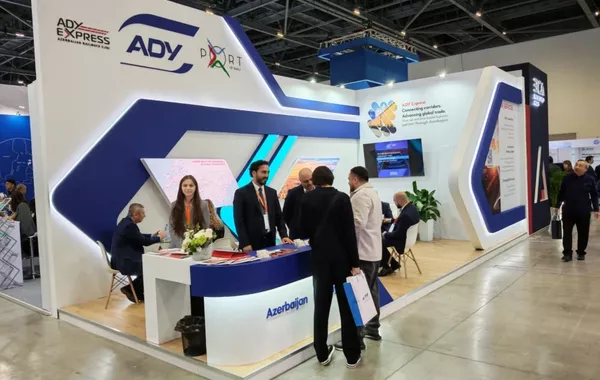
Investors must also address fundamental logistical and processing challenges before companies can commit to major initiatives. For corporations, this means enhanced planning and outreach to local governments. For the U.S. government, this means consideration of financing and further support for logistical corridors, including trade routing through Armenia and Azerbaijan and the broader Middle Corridor.
If these capacities are not developed simultaneously, mining investments will continue to perpetuate Chinese control through reliance on Chinese processing and downstream influence.
By Angela Howard