Central Asian States Need to Join Forces to Solve Water Conundrum – Report
Central Asia’s mounting water challenges are no longer a national issue but a regional one that demands coordinated solutions. Eurasianet features that fragmented water policies, competing national interests, and climate pressure are accelerating risks to agriculture, energy security, and social stability.
Central Asia’s water deficit is reaching the crisis point, according to a new report published by the Washington-based New Lines Institute for Strategy and Policy. Central Asian governments need to take urgent, collective action to create a more efficient water-management institution, if the region is to avert social upheaval, as well as come close to realizing its economic development and trade ambitions, the report contends, The Caspian Post republishes the article.
Providing extensive background on current conditions in Central Asia, the report, titled When Water Becomes Glue: Solving Central Asia’s Water Dilemma Through Collaboration, states that environmental factors, including persistent drought and glacier melt, are not the central source of the region’s water challenges. Wastage due to ineffective management and antiquated equipment is the chief culprit.
“Compounding the resulting crisis is the primitive and grossly wasteful system for irrigation and moving water to cities that Soviet Russia imposed on the entire region,” Frederick Starr, a preeminent expert on Central Asia at the American Foreign Policy Council in Washington, writes in his foreword. “According to some assessments of this messy network of unlined canals and leaking concrete channels, fully 40 percent of the region’s water is wasted.”
It is in the best interests of the United States and European Union, given their stated desire to tap into Central Asia’s abundance of critical minerals, to help regional states to upgrade irrigation canal systems and install water-saving technologies.
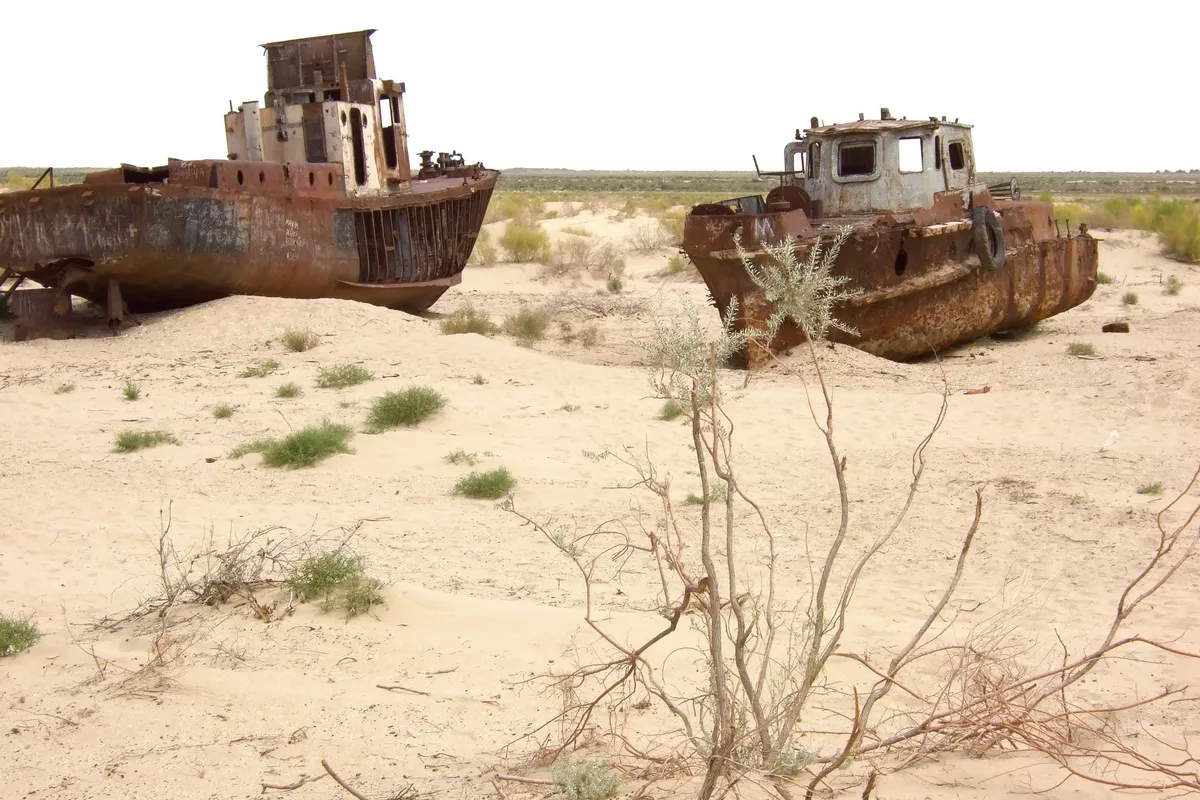
photo: Eurasianet
Central Asia already has multiple, multilateral organizations ostensibly dedicated to managing collective resources, but none has proven capable of enforcing usage quotas or in settling inter-state disputes. A major factor in this is that none of the existing bodies is designed to balance the competing interests of mountainous, upstream states -- Kyrgyzstan and Tajikistan, which possess the bulk of supplies -- and the downstream states of Kazakhstan, Turkmenistan and Uzbekistan, which use most of the water for agriculture during the summer months.
Regional leaders have recognized that current trends are creating a national security threat for the entire region, and have taken tentative steps to address challenges. Yet, so far, there has been more talk than action. The creation of an effective water-management institution could catalyze efforts to establish a regional trade bloc, something that Uzbek President Shavkat Mirziyoyev has called a “Central Asian community.”
“Ultimately, success will depend on their [regional governments’] ability to cooperate and establish an efficient organization that balances competing demands for water, ensuring adequate supplies for irrigating agricultural lands, generating electricity, and accommodating economic growth,” the report states.
Adding to already existing challenges, individual Central Asian states have economic development agendas based on the expansion of water-intensive sectors, including mining, nuclear energy and artificial intelligence.
“The pressure on Central Asia’s water resources will only intensify in the coming years. The region’s population is growing rapidly, and governments are implementing modernization plans centered on water-intensive sectors,” the report notes. “The way forward offering the highest chances of success is through unity via the creation of a comprehensive water-management framework, built and run by the Central Asian states themselves.”