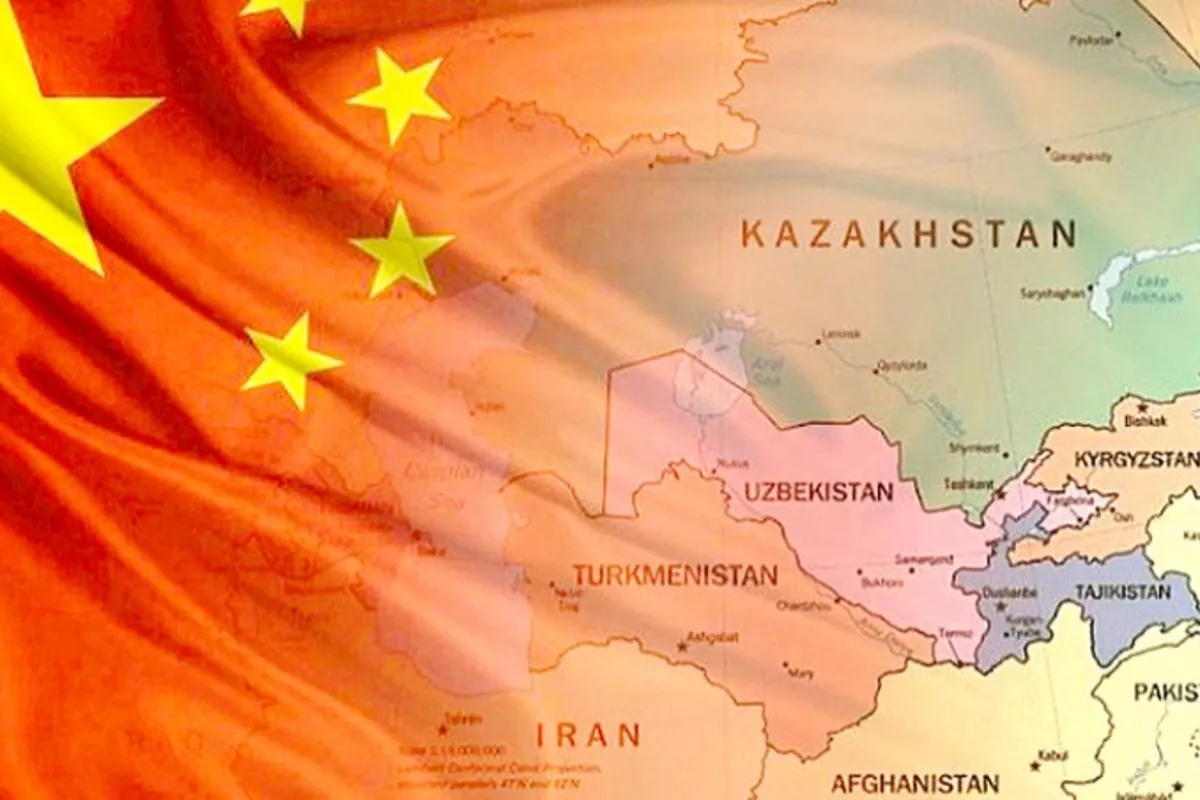
Eurasianet features that China’s trade grip on Central Asia continues strengthening, but a closer look at the figures reveals inconsistencies that raise important questions.
China solidified its position in 2025 as Central Asia’s top trade partner, with overall turnover topping $106.3 billion, a 12 percent increase over the previous year’s total. According to data published by China’s General Administration of Customs, the PRC is the largest trade partner for both the region as a whole, and for each of the five Central Asian countries individually, The Caspian Post reports via Eurasianet.
The regional balance of trade in 2025 was once again lopsided in China’s favor, with Beijing’s exports to Central Asia amounting to $71.3 billion, while imports totaled $35.1 billion. Meanwhile, trade figures reported by several Central Asian states differed markedly from those published by Beijing.
Kazakhstan was China’s largest individual state trade partner, with bilateral turnover growing by 11 percent to $48.7 billion. Kazakh imports ($29.7 billion) from China outpaced exports ($19 billion).
Bilateral Kyrgyz-Chinese trade grew by 20 percent to $27.2 billion, of which Kyrgyz imports accounted for $22 billion. Bishkek sent $5.2 billion in goods and services to China for the year. Curiously, Kyrgyz exports to China have surged over the past three years, rising from a paltry $80 million in 2023, and moving up to $2.8 billion in 2024 before hitting $5.2 billion last year.
The Chinese official data is at odds with Kyrgyz government figures, which show Kyrgyzstan’s entire GDP in 2025 was under $22 billion. Given that Beijing’s numbers show more than $22 billion in exports to Kyrgyzstan, the data published by one country or the other would appear to be inaccurate. A potential explanation for discrepancies is connected to possible sanctions-busting activity. Kyrgyzstan has long been suspected of serving as a conduit for Russia-bound smuggling.
Uzbekistan boosted trade with China by 18 percent to $16.1 billion, thanks to the increase in Tashkent’s imports from the PRC to $14.2 billion; Uzbek exports shrank a little to $1.9 billion. Uzbekistan’s government statistical agency released partial numbers for bilateral trade, reporting a total turnover of $17.1 billion, with exports to China at just under $2.5 billion. The reason for the discrepancies in statistics is unclear. The Uzbek agency also reported that China remains by far Uzbekistan’s largest trade partner, accounting for more than a fifth of the Central Asian country’s total foreign trade.
Tajikistan’s turnover with China rose 12 percent in 2025 to $4.3 billion, according to Chinese customs statistics; Tajik imports reached $3.7 billion and exports were limited to $560 million. Tajikistan’s customs agency released somewhat different data. While the number for Tajik exports was in the same range, $524 million, Tajik authorities set the import total at $2.3 billion. The discrepancy appears to reflect the amount of Chinese goods that are imported to Tajikistan without being officially recorded to avoid customs tariffs. The Tajik customs also reported that China is the Central Asian nation’s largest trade partner.
Turkmenistan was the only Central Asian state running a surplus with China, thanks to natural gas exports. But bilateral trade actually declined by 5.6 percent in 2025 to $10 billion, compared to the previous year’s total. Turkmen exports in 2025 to China registered $8.4 billion, while imports rose 55 percent over 2024’s total to $1.6 billion. As a result of its lower gas exports to China, Turkmenistan surrendered to Russia its long-held position as the largest supplier of pipeline gas to the PRC.
Photo:VCG
Kazakhstan
Astana and Beijing are developing a draft agreement on water sharing on transboundary rivers, as announced by Kazakhstan’s Ministry of Water Resources and Irrigation. The draft agreement’s main aim is to ensure that water levels in the IliRiver, as well as Lake Balkhash that it feeds, remain stable. In addition, an annual meeting of the Kazakh-Chinese Commission on Environmental Protection Cooperation discussed environmental issues, including water, but no significant breakthroughs were reported.
The number of Chinese companies and Chinese-Kazakh joint ventures operating in Kazakhstan grew by nearly 50 percent to 9,252 in 2025, up from 6,227 in 2024. With the exception of Uzbek companies, the number of which grew by close to 2,500, business expansion from other countries in Kazakhstan mostly remained flat. The number of Russian entities in Kazakhstan even declined.
Kazakh Invest National Co. and China’s Guoyou Materials Group are moving ahead with a $1.1 billion investment project to develop the port of Kuryk in Kazakhstan. The project is presently undergoing a feasibility study.
Officials have agreed to build a new bridge in the East Kazakhstan region to replace an antiquated span. The project will enable an increase in truck traffic between Russia and China via Kazakhstan.
Officials in Kazakhstan’s Aktobe region signed an MoU with Chinese company Suzhou Hunan New Materials to build a processing facility for chromium. The company intends to invest up to $150 million in developing the first of the project’s two stages. Meanwhile, Kazakhstan’s Ferro-Alloy Resources Ltd. has signed an MoU to deliver up to 360,000 tons annually of carbon black substitute to be used in the manufacture of Chinese tires by Qingdao Master Tyre Co., Ltd.
A Kazakh consulate has opened in Guangzhou, the capital of the coastal Chinese province of Guangdong. The new consulate will serve provinces in Chine’s export/manufacturing heartland.
China will offer another batch of 73 full-ride scholarships to Kazakh students looking to study in China for the 2026-27 academic year under an agreement signed by the Chinese and Kazakh education ministries in 2003.
A Kazakh-Chinese scientific agricultural center will open as a joint initiative between Kozybayev University and the Henan Agricultural Investment Group. It will facilitate the development of more efficient crop cultivation techniques in North Kazakhstan, a key agricultural region.

photo: 24kg
Kyrgyzstan
Kyrgyzstan’s ministries of finance and emergency situations signed an MoU with Sino Pharmaceutical Equipment Development Co. Ltd, a Chinese company that operates 40 factories producing medical equipment. The agreement aims to help Kyrgyzstan import cutting-edge medical equipment and train Kyrgyz personnel in their use.
China’s Alma Finance Bank received a commercial banking license to operate in Kyrgyzstan.
Kyrgyzstan’s Deputy Minister of Transport and Communications, Almaz Turgunbaev, presided over a meeting on January 19 that considered “problems that have occurred, and ways to solve them” relating to the construction of the China-Kyrgyzstan-Uzbekistan railway. A report concerning the meeting distributed by Open.kg provided no details on the substance of the discussions. Turgunbaev also toured the construction site of the administrative building of railway’s management entity.
photo: Caspian Post
Tajikistan
Tajik workers at the Chinese-run Zarafshon gold mine protested against low wages and the significant pay gap compared to the salaries of their Chinese colleagues. The protest follows recent deadly attacks on Chinese workers near the Afghan border. Those attacks prompted Beijing to order the evacuation of Chinese workers at a variety of work sites in the vicinity of the Afghan-Tajik border.
The Institute of Economics and Trade at Tajik State University of Commerce and China’s Guilin University of Technology signed an MoU to conduct student and professor exchanges, as well as implement joint research projects and hold joint events.
Photo: VCG
Turkmenistan
Turkmenistan’s ambassador to China met with the secretary-general of the China-led Shanghai Cooperation Organization to discuss expanding cooperation, according to a statement issued by the Turkmen Foreign Ministry. The statement noted there exists “significant potential” for cooperation in trade, transport logistics, and the humanitarian sphere.
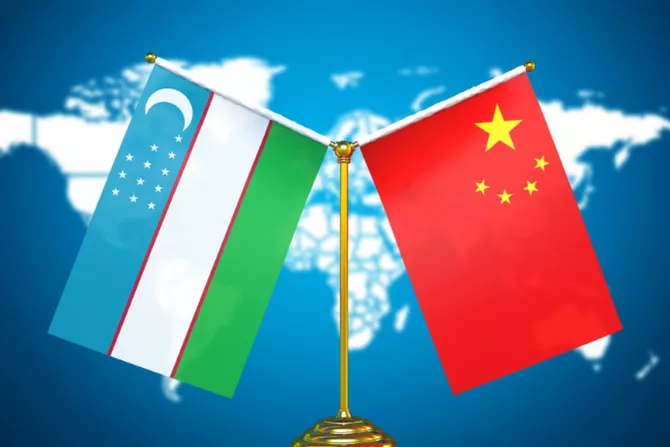
Photo: VCG
Uzbekistan
Tourism between Uzbekistan and China is exploding. The number of Chinese citizens visiting Uzbekistan for tourism nearly quadrupled to 278,900 in 2025 from 74,300 in 2024. Meanwhile, the number of Uzbeks vacationing in China nearly tripled to 52,600 from 18,347, according to Uzbek official statistics. In mid-2025, Uzbekistan and China introduced a visa-free regime for short-term visits.
Uzbek officials signed deals with Chinese company JDB Group Ltd covering the joint development of gold deposits in the Surkhandarya region and the implementation of a project to process precious metals.
Chinese and Uzbek government and private entities signed a $10-million deal to create a laboratory in Uzbekistan for the testing of construction materials.
The Uzbek consulate in Guangdong province teamed up with the region’s Chamber of Commerce to organize a trade fair highlighting Uzbekistan’s economic potential. Representatives of more than 200 Chinese companies attended the event. The consulate and chamber also reached an agreement to bring Chinese business missions to Uzbekistan’s provinces.