Fueling uncertainty: How US-Iran Tensions Shape Energy Markets
Daily Sabah, a Turkish daily newspaper, has published an analytical article analyzing the potential impact of the ongoing US-Iran tensions on energy markets.
The Caspian Post republishes the article.
The current picture dominating global energy markets can, at a first glance, be read as one of surprising calm and controlled optimism. Messages of coordination and supply security, delivered at the International Energy Agency ministerial meeting, together with the agreements signed at the LNG2026 in Qatar, have presented the market with a strong perception of supply security.
Meanwhile, structural assurance provided by long-term liquefied natural gas (LNG) contracts has also reinforced this perception, creating a belief that actors can manage short-term shocks.
Yet some serious geopolitical risks are accumulating beneath the surface. What is particularly striking, is that this sense of comfort has emerged at a time of escalating tensions between Washington and Tehran and the negotiation process continues to carry uncertainty.
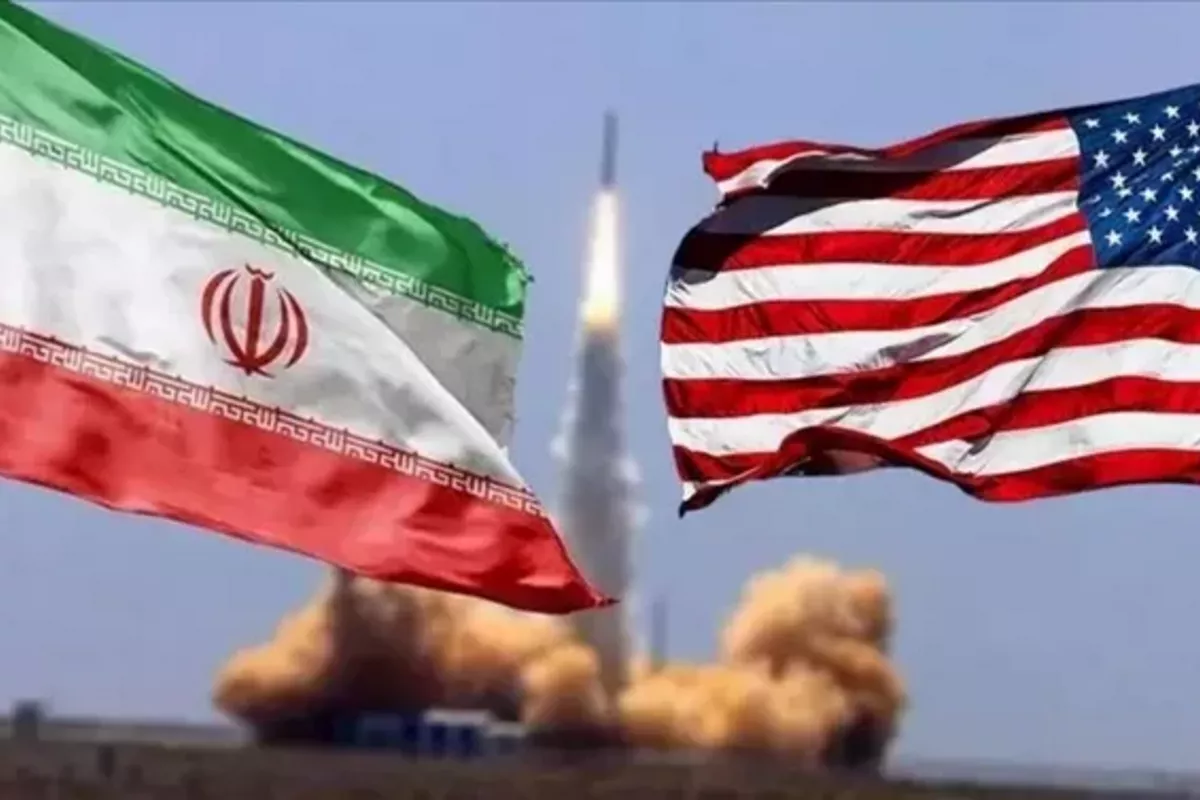
The key reason why this sector-wide calm is surprising lies in the increasingly hardening rhetoric and mutually firm demands along the Washington-Tehran line. While Washington demands that Iran significantly limit its nuclear program and fully comply with international inspections, Tehran sets the lifting of sanctions and the removal of economic pressure as a precondition. This reciprocal positioning narrows the ground for negotiation and, at the same time, brings about a process where power projection becomes more visible.
At this point, the United States’ globally unique military capacity comes into play, not only as an instrument of intervention but also as a carefully calibrated deterrence mechanism. By positioning its military presence and operational capabilities in a controlled and measured manner, without engaging in direct conflict, Washington aims to deliver a clear message of power to the other side while keeping tensions manageable.
This approach stems not only from possessing hard power elements but also from the strategic judgment of knowing when and how to use that power. For this reason, it is even more noteworthy that energy markets assess these developments as a limited and scaled risk factor despite the presence of such high-level military capacity and diplomatic tension on the ground.
Indeed, Brent crude has exceeded the $70 threshold and appears to have stabilized in the $71-72 range. This increase indicates that a geopolitical risk premium has been added to prices. However, the sudden and sharp spikes observed during previous crises have not yet occurred. Despite temporary and partial restrictions put in place due to military exercises in the Strait of Hormuz, no permanent disruption has emerged in international energy traffic and physical supply flows have largely continued.
A similar calm prevails in natural gas and LNG markets. The continuation of Qatari LNG shipments as planned strengthens the perception of supply continuity, particularly for European and Asian markets. The agreements signed under LNG2026, focusing on long-term sales contracts and supply security, do not eliminate potential spot market price pressures, yet they provide a functional buffer mechanism that limits the transformation of shocks into systemic panic pricing.
Although Iran’s production capacity remains theoretically an important variable, at the current stage, it has not created a decisive break either in physical flows or in pricing behavior. This picture points not to a crisis-pricing phase but to a period of calibrated risk premium. Although geopolitical tension remains high, energy markets assess this tension not as a systemic shock but as a manageable area of uncertainty.
In this context, Türkiye has accelerated its steps toward diversifying gas supply and noticeably deepening LNG trade with the US. This creates a significant advantage for Ankara in terms of both supply security and price flexibility.
However, if negotiations along the Washington-Tehran axis produce negative outcomes, uncertainty remains as to what extent and in what manner Iran would use the energy cards it holds. Although a direct supply cut by Iran is a low probability, creating indirect effects through steps that would increase regional tensions stands out as a more likely scenario. At this point, energy flows passing through the Strait of Hormuz become particularly critical.
Türkiye and Qatar stand out as two important balancing elements in this equation. While the uninterrupted continuation of Qatar’s LNG exports remains a fundamental source of confidence for European markets, Türkiye’s ability to assume the role of a flexible transit and trading hub through its gas pipeline and LNG infrastructure can serve as a critical buffer in managing any possible shocks.
However, any disruption in the Strait of Hormuz could directly affect Qatari LNG flows, weaken Europe’s supply security and create upward pressure on prices. In such a scenario, while the European market may turn toward more aggressive LNG demand, Türkiye may face rising costs, yet at the same time assume a higher volume and more strategic role in line with its objective of becoming a trading hub. Therefore, Türkiye-Qatar can become a determining axis in terms of supply security and market balancing capacity during periods of crisis.
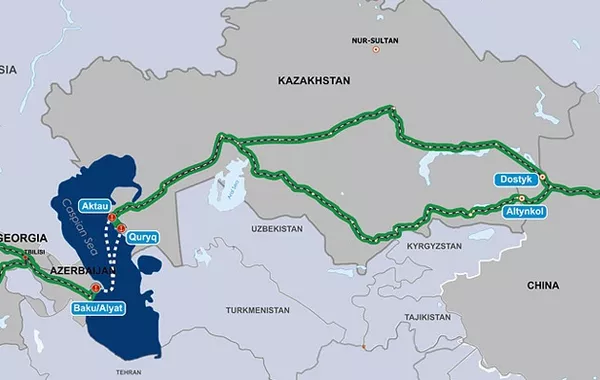
The case of the Zangezur Corridor, which was initially designed as a transportation and trade project along the Azerbaijan-Armenia line but later evolved into the "Trump Corridor" due to great power competition and U.S. influence, clearly demonstrates how energy and geopolitics are intertwined. A similar question can be asked today of the Strait of Hormuz: can this narrow passage, which constitutes the heart of global oil and LNG flows, move beyond being merely a physical strait and turn into a "Trump Strait," directed by the United States?
The U.S.' energy policies have moved beyond its identity as a producer and transformed into a strategic instrument that manages geopolitical risks, perceptions of supply security, and pricing. In this framework, control of Hormuz is evaluated not through direct military dominance, but through the capacity to determine the risk premium in global energy markets, to gain advantage in LNG competition, and indirectly shape the direction of trade flows. In such a scenario, Iran’s role would not remain as an actor that completely closes the corridor, but as a balancing element that raises tension on this geopolitical stage and influences prices. Therefore, the question of whether Hormuz becomes a Trump Strait refers to a deeper debate over power concerning who determines the psychology and direction of energy markets, rather than physical control.