Geologists Reveal Tethys Ocean’s Role in Central Asia’s Landscape
A new study by the University of Adelaide in phys.org describing science and technology suggests that the ancient Tethys Ocean played a key role in shaping the landscapes of Central Asia. Researchers say the long-vanished ocean influenced the region’s mountains, basins, and river systems, leaving a geological legacy that can still be traced today.
New research from Adelaide University suggests the power of the ancient Tethys Ocean might have shaped Central Asia's topography during the Cretaceous period.
Researchers made the discovery using a big-data approach that involved hundreds of thermal history models that have been published for Central Asia throughout three decades of research.
Creation of the landmass's landscape is often attributed to the interplay between tectonic, climatic and mantle-related processes over the last 250 million years.
"We found that climate change and mantle processes had only little influence on the Central Asian landscape, which persisted in an arid climate for much of the last 250 million years," said Dr. Sam Boone, who was a post-doctoral researcher at Adelaide University when the research was conducted.
"Instead, the dynamics of the distant Tethys Ocean can directly be correlated with short-lived periods of mountain building in Central Asia."
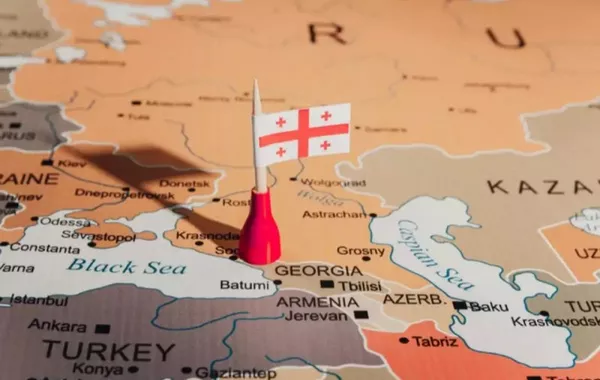
The once mighty Tethys Ocean closed during the Meso-Cenozoic period, which spans the last 250 million years. All that remains of it today is the Mediterranean Sea.
How tectonic shifts shaped the region
"The present-day relief of Central Asia was largely built by the India-Eurasia collision and ongoing convergence," said co-author Associate Professor Stijn Glorie, from Adelaide University's School of Physics, Chemistry and Earth Sciences.
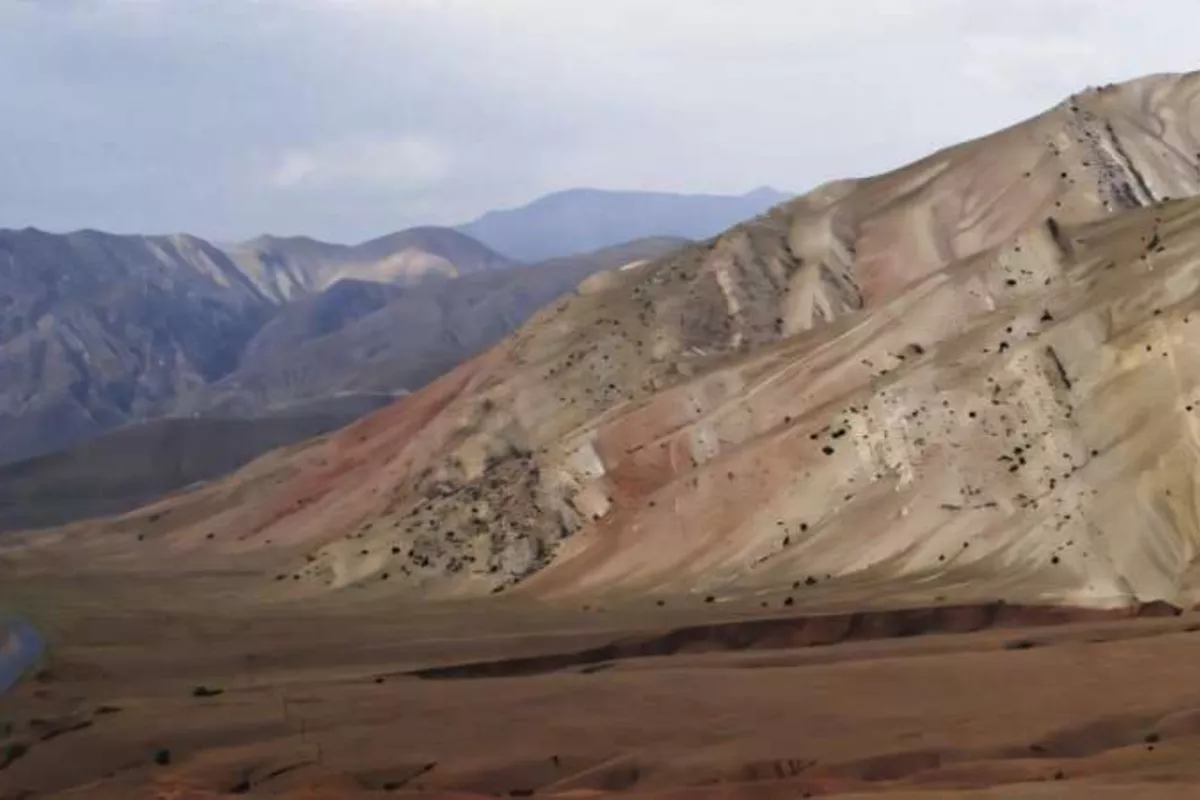
"However, during the Cretaceous periods, dinosaurs would have seen a mountainous landscape as well, similar to the present-day Basin-and-Range Province in the western US.
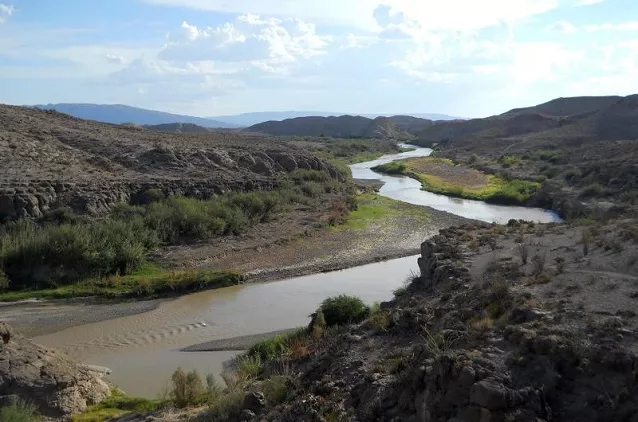
photo: National Park Service
"It is thought that the extension in the Tethys, due to rollback of subducting slabs of ocean crust, reactivated old suture zones into a series of roughly parallel ridges in Central Asia, up to thousands of kilometers away from the Himalaya collision zone."
Using thermal models to reveal history
The thermal history models that underpin this research allowed the researchers to reveal previously untold histories of how Earth has formed.
"These models were constructed using thermochronology methods and reveal how rocks cooled down when they are brought towards the surface during mountain uplift and subsequent erosion," Associate Professor Glorie said.
"We analyzed a compilation of thermal history models in function of plate-tectonic models for the Tethys Ocean evolution, as well as deep-time precipitation and mantle-convection models."
Applying the approach to other regions
Associate Professor Glorie, whose study was published in Communications Earth & Environment, said the same approach could be applied to other areas of the globe.
"There are many parts on the planet where the drivers and timing for mountain building and/or rifting are poorly understood. For example, closer to home, the break-up history of Australia from Antarctica is somewhat enigmatic," he said.
"Australia drifted away about 80 million years ago, but there is no obvious imprint of this in the thermal history record of either the Antarctic or Australian plate margins. Instead, they record much older cooling histories.
"We are applying the same approach as used in Central Asia to advance understanding of the Australia-Antarctica break-up."