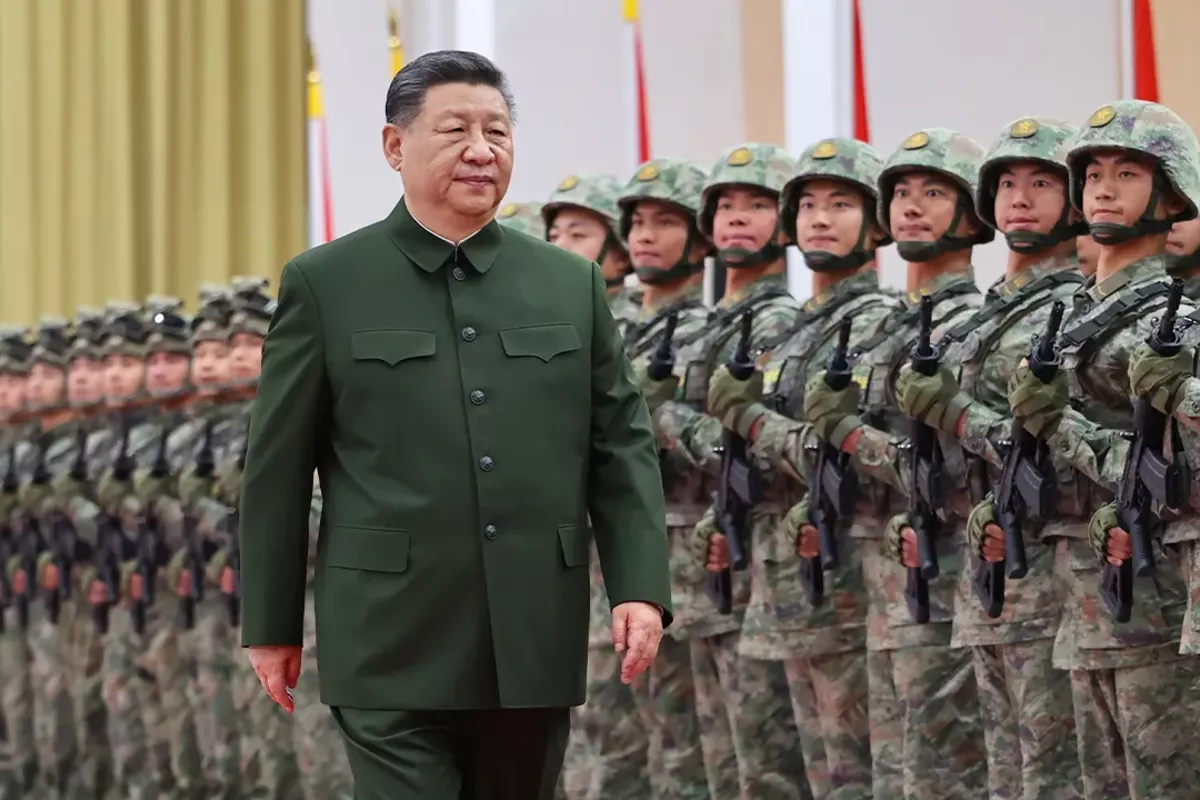
Late January 2026 Marked A Moment When Chinese Leader Xi Jinping’s Long-Running Anti-Corruption Campaign In The People’s Liberation Army (PLA) Reached A Level Difficult To Explain By Financial Misconduct Alone.
China’s Ministry of National Defense announced investigations into General Zhang Youxia, vice chairman of the Central Military Commission (CMC), and General Liu Zhenli, head of the CMC’s Joint Staff Department. The official wording was familiar within China’s political system: “serious violations of discipline and law.”
The news immediately generated two competing interpretations. The first framed it as another routine anti-corruption sweep, a logical continuation of Xi’s policy. The second suggested “internal instability,” accompanied by rumors of a supposed palace-style plot against China’s top leader. It is essential to separate fact from speculation. What is confirmed is the existence of investigations and significant staff turnover within the military leadership. Claims about a “coup attempt” remain unverified and circulate only as informal conjecture, without confirmation from authoritative sources.
Why These Figures Change the Equation
Zhang Youxia is not a marginal general or a purely technical figure. Reuters has noted that he was considered one of Xi’s key military allies and a central figure in the modernization of the PLA. His investigation makes him the highest-ranking military official targeted in the multi-year campaign.
Liu Zhenli, in turn, held a position directly tied to operational command and coordination. These are not peripheral actors but individuals at the very core of China’s military decision-making system.
The public impact of such moves is unavoidable. Even if the management machinery continues to function, the atmosphere within the senior officer corps inevitably changes. Any elite structure in which top figures are suddenly removed and investigated without detailed explanation begins to operate under heightened caution and self-censorship. For the military apparatus, this means one thing above all: political loyalty increasingly outweighs autonomy and, potentially, initiative.
A “Paralyzed” CMC: Not a Question of Numbers, but of Trust
The Central Military Commission is traditionally viewed as the supreme governing body of the PLA. Under normal conditions, in addition to the chairman (Xi Jinping), it consists of six other members. Following the January developments, the Associated Press described the situation as follows: of the six members besides Xi, only one remains effectively “in place.”
Even if vacancies are formally filled quickly, the very existence of this window of uncertainty is a telling indicator. It demonstrates that the logic of the current campaign allows strikes against individuals who until recently were considered system-forming. This reinforces the personalization of power and simultaneously weakens the role of “collective leadership” within the military sphere.
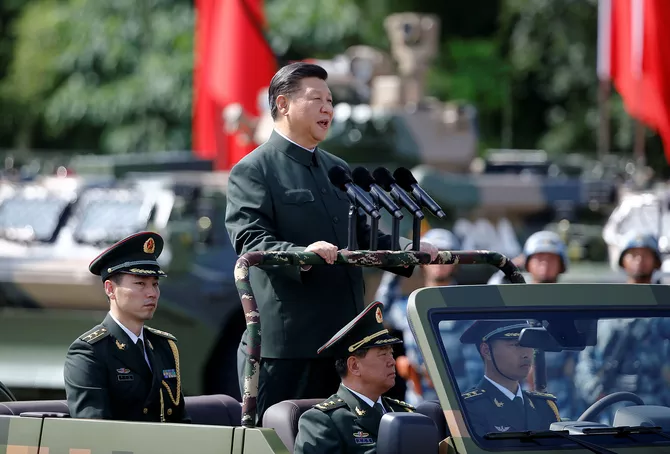
Photo credit: Reuters
The Purges Did Not Begin Yesterday: The Rocket Force as a Prologue
To understand 2026, one must look back at 2023. That year saw the most visible public wave of investigations affecting the PLA Rocket Force, one of the most sensitive components of China’s military system, responsible for strategic missile capabilities.
Analysts documented the removal of Rocket Force commander Li Yuchao and several of his deputies, including Liu Guangbin, in connection with anti-corruption probes and staff reshuffling. The core message of this prologue is straightforward: when purges start in the missile segment, the issue is not only about money flows but about confidence in the management of a critical pillar of national defense.
Rising Budgets, Continuing Purges: The Paradox of Modernization
Despite the staffing upheaval, China continues to steadily increase its military spending. Officially, defense outlays have grown by 7.2 percent for three consecutive years - 2023, 2024, and 2025. In 2025, according to official figures, the defense budget reached 1.784,665 trillion yuan (roughly $249 billion by cited estimates), with authorities emphasizing that this was the same growth rate as in previous years.
Here lies a contradiction. Modernization requires a stable managerial hierarchy, transparent procurement procedures, long planning cycles, and clear accountability. Large-scale purges within the defense establishment almost always produce an “initiative freeze”: officials minimize risk, avoid decisions, and push responsibility upward. Reuters has directly linked the purges to effects on procurement and defense companies, even as analysts believe day-to-day military operations remain stable.
October 2025: A Marker of Systemic Campaign
In October 2025, Reuters reported that two top generals were expelled from the Communist Party and the military on corruption charges - among the highest-ranking casualties of the purge that began in 2023. Shortly afterward, Reuters noted the promotion of Zhang Shengmin, a key figure in the military’s disciplinary and anti-corruption track, to the position of “number two” in the military hierarchy, amid the replacement of purged leaders.
This matters because it reveals the architecture of the campaign: old networks are dismantled while the disciplinary apparatus is simultaneously strengthened as a political instrument of control.
Rumors of a “Coup”: Why They Arise and Why They Should Not Be Treated as Fact
Rumors of coup attempts tend to surface in systems characterized by:
1. Extremely closed information environments;
2. Non-transparent staff decision-making;
3. A highly personalized political center.
Contemporary China fits all three conditions. However, from the standpoint of professional journalism, the rule is simple: without confirmation from reliable sources, such claims remain hypotheses or noise. What is confirmed by established reporting is something else - sharp and “abnormal” changes at the top of the PLA, closely monitored, among others, by Taiwan.
Taiwan and the External Dimension: Purges Do Not Remove the Threat, but They Change Calculations
Taipei’s reaction is instructive. Taiwan’s defense minister publicly stated that the changes are “abnormal,” but that the level of threat remains and defense readiness must not be reduced. This reflects the dual nature of the situation. On one hand, staff turnover can theoretically reduce the efficiency of large-scale operations in the short term. On the other, Beijing’s political logic may push toward more demonstrative military activity to offset perceptions of internal instability and reaffirm control.
What It Means and What Comes Next
The central question observers are asking is whether the purges in the PLA are a sign of weakness or strength. In reality, they are both, and that is precisely why the issue matters.
They are a sign of strength because the political center demonstrates the capacity to strike at the highest figures. For Xi Jinping, this sends a clear message to elites: past service and proximity to power do not confer immunity. Such an approach can tighten discipline, reduce autonomous behavior, and increase vertical control, particularly in light of modernization goals toward 2035 that feature prominently in official rhetoric.
They are also a sign of vulnerability because the very need for such purges points to underlying problems: entrenched corruption practices, conflicts of interest, failures in procurement oversight, and possibly competition among influence groups. In the short term, this may produce “institutional caution,” with officers and defense managers favoring safe choices over unconventional ones.
Over the next 12-18 months, several scenarios are plausible:
1. Rapid stabilization: Beijing quickly fills vacancies in the CMC and demonstrates the restoration of a normal management structure while continuing targeted investigations. This would reduce the external impression of paralysis while preserving the political effect of the campaign.
2. Continued cleansing: Investigations expand, affecting additional segments of the PLA and the defense industry. External partners and rivals would then conclude that internal control is being prioritized over the pace of modernization, signaling a prolonged restructuring phase.
3. Hard personalization: If staffing decisions become increasingly tied to the disciplinary apparatus and personal appointments, the PLA will become even more politically loyal but potentially less operationally flexible. This could raise the risk of miscalculation in crises, especially where initiative at the command level is required.
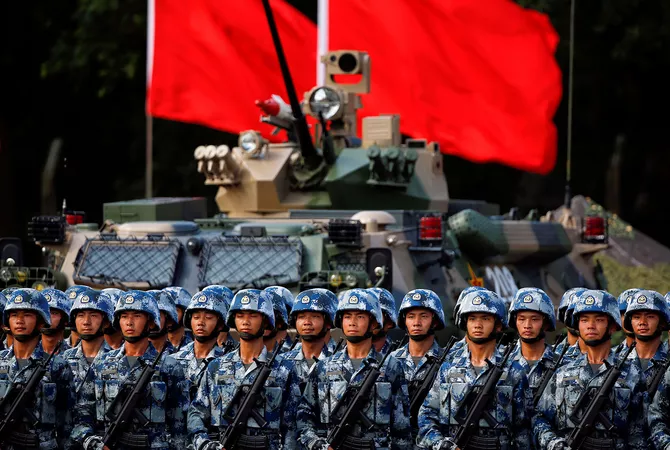
Photo credit: Reuters
Which path emerges will be indicated by three key markers:
How quickly, and by whom, key CMC positions are filled;
Whether pressure on defense corporations and procurement chains continues;
Whether the intensity of military activity around Taiwan changes amid leadership upheavals.
As of late January 2026, the overall conclusion is clear: this is not an isolated case, but a structural campaign in which anti-corruption serves a political function, reprogramming the military toward a model of absolute vertical control. This strengthens the center’s grip but also reveals the cost of such control: reduced institutional resilience, heightened caution, and a defense governance system increasingly dependent on the staffing logic of internal politics.
Ultimately, what is unfolding inside the PLA reflects a broader shift in China’s overall model of governance. The country is moving away from a system in which key institutions possessed limited autonomy toward a configuration in which all strategic levers are concentrated in a single political center. Within this logic, the military ceases to function as an independent corporate actor and is finally transformed into an extension of the party apparatus.
This strengthens control and reduces the likelihood that an alternative political actor could emerge from within the officer corps. At the same time, the price of such stability rises. The system becomes less resilient to unexpected crises, as it loses mechanisms of collective deliberation and distributed responsibility.
For external observers, the main conclusion is that the purges in China’s military are not a sign of imminent collapse or an inevitable coup. Rather, they are a symptom of deep structural transformation, in which China is deliberately sacrificing part of its institutional flexibility in exchange for maximum political control.
In the short term, this model can function effectively. In the long term, however, it creates risks associated with overestimating the capabilities of the center and underestimating the complexity of modern warfare, where decisive importance is attached not only to technology and budgets but also to the quality of command.
Therefore, the current wave of purges is less a story about corruption than a story about what the Chinese state is becoming in the Xi Jinping era: more centralized, more personalist, and simultaneously more vulnerable to its own internal contradictions.