Hyper-Connectivity Put to Test: Israel/US and Iran War and Türkiye's Critical Role
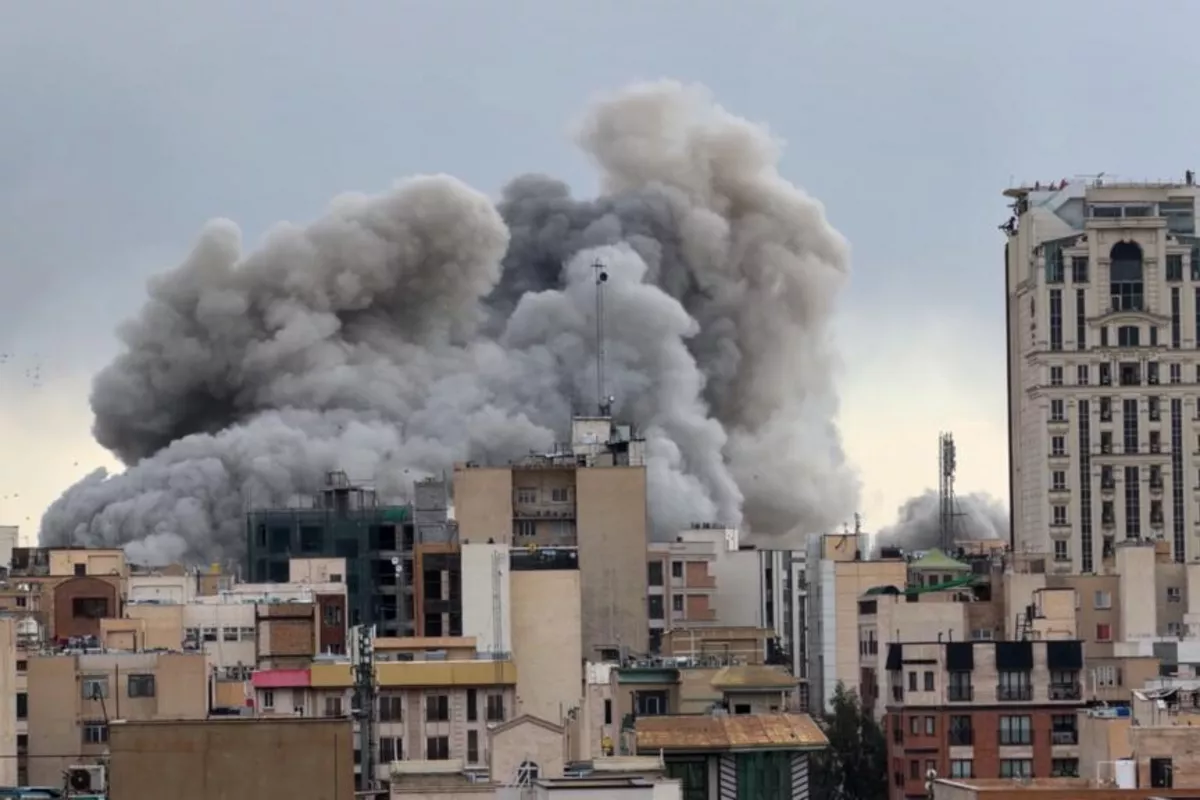
Now that the first month of the US-Israel war against Iran -- which began on February 28, 2026 -- is behind us, the Houthis joining the fray on Iran's side has significantly raised the stakes across the region. It is clear that the supply crisis centered around the Strait of Hormuz has the potential to spiral into a far deeper, global-scale crisis, especially as the Bab al-Mandeb Strait is being pulled into the conflict with full force.
Yet at this juncture, an alternative geostrategic reading is needed -- one that shakes established paradigms. Whenever the vital importance of the Bab al-Mandeb and Hormuz straits is discussed in terms of global political economy, the analytical lens almost invariably narrows to energy supply security. While the international system remains trapped in the anxiety of "will hydrocarbon flows be disrupted?", a critical reality continues to be stubbornly ignored: the depths of the Red Sea are far more than just an oil transit corridor. This strategic waterway is also home to another lifeline of the 21st century -- one at least as precious as oil, and far more critical to the global security architecture: data corridors.
What makes this threat even more alarming is that the actors involved are deliberately exploiting the attribution problem -- the near-impossibility of conclusively proving who is behind an act of sabotage -- as an asymmetric weapon when targeting submarine fiber-optic networks. By making it virtually untraceable who caused the destruction 60 meters below the surface, these actors effectively sidestep international law. Whereas identifying the origin of a missile launched at an onshore energy facility is relatively straightforward, a severed fiber cable can be conveniently blamed on a passing commercial vessel's anchor or natural seismic activity, granting the perpetrators a wide cushion of plausible deniability. This cloak of anonymity provided by the attribution problem emboldens these actors and turns data lines into one of asymmetric warfare's most devastating yet remarkably low-cost targets.
The Oil of the 21st Century and "Hyper-Connectivity"
The fiber-optic cable networks running along the Red Sea floor carry the flow of information between Asia and Europe, linking continents together. With their numbers reaching 570 worldwide, these submarine cables are the primary infrastructure underpinning the international system's "hyper-connectivity" -- and 17 of them pass directly beneath the Red Sea. Carrying 90 percent of data traffic between Asia and Europe, this corridor also serves as a critical lifeline for the digital infrastructure of the Middle East, Africa, and the Gulf states.
Yet this hyper-connectivity comes with its own asymmetric threats and structural vulnerabilities -- and the recent past has offered the starkest examples. In 2024, the severing of four submarine fiber-optic cables in the Red Sea, through a combination of sabotage and accidents, caused severe disruptions to internet connectivity between Europe and the Middle East. Considering how vital uninterrupted data flow is to sectors like banking, finance, and corporate communications, even these relatively short-lived outages inflicted significant financial losses across global markets, hitting India and the Gulf states particularly hard. When similar incidents recurred in 2025, they served as yet another reminder of just how fragile this corridor really is.
The Growing Sabotage Risk at Bab al-Mandeb and Its Catastrophic Potential
Taking both the historical and present-day context into account -- a wartime reality in which Iran has sealed off the Strait of Hormuz and the Houthis have joined the war -- the risk to submarine fiber-optic cables in and around the Bab al-Mandeb Strait has reached an all-time high. The strait's name, which means "gate of grief" in Arabic, connects the Red Sea to the Gulf of Aden and the Indian Ocean through a narrow chokepoint. With its shallowest depth at a mere 60 meters, the cable networks in the area are dangerously exposed to potential undersea sabotage. So what happens to the global system if the feared scenario materializes? The answer lies in the cascading fallout that such an act of sabotage would unleash.
In the first scenario -- partial damage, where only some of the cables are severed -- digital traffic would not grind to a complete halt. Operators would reroute data flow through the Cape of Good Hope, the Mediterranean, or other terrestrial backbones. But this rerouting comes at a cost: higher latency and reduced bandwidth. For algorithmic trading platforms and High-Frequency Trading (HFT) systems that operate on millisecond margins, even a slight increase in latency means billions of dollars in arbitrage losses. Meanwhile, synchronization failures in the SWIFT network -- the backbone of global interbank money transfers -- would disrupt commercial payments, leaving internet connectivity slower, vastly more expensive, and dangerously fragile. This is not speculation. it is exactly what the world witnessed during the cable incidents of 2024 and 2025.
In a graver scenario -- multiple simultaneous strikes triggering a regional shock -- several main cable lines in the Red Sea are knocked out at once. This would directly paralyze cloud-based business operations running along the Asia-Europe corridor. With the massive data centers in the Gulf states cut off from Europe, e-commerce across the Middle East would grind to a halt, airline reservation and logistics tracking systems would crash, and even remote diagnostics and automation in the healthcare sector would be rendered useless. This would be far more than a simple "internet outage" -- it would be the equivalent of the global digital economy's nervous system shutting down.
The third scenario is the bleakest, yet it cannot be ruled out: a repair crisis that snowballs into global collapse. Even when submarine cables are damaged by natural disasters, it takes repair vessels days to reach the site. In an active warzone, that timeline becomes completely unpredictable. Deploying civilian repair ships into a strait that has been mined or is under live fire could prove virtually impossible -- both financially and practically -- given the special clearances required, the staggering war-risk insurance premiums, and the need for military escorts. A "dark period" stretching on for months would bring supply chains to a complete standstill. Without real-time data tracking of energy cargoes, container ships, and international trade flows, panic selling would sweep through global markets. The world may be bracing for a conventional energy crisis as it watches the standoff at the Strait of Hormuz -- but no one can guarantee that a far more devastating data crisis is not already at the door. The shockwave of such a crisis could magnify the destruction wrought by the energy crisis through a multiplier effect, offering the entire world a painful demonstration of just how ruinous "non-kinetic" warfare can be.
The Solution: Türkiye as a "Terrestrial Digital Corridor"
One of the surest ways to avert this potentially dystopian crisis is the urgent construction of alternative routes. This is where Türkiye must act proactively -- positioning itself as a global data transit hub is not merely an opportunity but a historical imperative. The strategic moves that would turn Türkiye into a "terrestrial digital corridor" are grounded in the country's inherent potential as a reliable and stable route. Redundant, secure overland fiber-optic networks running through Türkiye -- along the Development Road Project planned via Iraq and the east-west Middle Corridor route -- are capable of defusing these global digital shock threats.
In this way, the "digital bridge" role that Türkiye would assume would not only safeguard regional stability but also strengthen Türkiye's normative power within the international system while reinforcing its digital sovereignty. The Republic of Türkiye -- as a major state that prioritizes stability, peace, international law, and diplomacy at both the regional and global levels -- has the potential to serve as a lifeline for humanity and the global economy in this looming data bottleneck.
See the original aticle here