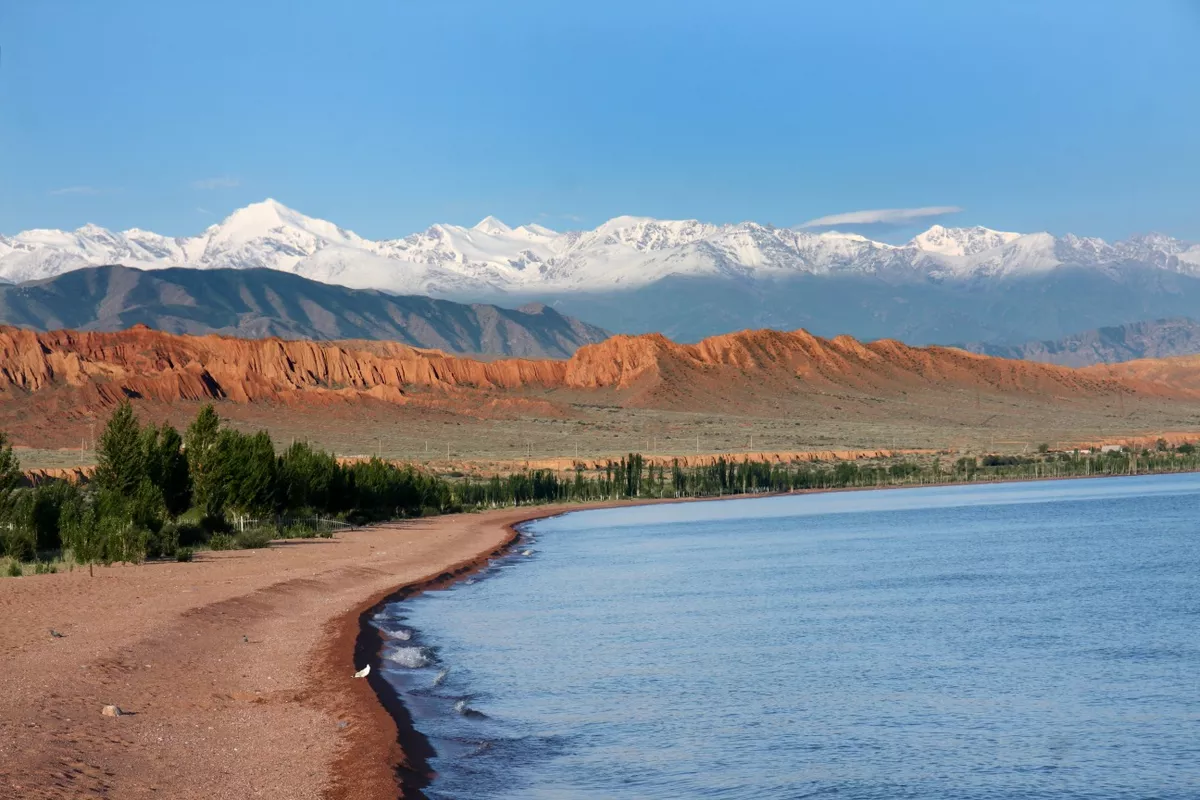
When Kyrgyzstan’s Deputy Prime Minister and Minister Bakyt Torobayev warned at the World Governments Summit in Dubai that climate change is already affecting Issyk-Kul Lake, he was not projecting a distant or hypothetical risk. His remarks reflected an unfolding reality: Issyk-Kul is under compound pressure from climatic shifts, intensifying human use, and institutional constraints that together threaten the long-term stability of one of Central Asia’s most important natural systems.
Issyk-Kul is more than a geographic landmark or cultural symbol. It is a strategic national asset whose ecological health underpins tourism, regional livelihoods, and Kyrgyzstan’s environmental credibility. As a closed, high-altitude lake with no outlet, Issyk-Kul functions as a self-contained hydrological system. Water enters through rivers, snowmelt, and precipitation, and exits primarily through evaporation and human withdrawals. When inflows decline or withdrawals increase, the system has no natural release valve. The result is a falling water level, altered chemistry, and cascading ecological and economic effects.
This vulnerability is now being amplified by climate change. Rising temperatures are altering precipitation patterns, accelerating glacier retreat, and increasing evaporation. At the same time, growing water demand from agriculture, settlements, and tourism is drawing more heavily on the rivers and aquifers that sustain the lake. Weaknesses in wastewater treatment and environmental oversight further intensify the strain. Together, these pressures place Issyk-Kul at the center of a national challenge that blends climate adaptation, development policy, and environmental governance.
A Long-Term Decline Reaching Political Urgency
The scale of Issyk-Kul’s transformation helps explain why it has moved from a technical concern into a political priority. Since the mid-19th century, the lake’s water level has dropped by nearly 14 meters, while total water volume has declined by approximately 85 billion cubic meters. These figures are not abstract measurements. They translate into real changes along the shoreline: the disappearance of shallow littoral zones that support fish reproduction, altered habitats for birds and aquatic organisms, and the steady retreat of beaches that once formed the backbone of the region’s tourism infrastructure.
Historical records show that Issyk-Kul’s water level has fluctuated over time, with periods of decline followed by partial recovery. However, the current situation differs in both scale and complexity. Climate variability now interacts with sustained human pressure on inflowing rivers. As temperatures rise, glaciers initially release more water, but over time their diminishing mass reduces long-term runoff reliability. At the same time, agriculture, urban expansion, and service-sector growth continue to increase withdrawals from the basin.
This creates a moving target for policymakers. The lake’s balance is shaped not only by natural variability but also by management choices. Every additional irrigation diversion, every poorly regulated tourist facility, and every inefficiency in water use compounds the stress on the system-especially during dry years. What once might have been manageable fluctuations now risk becoming structural decline.
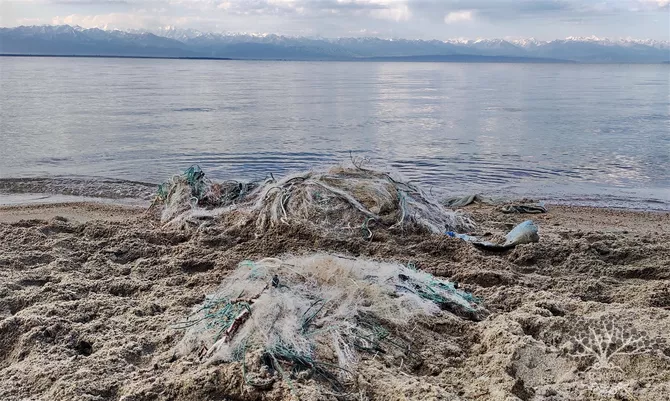
Photo: EcoMap.kg
Environmental Stress: Hydrology, Pollution, and Ecosystem Change
One of the most immediate environmental challenges facing Issyk-Kul is the changing hydrological regime of its tributaries. The lake is fed by numerous rivers and streams whose flow depends heavily on mountain snowpack and glacier melt. Scientific research in the basin has documented significant changes in river water content over recent decades, reflecting the disruption of glacial-fed systems across Central Asia. While climate-driven melt can temporarily increase flows, the long-term trend points toward reduced and less predictable runoff.
Modeling studies that combine climate change and human water consumption show that Issyk-Kul’s water balance is being squeezed from both sides. Reduced inflows coincide with rising withdrawals, leaving little margin for error. Evaporation, already a dominant component of the lake’s water budget, is expected to intensify as regional temperatures rise, further amplifying the impact of declining river inputs.
Falling water levels also affect the lake’s internal dynamics. Even modest changes can alter salinity and vertical water exchange, with significant ecological consequences. Shifts in salinity influence plankton communities, disrupt food chains, and reduce habitat suitability for fish and invertebrates. Wetlands along the shoreline, which rely on stable water levels, become increasingly vulnerable as the interface between land and lake retreats.
Water quality presents another critical risk. Issyk-Kul’s economy has long depended on resort tourism, yet wastewater infrastructure has often lagged behind development. Untreated or insufficiently treated sewage remains one of the most serious threats to the lake, particularly during peak tourist seasons. While policy initiatives and international development projects have prioritized wastewater treatment upgrades, coverage gaps and maintenance challenges persist.
Pollution risks extend beyond what is visible at the shoreline. Environmental assessments have highlighted the need for deeper and more comprehensive monitoring, including microbiological contamination, heavy metals, hydrocarbons, and other pollutants. Limited data can mask emerging problems until they reach a scale that is both costly and politically destabilizing. For a lake that functions as a national brand, reputational damage from perceived pollution can quickly translate into economic losses.
Biodiversity pressures further complicate the picture. Issyk-Kul’s ecosystem has already been altered by historical introductions of non-native species and other human interventions. As water levels fall, the shallow zones essential for spawning and juvenile development shrink. Combined with warming temperatures and declining water quality, this creates a triple stress on fish stocks and other aquatic life. The loss of biodiversity is not only an environmental issue; it directly affects local livelihoods, food security, and the lake’s appeal for recreation and eco-tourism.
Socioeconomic Vulnerability Around a Strategic Lake
Environmental stress at Issyk-Kul quickly becomes a socioeconomic problem. Tourism is central to the lake’s regional economy and a key component of Kyrgyzstan’s national identity. Declining water levels threaten beaches, marinas, and shoreline amenities. Infrastructure built for a stable lakefront can become stranded as the shoreline retreats, forcing costly adaptation measures such as new piers, dredging, or relocation. These changes often generate conflict, as businesses seek compensation, communities demand public investment, and regulators face pressure to relax environmental standards in the name of economic recovery.
Pollution exacerbates this vulnerability. Tourist perceptions can shift rapidly, and concerns about wastewater or declining water quality can reduce visitor numbers faster than policy responses can take effect. This is why investment in sewage networks and treatment facilities is not merely an environmental measure but a form of economic risk management.
Social impacts are unevenly distributed. Lakeside communities, seasonal workers, and small enterprises are often the first to feel the effects of a poor tourist season or declining fish stocks. Larger or wealthier actors may adapt through private solutions-drilling wells, installing treatment systems, or relocating operations-while poorer households face rising costs, health risks, and job insecurity. Over time, sustained decline could contribute to internal migration toward urban centers or abroad, adding a demographic dimension to the lake’s crisis.
Agriculture introduces another layer of tension. Water diverted for irrigation directly competes with the lake’s water balance, particularly during dry periods. Analyses of Issyk-Kul’s decline consistently highlight the role of river diversions for farming. The political economy is complex: farmers need reliable water to manage climate risk, yet inefficient irrigation systems result in high losses. Without modernization, the basin effectively trades long-term lake stability for short-term agricultural output, undermining Issyk-Kul’s status as a strategic asset.
Governance capacity and investment coordination remain central challenges. Calls for science-based, long-term solutions and stronger international cooperation reflect recognition that Issyk-Kul’s problems are systemic. Wastewater projects, wetland protection, tourism development, and irrigation reform must be aligned. Fragmented planning risks producing partial successes that fail to add up: treatment plants without sufficient connections, protected zones alongside wasteful water use, or tourism promotion without adequate monitoring and enforcement.
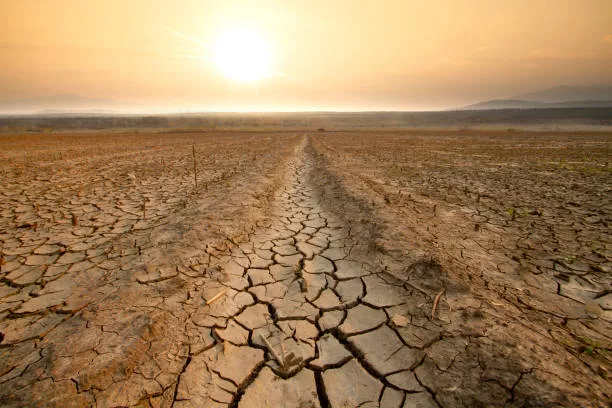
Photo: iStock
Managing a System at Risk: From Fragmentation to Integration
Issyk-Kul’s current trajectory is best understood as the convergence of three accelerating forces. First, climate change is increasing hydrological variability and long-term uncertainty through glacier retreat, shifting precipitation, and higher evaporation. Second, economic expansion around the lake is raising water demand and pollution loads. Third, institutional lag-manifested in fragmented planning, limited monitoring, and uneven enforcement-allows incremental pressures to accumulate into systemic risk.
This means that even moderate climate change would pose serious challenges if water use and wastewater management remain misaligned with basin limits. Conversely, even perfect pollution control would not be enough if drying trends and rising evaporation continue unchecked. The lake must be managed as a single, integrated system.
A credible protection strategy requires several interlinked pillars. Basin-wide water accounting is essential to establish transparent inflow, withdrawal, and evaporation trends and to define enforceable allocation rules that protect minimum ecological levels. Improving irrigation efficiency offers one of the fastest ways to reduce pressure, turning agriculture into a partner rather than a competitor for water security. Tourism infrastructure must be sized for peak seasonal demand, with strong compliance mechanisms to ensure that all developments connect to and maintain wastewater systems.
Comprehensive monitoring is equally critical. Sampling must extend beyond the shoreline to include deep-water processes and a wide range of pollutants. Robust data not only supports effective regulation but also builds confidence among tourists and investors. Biodiversity protection should be linked explicitly to livelihoods, recognizing that fisheries management and habitat conservation are forms of economic policy as well as environmental stewardship.
International cooperation and climate finance have a role to play, particularly given the vulnerability of mountain regions. Issyk-Kul’s health depends on glacier and snowpack dynamics, making it a downstream indicator of broader climatic shifts. Framing the lake as a regional public good strengthens the case for joint projects and blended financing mechanisms.
Conclusion: A Strategic Asset at a Crossroads
Issyk-Kul’s nearly 14-meter historical water-level decline and massive loss of volume are warning signals that the lake can no longer be treated as a passive backdrop to development. It is a living system with a finite balance. Climate change is constraining inflows, while economic growth and water consumption increase outflows. Pollution and biodiversity loss magnify the consequences of this imbalance.
The path forward is demanding but clear. Integrated basin governance, serious investment in wastewater and tourism infrastructure, irrigation modernization, strong monitoring, and sustained international cooperation are all necessary. If Kyrgyzstan succeeds, Issyk-Kul can become a model for climate adaptation in closed-basin lakes. If it fails, the costs will extend far beyond ecology, appearing instead as lost revenue, declining public health, social strain, and growing inequality around one of the country’s most vital natural assets.