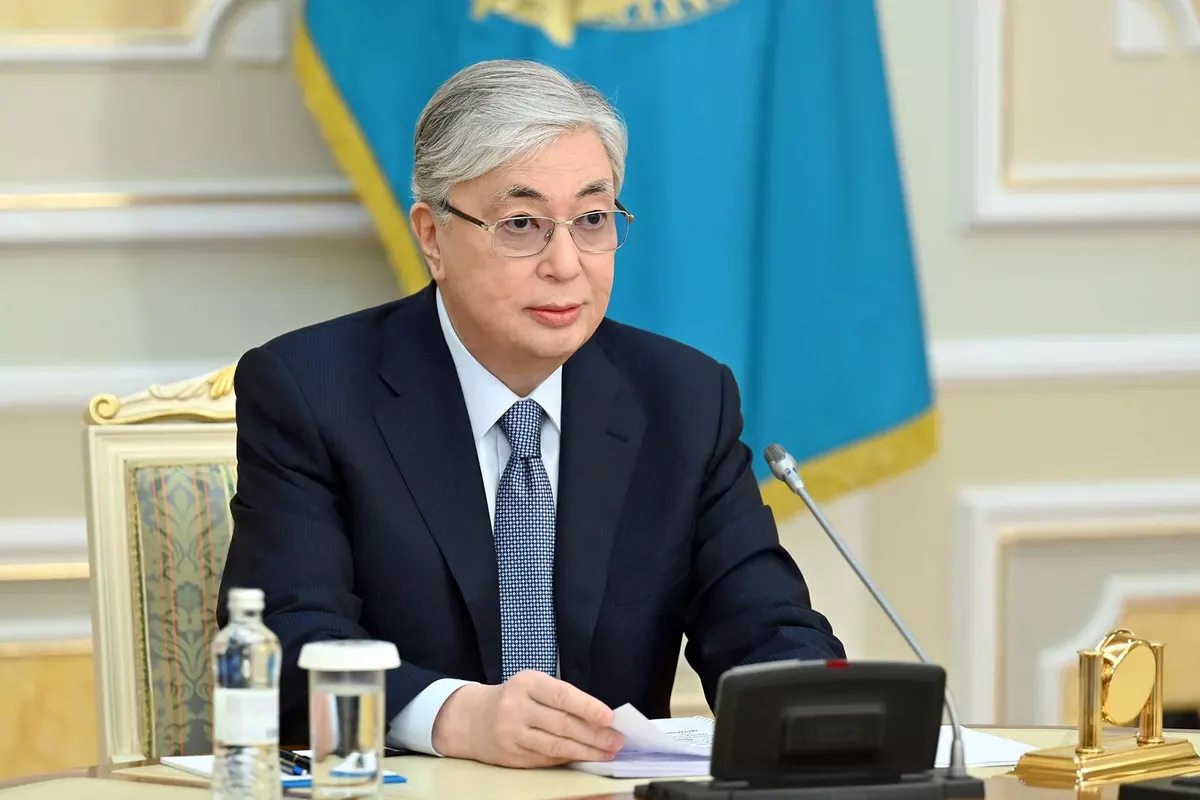
Kazakhstan’s evolving political model is drawing growing attention beyond Central Asia, particularly in Europe, as President Kassym-Jomart Tokayev advances the concept of a “Kurultai state.” In an analytical piece published by EUReporter, journalist Colin Stevens examines why this new political architecture matters not only for Kazakhstan’s domestic governance, but also for Europe’s strategic interests.
President Kassym-Jomart Tokayev has used the 5th session of Kazakhstan’s National Kurultai in Kyzylorda to outline what amounts to a redesigned state architecture. The proposals go well beyond administrative reform: they include a shift to a unicameral parliament, the renaming of the future legislature as the “Kurultai”, the creation of a new People’s Council (Khalyk Kenesi), the establishment of a Vice President, and the preparation of a new draft constitution by a Constitution Commission, with the possibility of popular ratification via referendum, The Caspian Post republishes the article.
Taken together, these moves suggest not incremental reform, but a deliberate attempt to re-engineer Kazakhstan’s political operating system at a moment of global uncertainty.
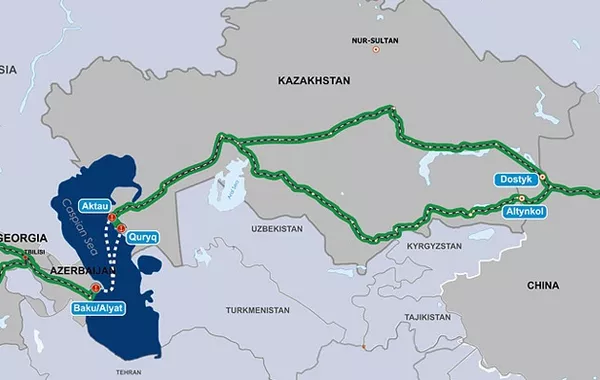
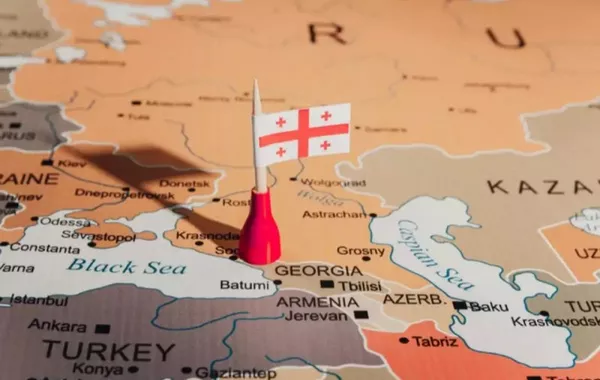
For Europe, the implications are not abstract. Kazakhstan is a pivotal partner for energy security, critical raw materials, and the Middle Corridor linking Europe to Asia. In all three areas, predictability and continuity matter as much as formal democratic design.
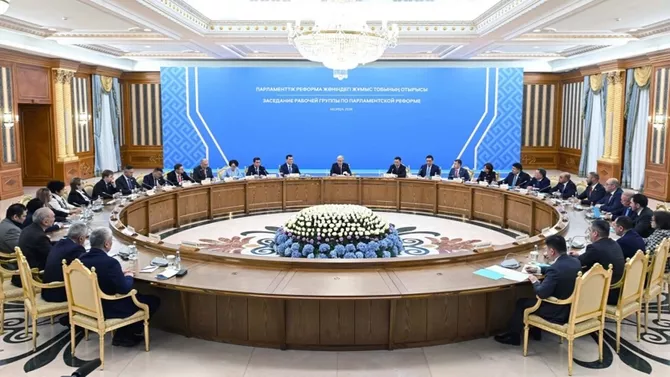
photo: Kazinform
A Unicameral Parliament: Efficiency Versus Concentration
Under the proposed reforms, Kazakhstan would move from a bicameral legislature to a single-chamber parliament of 145 deputies, with a tightly limited number of committees and a streamlined leadership structure. The stated objective is to reduce institutional duplication, speed up law-making, and improve implementation.
There are two ways to read this.
The capacity argument is compelling. Fewer chambers and clearer legislative pathways can accelerate decisions on infrastructure, energy transition, digitalisation, and industrial policy-areas where Kazakhstan is racing both regional competitors and shifting global supply chains.
The power-management argument, however, is equally relevant. Fewer veto points also mean tighter agenda control. Renaming the legislature the “Kurultai” invokes historical legitimacy and national continuity, reinforcing a political narrative that blends reform with tradition.
For European observers, this is less about Western-style parliamentary pluralism and more about whether institutional efficiency translates into regulatory reliability.
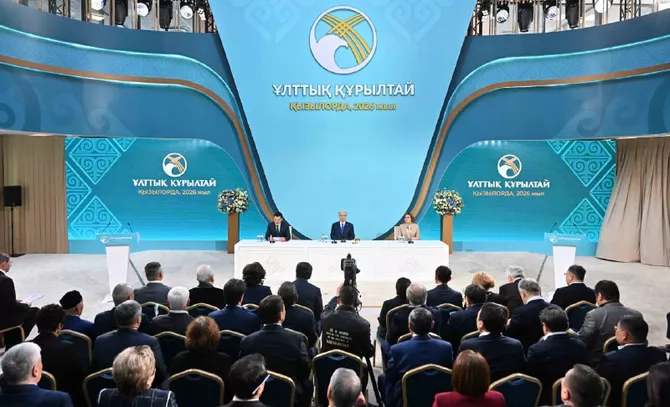
photo: Trend
The People’s Council: Structured Consultation or Managed Consensus?
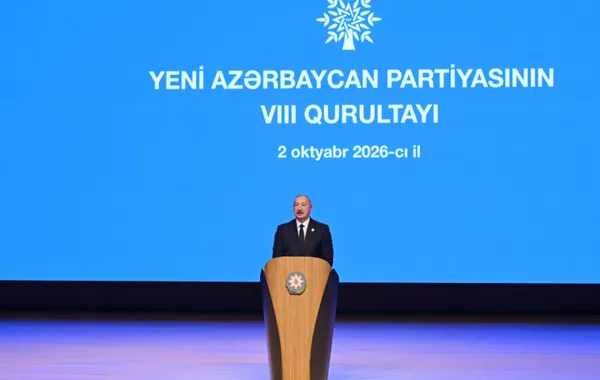
Tokayev’s proposal to establish the Khalyk Kenesi (People’s Council) adds another layer to the evolving system. The body would absorb and merge functions previously associated with the National Kurultai and the Assembly of the People of Kazakhstan, covering social dialogue, interethnic harmony, and ideological cohesion.
In EU terms, this resembles a formalised consultation mechanism-a channel through which public sentiment can be gathered, processed, and filtered.
If well designed, it could reduce policy volatility by institutionalising debate. If poorly designed, it risks becoming a gatekeeper of acceptable opinion, substituting pluralism with curated consensus. Either way, it signals that Astana is consciously designing a state-society interface intended to absorb pressure rather than react to shocks.
Why Now? Reform Timing and the Shadow of Risk
Supporters present these reforms as the continuation of the post-2022 transformation agenda. The timing, however, is telling.
Tokayev’s Kurultai address did not focus solely on political architecture. It was accompanied by urgent directives on energy security-including accelerating CHP construction, completing delayed power projects, expanding balancing capacity, and increasing exploration as domestic gas production struggles to meet demand.
This pairing is not accidental. Institutional reform and delivery pressure are being advanced in parallel. The message is clear: Kazakhstan’s leadership wants a system capable of deciding faster and delivering more predictably, particularly in strategic sectors where delays carry geopolitical costs.
The Missing Link: the Vice Presidency and Succession Risk
Perhaps the most strategically significant element of the reform package is the proposed creation of a Vice President position.
In Kazakhstan’s political context, this is not a procedural adjustment-it is structural.
Since independence, executive authority has been highly personalised, with succession managed through exceptional arrangements rather than institutionalised norms. The unrest of January 2022 exposed the risks of ambiguity at the top of the system.
A Vice President would:
Establish a constitutionally defined succession mechanism
Reduce uncertainty during crises or transitions
Provide continuity on long-term strategic files such as energy, infrastructure, and foreign partnerships
Help prevent elite fragmentation at moments of stress
For European governments and investors, this addresses an unspoken but persistent concern: what happens in the event of sudden leadership disruption?
This is not about enabling political alternation. It is about risk minimisation and continuity-a controlled evolution rather than a competitive transition model.
photo: Silk Way TV Channel
The Constitution Commission: Rewriting the Rules, Not Patching Them
Equally important is the decision to channel these reforms through a dedicated Constitution Commission, tasked with preparing a consolidated draft constitution.
This matters for three reasons.
First, it provides process legitimacy. A commission signals deliberation and coherence rather than improvisation.
Second, it enables systemic alignment. Introducing a Vice President, a unicameral parliament, a People’s Council, and revised executive relationships requires careful constitutional harmonisation. Without it, institutional overlap would invite conflict.
Third, it prepares the ground for a single national referendum, framing the reforms as a unified constitutional reset rather than a series of ad hoc power adjustments.
From a European perspective, this resembles a “big-bang” constitutional moment-designed to lock in stability for the next political cycle.
Stability by Design: Institutionalising the Post-2022 Order
Viewed together, the Vice Presidency and the Constitution Commission reveal the deeper logic of the Kurultai reforms. Kazakhstan’s leadership is seeking to institutionalise the post-2022 settlement, reducing reliance on informal elite consensus and replacing it with codified continuity.
The system being designed prioritises:
Predictability over contestation
Continuity over volatility
Managed evolution over open-ended pluralism
For the EU, this is a double-edged signal.
On one hand, it promises a more legible partner-easier to engage, more consistent in policy delivery, and potentially more attractive for long-term investment in energy, transport, and raw materials.
On the other, it confirms that Kazakhstan’s reform trajectory is stability-first, with democratic competition carefully bounded.
What Europe Should Watch Next
Three indicators will determine how these reforms translate into real partnership value:
The Vice Presidency’s design
How is the Vice President selected? What powers are defined? How does the role interact with the Prime Minister?
Referendum credibility
Is popular ratification competitive, transparent, and trusted?
Regulatory follow-through
Does faster decision-making produce stronger rule predictability, or simply faster discretion?
The Strategic Bottom Line
Kazakhstan is not merely reforming institutions-it is designing continuity.
For Europe, the Kurultai moment is a signal that Astana is attempting to future-proof the state in a volatile region while remaining open for business and partnership. Whether this produces a durable, rules-based relationship or simply a more efficient but more closed system will define EU-Kazakhstan cooperation for the next decade.