North and Central Asia’s SDG6 Record Shows Progress — and Limits
North and Central Asia has made measurable strides toward Sustainable Development Goal (SDG) 6, expanding access to clean drinking water and improving sanitation across several countries. However, as ESCAP highlights, progress remains uneven, with aging infrastructure, water scarcity, and climate pressures continuing to limit gains in rural and vulnerable communities.
Water is the most basic human need for health, livelihoods and dignity. Historically, water resources have been a critical issue in North and Central Asia due to its landlocked nature, which poses considerable challenges to equitable and efficient access to water. The vulnerability of water resources is further exacerbated due to emerging issues, such as rising water demand, worsening climate impacts, and aging infrastructure. In this context, accelerating progress toward SDG 6 has emerged as an urgent priority to secure long-term water sustainability across the subregion, The Caspian Post republishes the article.
Challenges in Achieving Equitable Water and Sanitation Services
North and Central Asia has made steady progress in expanding access to clean water, with 76.2 per cent of the population having access to safe and affordable drinking water as of 2022. However, significant disparities persist across the subregion. While some countries have achieved universal access to safe drinking water, others still lag considerably behind.
Urban-rural inequalities are also evident. Data reveals that rural areas in the subregion consistently lag behind in expanding both drinking water access and sanitation infrastructure. The unequal accessibility of water and sanitation services pose serious problems, as they disproportionately affect vulnerable groups, including women, children and persons with disabilities. Limited access to inclusive, safe and private facilities hinders their ability to manage hygiene with dignity, often resulting in missed educational and economic opportunities and reinforcing patterns of exclusion.
Climate-Driven Pressures on Water Security
Climate change has further exacerbated existing water security challenges. The landlocked and arid geography, combined with a heavy dependence on glacial rivers, makes the subregion particularly vulnerable to climate-driven water shortages. A stark example of this vulnerability is the ongoing desertification of the Aral Sea, one of the worst environmental disasters in the world. The surface of Aral Sea has shrunk by more than 90 per cent since the 1960s due to large-scale irrigation and poor water management, while climate change has further accelerated its desiccation. Rising temperatures and heatwaves accelerate evaporation of the surface and extreme weather further strain water resources. This highlights the ongoing threat that climate-induced pressures on water are likely to intensify in the subregion.
Complexities in Managing Transboundary Water Resources
As many countries in the subregion share transboundary rivers and lakes, the management of water resources remains challenging and cumbersome. The subregion often has different priorities in using shared water resources, making it difficult to foster smooth regional cooperation. Furthermore, a lack of water resource monitoring and evaluation, persistent knowledge gaps, and unforeseen environmental changes further worsen transboundary water management.
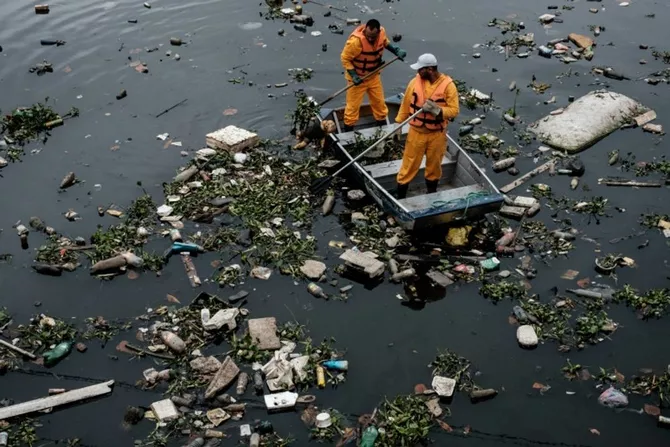
photo: i24News
Water Pollution from Aging Infrastructure and Legacy
The water infrastructure across the subregion is severely outdated, resulting in significant inefficiencies and inequalities. Much of the water infrastructure dates back to the Soviet era, primarily from the 1950s to the 1980s and has undergone limited updates. Therefore, many facilities have exceeded their functional lifespan, leading to a deterioration of water supply efficiency and requiring an urgent need for replacement. Wastewater treatment is also critically insufficient. Many treatment facilities in the subregion are either limited function or operate well below capacity. Untreated sewage is often discharged directly into rivers and other water bodies, posing serious risks to both environmental sustainability and public health.
Urgent Call for Action to Accelerate Progress on SDG 6
To address chronic water-related challenges and achieve full commitment to SDG 6, comprehensive and coordinated strategies are required.
Invest in innovative technology: Cutting-edge technology, artificial intelligence (AI), remote sensing and IoT sensors, is essential for strengthening water security. It enables real-time water monitoring, smart infrastructure management and predict climate-related risks. Moreover, technology facilitates data-driven policymaking, allowing countries to make informed decisions and allocate resources more efficiently.
Expand inclusive water and sanitation services: Investing in affordable and inclusive access to safe water is critical to equality and sustainability. It goes beyond simply expanding infrastructure; it requires meaningful inclusion from marginalized groups, gender-responsive planning and the use of disaggregated data to identify equity gaps. Safe water and sanitation are not only vital for health and development, but they are a matter of dignity, empowerment, and fundamental human rights.
Strengthen regional cooperation: Several regional initiatives have been launched to improve the management of transboundary water resources. However, the current level of cooperation remains insufficient to address growing challenges. Regional cooperation is essential as it serves as a critical mechanism to reduce legal and institutional barriers, promote knowledge sharing and ensure the efficient and equitable management of shared water resources.