Russia Moves to Safeguard Its Language Influence in Central Asia
Carly Brant, writing for Eurasianet, examines Russia’s efforts to maintain its linguistic and cultural influence in Central Asia in her article. The piece explores how Moscow is promoting the Russian language through education, media, and diplomacy, aiming to preserve its regional soft power amid shifting political and cultural dynamics.
In late 2025, Russia launched a new Russian-language television channel in Kyrgyzstan, aiming to extend the reach of Kremlin-friendly messaging in Central Asia. The initiative highlights the enduring importance of language as an instrument of influence for Russia as it struggles to retain its geopolitical primacy in the region, The Caspian Post reports via Eurasianet.
Russia has traditionally been the dominant player in Central Asia, but its hold on the region has slipped significantly since 2022, when Moscow launched its full-scale invasion of Ukraine. In 2024, China overtook Russia as the region’s top trade partner, and over the past year, the United States and European Union have made economic inroads.
While Russia’s regional hold has loosened, Central Asia’s strategic importance for Moscow has grown. The region serves as a vital trade conduit for the Kremlin, enabling Russia to procure goods that help keep its war effort in Ukraine going, bypassing international sanctions.
The war’s fiscal burdens limit Russia’s ability to exert economic or political pressure on Central Asian states to toe the Kremlin line. That said, the Russian language remains a cost-effective tool for Russian officials as they work to influence Central Asian public opinion.
The launch of Nomad TV in Kyrgyzstan in November aims to shore up Moscow’s ability to project propaganda across Central Asia. The channel was set up to operate round-the-clock, 365 days per year. The station’s editorial team included Anna Abakumova, a journalist who formerly worked at RT under the tutelage of Margarita Simonyan, a prominent Kremlin apologist.
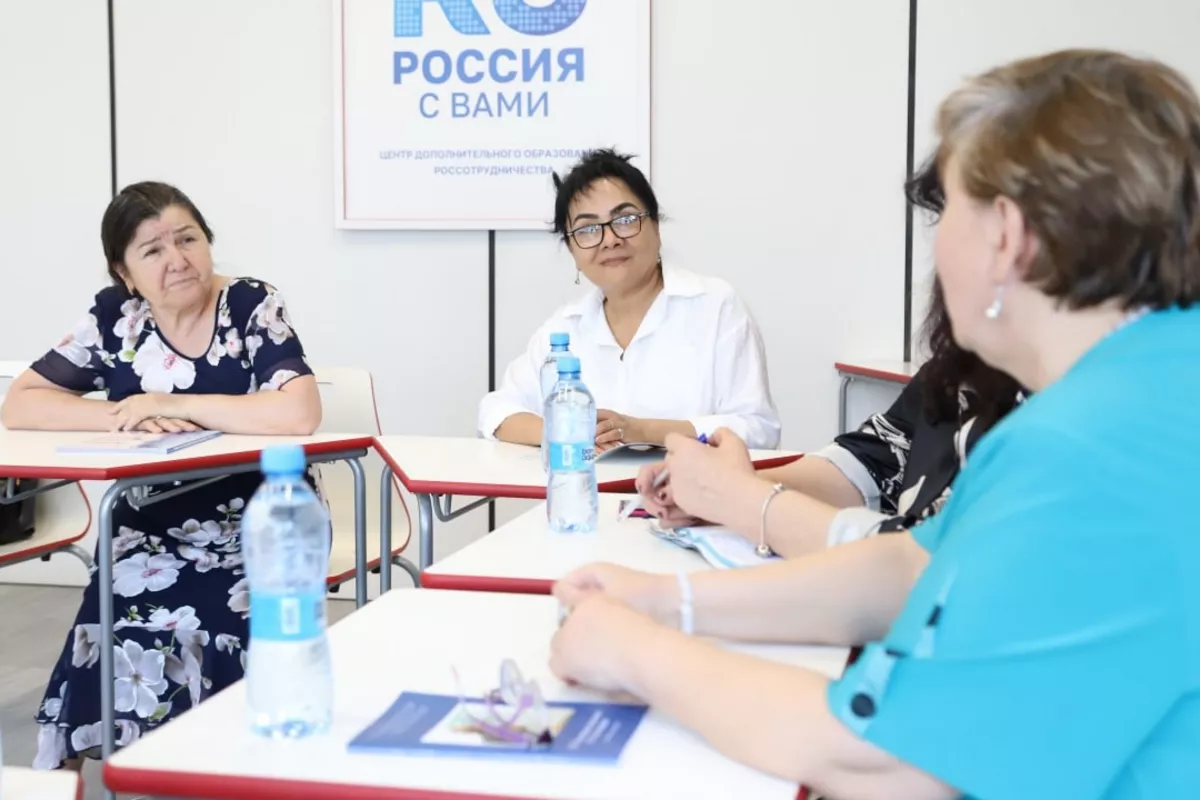
In Central Asia, Russian serves as a common language for trade, higher education, communication, and diplomacy. The use of Russian prevails among urban elites across the region, and many parents prefer to send their children to Russian-language schools, viewing them as offering a better chance of economic advancement than instruction in local languages.
photo: skilldeer
Central Asian governments have recognized the Russian language’s prevalence by giving it special status. In Kazakhstan and Kyrgyzstan, Russian is an official language. In the other three regional states, it is designated as a language of “interethnic communication.”
At the same time, Central Asian officials have implemented reforms to promote the use of national languages, evidently motivated by desires to bolster state sovereignty and diminish the influence of Russian-language mass media. For example, Uzbekistan has made a slow transition from a Cyrillic to a modified Latin alphabet. Kazakhstan also appears intent on latinizing its script. More broadly, the Organization of Turkic States, comprising Kazakhstan, Kyrgyzstan, Uzbekistan, Azerbaijan, and Türkiye, approved a 34-letter Latin-based alphabet to foster linguistic unity.
Meanwhile, the Turkmen government in recent years has actively discouraged education in Russian. Even in Kyrgyzstan, recently introduced legislation mandates that 60 percent of all radio and television programming be in Kyrgyz.
The overall number of Russian speakers in Central Asia has declined since the 1991 collapse of the Soviet Union, especially in rural areas. But the millions of labor migrants who shuttle between Central Asia and Russia every year have helped ensure Russian’s use remains widespread.
Intent on keeping it that way, Russian officials are trying to adapt to shifting circumstances. To gain better insight into current trends, Russia’s Ministry for Foreign Affairs in July 2025 commissioned a study by the All-Russian Public Opinion Research Center (VCIOM) on the use of the Russian language abroad.
The study was designed to evaluate the effectiveness of Russian-language support measures in Azerbaijan and Uzbekistan, as well as in China and India. A similar initiative in 2024 studied the state of the Russian language in Kazakhstan. Although findings from these studies have not been publicly released, the fact that Moscow continues to order such research indicates that it intends to refine its efforts to promote Russian, especially in formerly Soviet republics.
As great power competition intensifies in Central Asia, Russia appears committed to expending considerable resources on preserving the widespread use of Russian in the region. Language, in Moscow’s view, is a bulwark against further encroachment in Central Asia by rival powers.
That said, Russian is increasingly facing backlash by national governments that aim to both protect their sovereignty and maintain a multi-vector stance that strives to maximize the economic and political interests of Central Asian states by balancing trade relations with Russia, China, the US and the EU.