Carl Liles, a researcher at the University of Tartu’s Centre for Oriental Studies in Estonia, examines the fragile stability of Central Asia in his article “Apparent Calm: Hidden Risks of Central Asia’s Peace”, published in The Diplomat. Liles argues that beneath the region’s outward stability lies a pattern of illiberal governance and unresolved tensions that could challenge long-term security and development.
Central Asia has remained a relatively calm region since the end of the Cold War. Despite being surrounded by, and comprised of, mostly authoritarian states, hand-wringing in the 1990s over nuclear material proliferation and ethnic conflict, and grave concerns over the spread of radical Islam and terrorism in the 2000s, peace in Central Asia has faired better than many prognoses would have led us to believe, The Caspian Post reports via The Diplomat.
The predominant theoretical explanation for the phenomenon of peace amid autocracy emerged in the 2010s and termed Central Asia’s absence of mass violence as an “illiberal peace.”
However, politics in the region have taken some significant turns, namely Uzbekistan’s post-Islam Karimov thaw, and Kyrgyzstan’s autocratic backslide under President Sadyr Japarov, since illiberal peace theory was developed. The region, especially since the start of the 2020s, has become increasingly integrated as most of the region’s leaders have enthusiastically pursued and achieved inter-regional treaties to foster trade and streamline governance, among other goals. Moreover, the shockwaves from Russia’s full-scale invasion of Ukraine in 2022 and China’s increasingly antagonistic relationship with the West have also impacted Central Asia’s politics. Combined, these changes suggest that it is worthwhile to evaluate what peace looks like in Central Asia during this decade.
Liberal Peace and Illiberal Peace
Liberal peace is characterized by democratic consensus building, human rights, and sustained dialogue through institutions while seeking to develop mutually beneficial interlinkages to address the root economic, political, and social causes of a conflict. Liberal peacebuilding emerged as the dominant theoretical approach of Western states, as well as international NGOs and civil society (who are integral to the approach) from the 1990s onward.
Unlike liberal peace, illiberal peace involves the use of top-down, state-driven coercion coupled with patronage and other means of co-opting different actors (sometimes called authoritarian conflict management) to ensure that conflict is abated. Regime security and stability is prioritized, while human rights and consensus building are often sidelined or violated.
Illiberal peacebuilding as a practice began to emerge in the late 2000s onward as a response by non-Western states (namely China and Russia) to liberal peacebuilding, which they criticized as inefficient and hypocritical. It materialized with China’s systematic suppression of its Uyghur minority, and Russia’s 2015 intervention in the Syrian armed conflict.
Parallel to these developments, illiberal practices of conflict management had already been in use in Central Asia to suppress domestic dissent, such as in Andijan in 2005, Osh in 2010, and Zhanaozen in 2011. Unconcerned with the root causes of a conflict, illiberal peace is oriented to suppressing any possibility of conflict via repression, restriction, and force executed that is executed by sovereign states.
While security communities in a liberal peace are typically comprised of liberal democracies (e.g. NATO), illiberal peace is founded in an authoritarian security community.
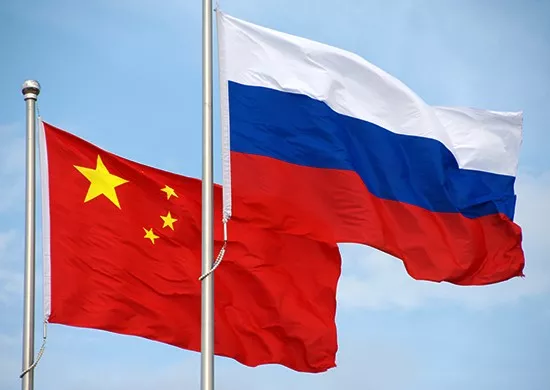
photo: Warsaw Institute
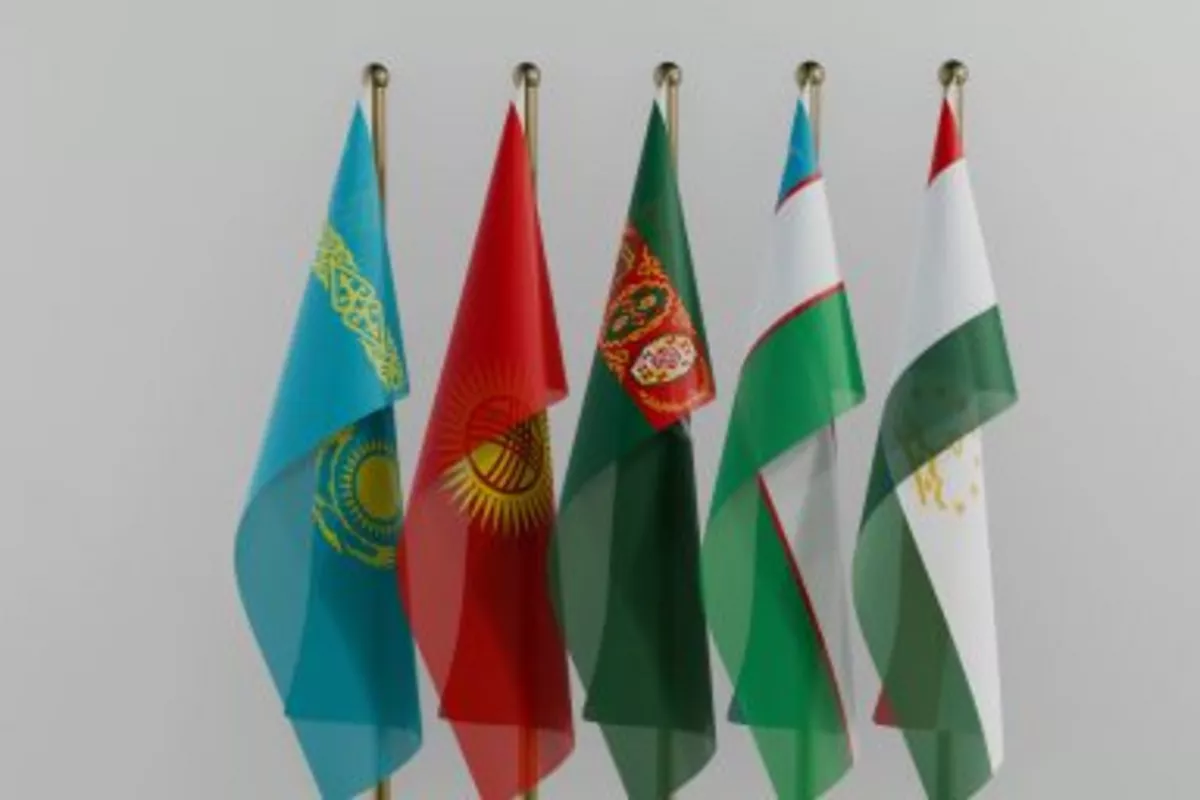
In the case of Central Asia, the five former Soviet republics form an authoritarian security community flanked by two relatively aligned external powers, Russia and China. The Central Asian states’ shared past and similar patterns of governance and patronage have ensured a level of familiarity and ability to find a common language and approach to conflict prevention and resolution. Hence, illiberal solutions to sustaining peace are widely employed and accepted as common practice at the interstate and intrastate levels across the Central Asian states and their neighbors.
Interstate Conflicts
2021 and 2022 were the first and only instance of direct interstate conflict in Central Asia in the post-independence period, when the armed forces of Tajikistan and Kyrgyzstan engaged in skirmishes along their border. Following the 2022 ceasefire between Kyrgyzstan and Tajikistan, no significant conflict has occurred to date (a small incident in May 2024 was successfully resolved).
Roughly three years later, both countries fully demarcated their border and ratified the new border in a festive March 2025 meeting between Kyrgyz President Japarov and Tajik President Emomali Rahmon as well as Uzbek President Shavkat Mirziyoyev. Despite the prior conflict, the demarcation of the border and mutual interest in increasing bilateral trade seems to have placed the 2021-2022 conflict in the past for Bishkek and Dushanbe.
The 2020s marked another border success: the full delimitation of the Kyrgyz-Uzbek border in 2023. The transition from the totalitarian, paranoid, autarkic foreign policy of former Uzbek President Islam Karimov to the pragmatic, outward facing authoritarianism of Mirziyoyev has undoubtedly played a role in facilitating Uzbekistan’s opening to finally demarcating the border. Once a point of contention between Kyrgyzstan and Uzbekistan, the administrations of both countries have since expressed significant optimism in their bilateral relationship.
As others have noted, the resolution of Kyrgyzstan’s borders with both Tajikistan and Uzbekistan has been in part the result of Bishkek’s authoritarian turn under Japarov. Unlike prior presidents, Japarov has had both the will and the authoritarian means to silence and suppress (through criminal charges, deploying counter protesters, censorship, and so on) local and national-level opposition to the land swaps made as a part of the border negotiations.
While all three presidents have been effective in suppressing domestic dissent in their respective countries, the absence of public participation and input (especially from local communities on the border) leaves the door open for future unrest and disobedience toward deals made by Dushanbe, Tashkent, and Bishkek. The absence of local commitment may give the Fergana Valley, the site of all three states’ border negotiations, only a tenuous peace at the local level in the coming years.
In spite of whatever animosity may remain between border communities, interregional cooperation has grown significantly in the 2020s. At the national level, every Central Asian government has been interested (to varying degrees) in improving trade, easing movement and border restrictions, cooperation in education and science, and so on.
Undoubtedly, Chinese investment, diplomacy, and regional ambitions have been a driving force in fostering multilateral cooperation in Central Asia. At the same time, Russia’s 2022 full-scale invasion of Ukraine and increasingly belligerent behavior have motivated the Central Asian republics to look to expand their relationships with one another and different external partners.
Intrastate Conflicts
While there has been a relative paucity of interstate violence in Central Asia since 1991, popular protests, ethnic violence, and religious extremism have been more common occurrences in the region. Here, we see more mixed results in the effectiveness of applying illiberal means to suppress conflict.
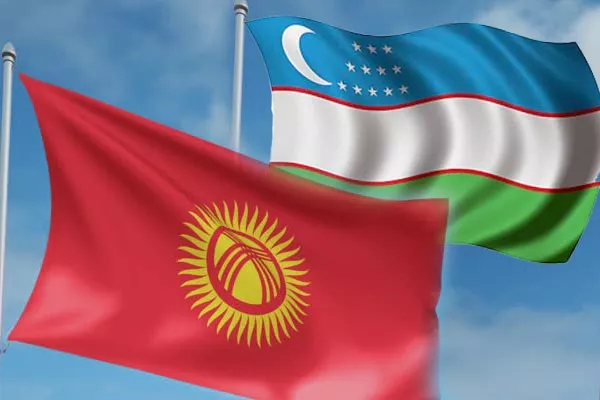
photo: UzDaily.uz
In 2010, , when ethnic conflict involving Uzbeks broke out in southern Kyrgyzstan, the government of Uzbekistan was able to effectively prevent retaliatory violence against ethnic Kyrgyz living in Uzbekistan by controlling and limiting public discourse. Meanwhile, fear of state security forces prevented any outbreaks of violence. Indeed, the de-escalation and prevention of further violence between Kyrgyz and Uzbeks across the border by the national government of Kyrgyzstan now rests on exclusionary hierarchies and systems of patronage.
Tensions still lie under the surface between the Uzbek and Kyrgyz communities in Kyrgyzstan, even though there has been no large-scale intrastate ethnic violence in Kyrgyzstan since 2010, despite unrest during the 2020 Kyrgyz Revolution and the recent Kyrgyzstan-Tajikistan border conflict.
While effective to a point in preventing ethnic violence, the Kyrgyzstan-Uzbekistan illiberal peace has come at a cost as the nationalism prevalent in the region has accelerated the emigration or assimilation (including closure of minority language schools, cultural centers, and so on) of ethnic minorities. Even though Uzbekistan has prevented any widespread violence in relation to its Kyrgyz minority, the violent 2022 government suppression of protests in Karakalpakstan over the suggested removal of the autonomous republic’s right to secede shows the limits of illiberal means to anticipate and prevent violence. This limit has been further echoed by the government of Tajikistan’s violent suppression of protests in 2022 in the autonomous region of Gorno-Badakhshan.
Unlike other illiberal domestic suppressions in the region, 2022 bore witness to interstate cooperation to suppress intrastate conflict with the Collective Security Treaty Organization (CSTO)’s combined deployment to Kazakhstan in response to the Bloody January unrest. The reactionary nature of the response is typical of illiberal conflict resolution, as seen in the 2011 violent protest repression in Zhanaozen. However, unlike 2011, this development highlighted the compatibility of regional authoritarian partners, in that several authoritarian regimes deployed their armed forces at the invitation of another state to suppress domestic violence (although the CSTO deployment actually arrived after the violence had subsided).
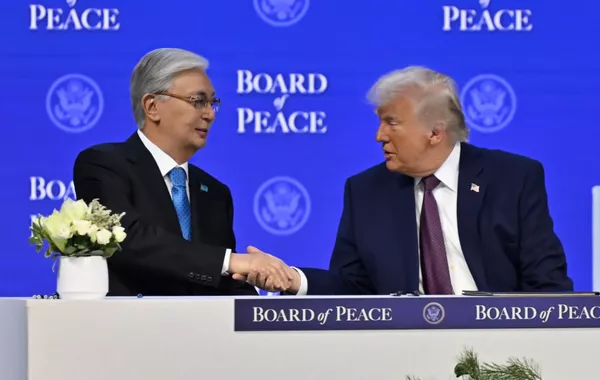
In addition to the use of force, the government of Kazakhstan introduced price caps, legislative reforms, and political restructuring to superficially address some of the causes for the initial protests. With the Tokayev administration seemingly firmly in place, and a lack of open conflict since 2022, the illiberal management of the protest has worked for now. Nonetheless, the fundamental causes for the 2022 unrest - massive wealth inequality, limited political voice and plurality - remain present.
The Future of Central Asia’s Illiberal Peace
2022 saw four different conflicts of significance erupt across Central Asia, and there has since been a lull. Having survived these tests, Central Asia’s illiberal peace is evolving. The continuous consolidations of domestic power, the increasing level of regional cooperation, and China and Russia’s (relatively) cooperative relationship suggest that illiberal approaches to governance will remain the foreseeable norm for the decades to come (even more so than in the past).
Water scarcity, however, is one growing challenge that will likely put this illiberal peace to the test. While the governments of Central Asia along the region’s two primary rivers, the Syr Darya and the Amu Darya, have engaged in different bi- and multilateral environmental initiatives of varying degrees of effectiveness to prevent water scarcity, Afghanistan’s role in the Amu Darya is set to complicate matters.
The Amu Darya originates in Tajikistan, and transits through Afghanistan, Uzbekistan, and Turkmenistan before finally terminating in the south Aral Sea. The increasing strain on the river’s capacity has concerned all four states, which have engaged in various multi- and bilateral negotiations over water access and use. Despite recent effective bilateral cooperation between Uzbekistan and Tajikistan, the construction of the Qosh Tepa canal in Afghanistan has become an immense point of concern for the other three stakeholders along the Amu Darya.
The canal, which is being constructed by the Taliban to boost agricultural production in northern Afghanistan, threatens to significantly reduce the availability of water downstream in Uzbekistan and Turkmenistan while providing neither country with any tangible compensation. The Taliban’s lukewarm interest in negotiating with the other states on the canal’s construction and use doesn’t bode well for the future water management of the Amu Darya.
While the Taliban’s authoritarian rule provides a compatible framework for the Central Asian states to negotiate with, the uneasy shared history and ideological differences will likely continue to impede deeper coordination between Afghanistan and its northern neighbors.
In sum, Central Asia’s illiberal peace seems likely to remain for any foreseeable future, as there is no external or internal force that is set to challenge illiberalism’s (and its peace’s) hegemony as a form of government and conflict management. Nonetheless, Central Asia’s illiberal peace will continue to be sustained by a long shadow of violence and domination. Although this peace has endured through inter- and intrastate conflict, its ability to endure environmental crisis remains untested and dubious.