Catherine Putz, managing editor of The Diplomat, features that Kazakhstan and Uzbekistan have signed on to U.S. President Donald Trump’s “Board of Peace.” The move came on the sidelines of the World Economic Forum in Davos, as the initiative, originally linked to a U.N.-backed Gaza peace plan, expands into a broader international organization aimed at promoting stability and governance in conflict-affected regions.
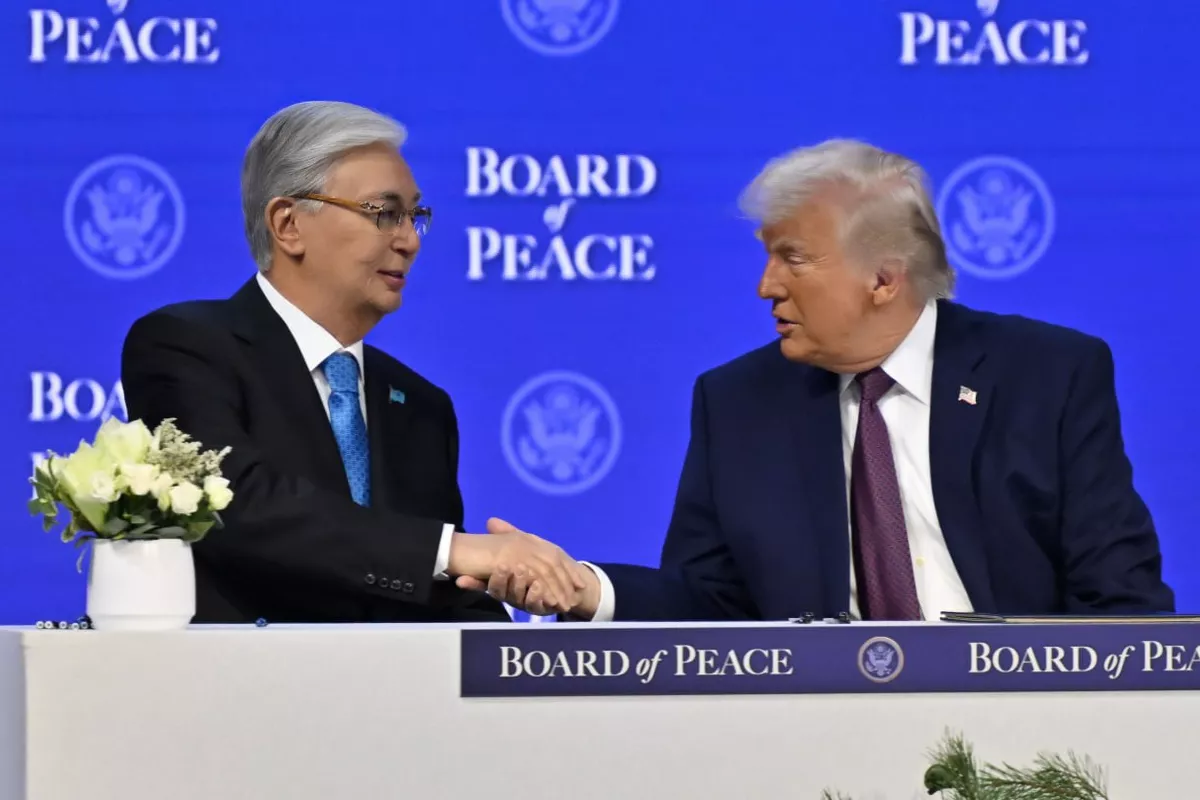
It’s not entirely clear what U.S. President Donald Trump’s “Board of Peace” will be doing, but that didn’t stop Kazakhstan and Uzbekistan from rushing to sign on, alongside 17 other countries whose leaders attended a signing ceremony this week on the sidelines of World Economic Forum in Davos, The Caspian Post reports via The Diplomat.
In September 2025, Trump proposed - and the U.N. Security Council later approved - a 20-point peace plan for Gaza. The plan included the creation of a “new international transitional body,” the Board of Peace, to be chaired by Trump and which “will set the framework and handle the funding for the redevelopment of Gaza…”
The idea has since metastasized, as illustrated by the charter sent alongside invitations to world leaders urging them to sign on. The charter refers to the board as an “international organization” rather than a “transitional” one. It defines the broad’s purpose as seeking “to promote stability, restore dependable and lawful governance, and secure enduring peace in areas affected or threatened by conflict.”
Membership on the board is limited to three-year terms, unless a country opts to pay $1 billion for a permanent seat or if the chairman decides to renew them. Members are subject to removal by decision of the chairman. Trump, per the charter text, essentially gets to remain chairman as long as he deigns to hold the seat, as only a unanimous vote by the Executive Board - all appointed by the chairman - can oust him.
The inaugural Executive Board consists of U.S. Secretary of State Marco Rubio; Trump’s Special Envoy to the Middle East (and also Peace Missions) Steve Witkoff; Trump’s son-in-law Jared Kushner; former British Prime Minister Tony Blair; American billionaire CEO Marc Rowan; current President of the World Bank Group and former Mastercard executive Ajay Banga; and long-time Trump adviser Robert Gabriel, who is currently the deputy national security adviser.
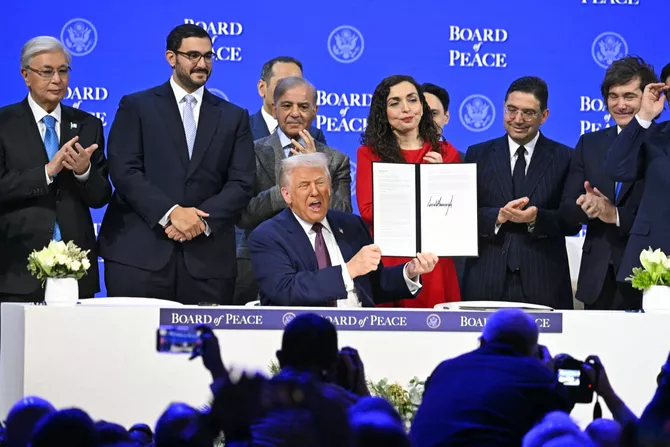
photo: NBC News
The charter makes no specific mention of Gaza, although it’s clear Gaza is the board’s first project. U.N. spokesperson Farhan Haq told reporters that the “Board of Peace” authorized by the U.N. Security Council is “strictly” for work on the Gaza issue. “We would have to see in terms of details what the Board of Peace becomes as it actually is established to know what sort of relationship we would have with it,” Haq added.
At least six countries - France, Denmark, Norway, Sweden, Slovenia and the U.K. - have so far declined invitations to the join the board. A number of other countries, including China, Russia, India, Japan, and Thailand - along with most of Europe - have received invitations but not made public decisions yet.
Besides Trump, the heads of 19 states (or their representatives) attended the January 22 signing ceremony, most of them Muslim-majority or Middle Eastern states, alongside Trump fans such as Argentina’s Javier Milei. The states represented included Argentina, Armenia, Azerbaijan, Bahrain, Bulgaria, Hungary, Indonesia, Jordan, Kazakhstan, Kosovo, Mongolia, Morocco, Pakistan, Paraguay, Qatar, Saudi Arabia, Turkiye, the United Arab Emirates, and Uzbekistan.
Several other states, including Belarus, Israel, and Vietnam have said they would also join the board.
In its readout of the event, Uzbekistan stated, “The creation of the Peace Council aligns with Uzbekistan’s foreign policy priorities, which are aimed at supporting peace initiatives and multilateral cooperation.” The readout goes on to specifically link the board to the U.N. Security Council approved Gaza peace plan, which, as noted above, Trump’s Board of Peace charter doesn’t actually reference.
Kazakhstan’s readout included even less detail, featuring mostly just pictures of President Kassym-Jomart Tokayev and Trump.
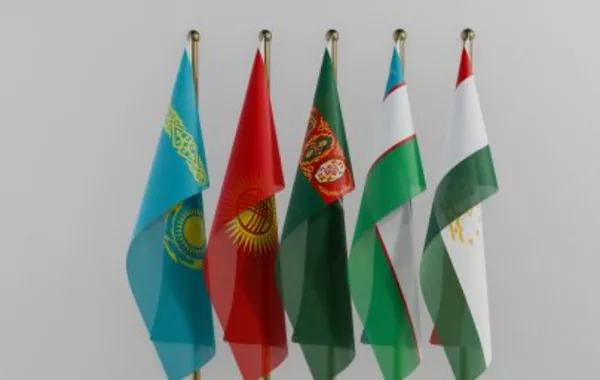
Central Asia’s two largest states have both sought to court the famously temperamental and transactional U.S. president; both hope to lure Trump into a visit, as no sitting U.S. president has ever traveled to Central Asia. They have so far been unsuccessful in getting on his calendar.
Last November, Mirziyoyev and Tokayev made the trip to Washington to participate in the second U.S.-Central Asia Presidential Summit - which amounted to a friendly dinner reception. At a related C5+1 business conference, a bevy of deals were signed across a wide range of sectors from aviation to critical minerals, but the deals were heavily weighted in the United States’ favor.
None of that apparent bonhomie stopped the U.S. from subjecting Kyrgyzstan, Tajikistan, and Turkmenistan to the visa bond program - in which travelers will need to pay bonds of up to $15,000 in order to obtain nonimmigrant business or tourism visas to the U.S. Nor did it stop the U.S. administration from suspending the processing of immigrant visas for citizens of Kazakhstan, Kyrgyzstan, and Uzbekistan.