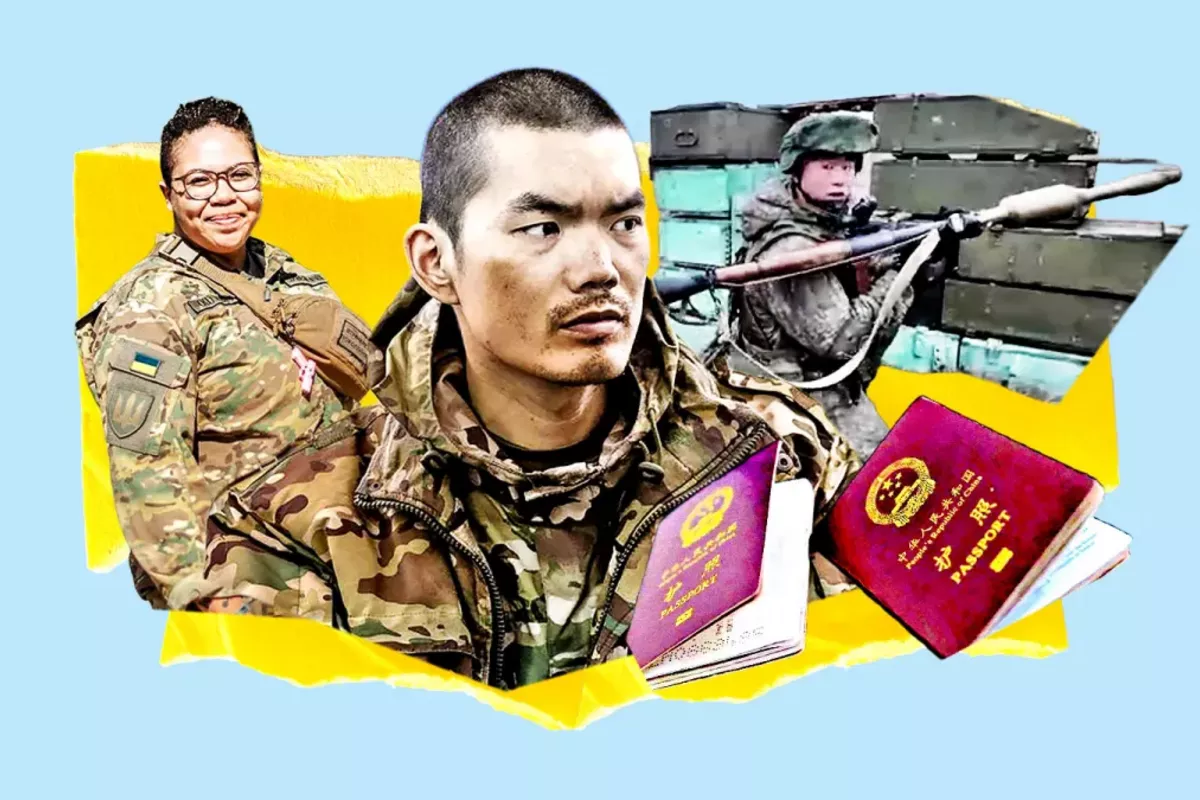
In a recent report by The Sunday Times, the evolving role of foreign fighters in the Russia-Ukraine war is examined, revealing a shift from volunteer combatants to what some analysts describe as “human bombs.”
Soldiers ranging from Colombian guerrillas to Indian security guards have been lured to the front lines by glory, high wages - and trickery.
When Russian President Vladimir Putin launched the full-scale invasion of Ukraine in 2022, it was a battle between two neighbours. Almost four years on, Colombians have been fighting North Koreans inside Russia.
The biggest war in Europe since 1945 has taken on a global scale as Moscow and Kyiv seek to reinforce battered armies with thousands of foreigners from every continent but Antarctica, usually against the wishes of their governments.
For some, the conflict defines a generation and will shape the world for years. For others, it is a chance to earn far more than they could at home - if they survive.
Widely shared videos, including one that appears to show a Russian soldier forcing an African “human bomb” recruit to storm Ukrainian lines, have underscored how expendable some foreign fighters are to Moscow.
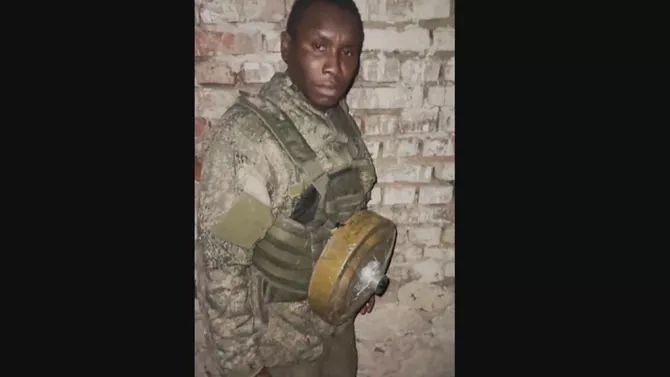
photo: The Sunday Times
Dmytro Usov, a Ukrainian military official, said in November that Russia’s military had recruited more than 18,000 foreigners from at least 37 countries. Many were motivated by money but some, he said, were duped. The British military was told by Ukraine that in a recent battle, 30 per cent of the prisoners of war captured were Africans and Indians.
Ukraine does not disclose figures for foreigners who have enlisted but an official in Kyiv indicated in August there were more than 15,000 from more than 70 countries.
South America: guerrillas and cartels
About 40 per cent of the foreigners helping to defend Ukraine are believed to come from South America. The vast majority are from Colombia, where years of armed hostilities between government forces, left-wing guerrillas and right-wing paramilitaries mean many men have combat experience.
Colombians with Ukraine’s 47th Separate Mechanised Brigade were involved last year in incursions into western Russia, where they came up against North Koreans deployed to support Moscow by Kim Jong-un, a Kremlin ally. In a ten-day battle in April, Colombians armed with Ukrainian-produced Skif anti-tank missiles are said to have destroyed four Russian armoured vehicles packed with North Korean troops.
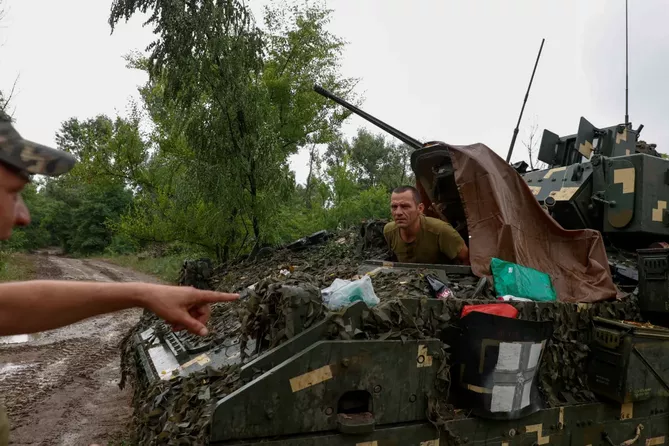
photo: Reuters
“No one could have thought this up … but it happened,” Lieutenant Hamlet Avagyan, who commands the Colombian units, said. More than 500 Colombians are thought to have been killed in Ukraine since 2022, the highest toll from any country outside Ukraine and Russia.
Edison Fabian Mendez said he had travelled to Ukraine to protect its “sovereignty, rights and freedom”. However, the incentive for many of his countrymen is a salary of up to 190,000 hryvnias (£3,395) a month, compared with the equivalent of £260 a month as a conscript to their country’s army.
Others have more sinister motives: in July, Mexican intelligence officials warned Kyiv that members of Colombian and Mexican drug cartels were enlisting to gain experience of operating drones.
North America: echoes of Spanish civil war
Up to 3,000 Americans are thought to have signed up since Ukraine launched its now defunct International Legion in the first week of Russia’s full-scale invasion.
Among them was Karl Johnson, a former hospice and intensive care worker from California who has helped to evacuate the dead and injured from front lines, including during Russian artillery barrages.
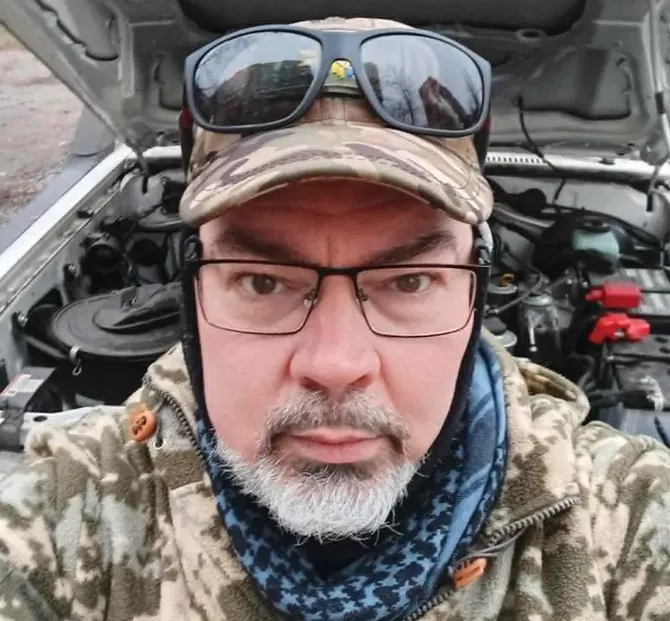
photo: The Sunday Times
In 2024 he recovered the body of James Wilton, the youngest Briton to have been killed in the war so far. Wilton, who had no previous military experience, was 17 when he left his home in Huddersfield for Kyiv.
He was killed by a Russian drone in eastern Ukraine only minutes into his first mission, not long after his 18th birthday. “That was hard, even though in my medical experience I’ve dealt with a lot of death,” Johnson said.
Johnson, 53, said he saw parallels in Ukraine with the 1936-39 Spanish civil war, which attracted volunteers to fight against Nazi-backed nationalist forces. “All my life I’ve fought against authoritarianism and fascism,” he said. “And this seems clearly the greatest struggle in that regard in the past 80 years.”
However, he was scathing about Ukrainian high command, accusing it of sending the legion into “futile, dumb” assaults and “wasting all of our troops”.
Glena Manchego, whose military call sign is Baby Doc, is another US citizen who answered President Zelensky’s call for help despite, as she admitted, “not being able to find Ukraine on a map” before Russia’s invasion.
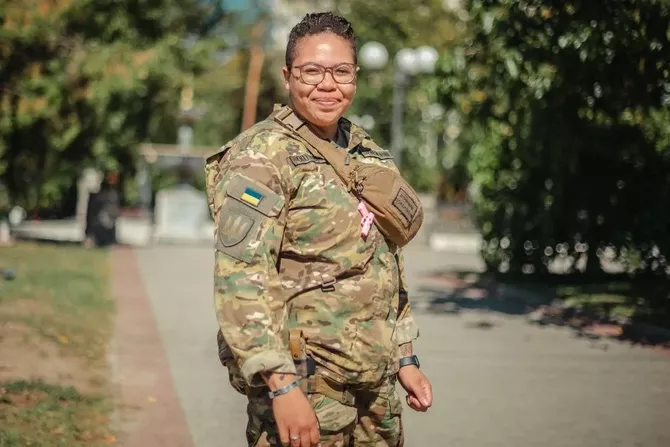
photo: The Sunday Times
A combat medic and nurse, Manchego, 25, has suffered six cases of concussion, including in a drone attack that knocked her out and put her in hospital for a month. “Everybody here has been blown up a few times,” she said.
Despite its value to Ukraine as a way of demonstrating the strength of global support for Kyiv, the International Legion was quietly broken up in December and its battalions were redeployed to assault units within the Ukrainian army.
While Kyiv’s military leadership says the legion has outlived its usefulness, its Ukrainian commanders and the foreigners who joined it said the decision was likely to reduce the number of people coming to fight.
“Foreigners don’t want to go into assault troops. They want to fight intelligently and smartly,” Lieutenant Colonel Andrii Spivak, a deputy artillery commander with the legion, said shortly before it was disbanded.
Dozens of foreigners have torn up their contracts with the Ukrainian army rather than be sent on assault missions, a source said, adding that they thought the decision to disband the legion was a “disgrace”.
Americans have also fought for Putin. The most prominent was Michael Gloss, the son of Juliane Gallina, the CIA’s deputy director for digital innovation.
He was killed in Ukraine last year after enlisting in a Russian assault unit, and was posthumously awarded the Order of Lenin.
One of the biggest foreign contingents of fighters on Russia’s side, thought to number between 1,000 and 5,000, is from Cuba. Although Havana supports Russia’s war, it has denied sending troops.
Europe: from Britain to the Faroe Islands
At least 45 British volunteer fighters are thought to have died in Ukraine. The oldest has been identified as James Shortt, who was 69 when he was killed in 2023. The exact circumstances of many of the deaths are unclear.
Last month, Hayden Davies, a former soldier who was captured by Russia, was imprisoned for 13 years on charges of being a mercenary. Hayden said he had travelled to Ukraine to join the International Legion, which he said paid him up to $500 per month. Britain said he was a prisoner of war and was entitled to legal protection under the Geneva Convention.
Some British citizens have sided with Putin. Ben Stimson, from Oldham, was sentenced to five years in prison in 2017 after returning from eastern Ukraine, where he had joined Russian-backed forces.
He returned to Moscow after his release and served in Russia’s army after it invaded. “I’ve become part of Russia and its history,” he wrote in a recent social media post.
About a hundred men from Serbia, which has deep historical ties with Russia, are said to be fighting on its side, along with far-right extremists from across Europe.
The vast majority of Europeans have sided with Ukraine, however. Even the Faroe Islands, with a population of about 55,000, is represented. Bjorn Kallsoy, a former fisherman known by his call sign Viking, joined in 2023 after speaking to his cousin, who was already fighting.
“It was hell,” he recalled of his first day at the front, when a Russian drone dropped a grenade into his unit. A few months later, the explosion of an anti-tank grenade left him with “126 pieces of shrapnel in me … those that they could count anyway”.
He returned to the Faroe Islands to recover, but six months later he was back, having been unable to adapt to a peaceful life. “I don’t think I’ll get any rest until this war is over,” he said.
Africa: ‘death sentence’ contracts
Africa is fertile ground for Russian recruitment. Its fast-growing young population is increasingly urban, tech-savvy and eager for overseas opportunities with limited prospects at home.
Kyiv estimates that more than 1,400 people from dozens of countries across the continent are fighting for Russia, many of them conscripted under false pretences. Andriy Sybiha, Ukraine’s foreign minister, has urged African governments to warn their citizens about the dangers of signing contracts “equivalent to … a death sentence”.
This month, Russian troops were accused of strapping an anti-tank mine to the chest of an alleged fighter from Africa and forcing him to advance unarmed on Ukrainian positions. A video showed a soldier pushing the man, who gave his name as Francis, at gunpoint through a trench. His fate was unclear.
Another video showed a group of men in military uniform singing a Ugandan resistance song in a snowy forest. An off-screen voice, thought to be that of a Russian soldier, mockingly referred to them as “disposables”.
In South Africa, the plight of 17 men who say they were tricked into joining the Kremlin’s forces has illustrated the reach of pro-Moscow influencers. It has divided the family of Jacob Zuma, who was a Putin ally while president in 2009-18. His daughter Nkosazana Zuma-Mncube has brought a criminal complaint against her sister, Duduzile Zuma-Sambudla, accusing her of tricking the men into travelling to Russia on the pretext of bodyguard training.
The scandal prompted Zuma-Sambudla to resign as an MP from her father’s MK party. She has denied arranging their deployment and said she was herself misled by a contact claiming to run a legitimate training scheme in Russia.
Cameroon is said to have lost hundreds of its troops to Moscow recruiters and has banned personnel from travelling overseas without permission. Scores have been killed in combat.
An estimated 200 Kenyans have been recruited or tricked into aiding Russia by agents offering lucrative packages. Evans Kibet, an aspiring long-distance runner, surrendered in September. He said a sports agent invited him to compete in St Petersburg, only for him to be taken to a military camp where he was told: “Either you go to fight or we’ll kill you.”
After a week of basic weapons training from instructors who spoke only Russian, he fled and hid in woods near Kharkiv until he was captured by Ukrainian troops and later freed.
Asia and Oceania: from Kim to Canberra
North Korea is the only country to have openly deployed troops to the front lines, though only to help Moscow expel Kyiv’s forces from western Russia rather than crossing into Ukraine.
Moscow has also enticed large numbers of fighters from Uzbekistan, Tajikistan and Kyrgyzstan, all former Soviet republics in central Asia, with the promise of high salaries and a Russian passport.
Hundreds of men from India, Nepal and Yemen have been tricked into fighting for Putin by shadowy agents. Sonu Kumar, who travelled from India on a student visa, was one of those who ended up at the front after being promised a job as a security guard, his family said.
He was killed in September and his remains were returned to India with a Russian army uniform and flag. “He was not a soldier,” his brother, Vikas, told Indian media. “Why was he sent to die?”
In April, the capture by Ukraine of two Chinese nationals fighting for Russia prompted a claim by Zelensky that Beijing was turning a blind eye to the recruitment of its citizens. He said at least 155 Chinese men were among Putin’s troops.
Hundreds of Syrian soldiers are said to have joined Russia’s army until the fall of Bashar al-Assad, a Kremlin ally, in 2024.
Australia has urged its citizens not to travel to Ukraine but this has not stopped some. In April, Caleb List, a 25-year-old former labourer from Queensland, was reported missing in action in the Kharkiv region after heavy fighting.
His uncle told Australian media that he had gone to Ukraine because he was shocked by Russia’s invasion and saw the opportunity to fulfil his ambition of military service. “He’d always wanted to be a soldier,” he said.