In recent years, the international system has entered a period of profound transformation in which not only the distribution of power but also the very nature of diplomacy has been reshaped. The war in Ukraine, the conflict in Gaza, disruptions to energy security, and the resurgence of great-power competition have significantly increased the complexity of states’ foreign policy calculations.
In this evolving environment, flexible diplomatic approaches that preserve room for maneuver in times of crisis have become as important as traditional alliance commitments and clear-cut bloc alignments. Moreover, diplomacy is no longer conducted through isolated policy files. Rather, it operates across interconnected and overlapping crises, where developments in one domain increasingly influence outcomes in others.
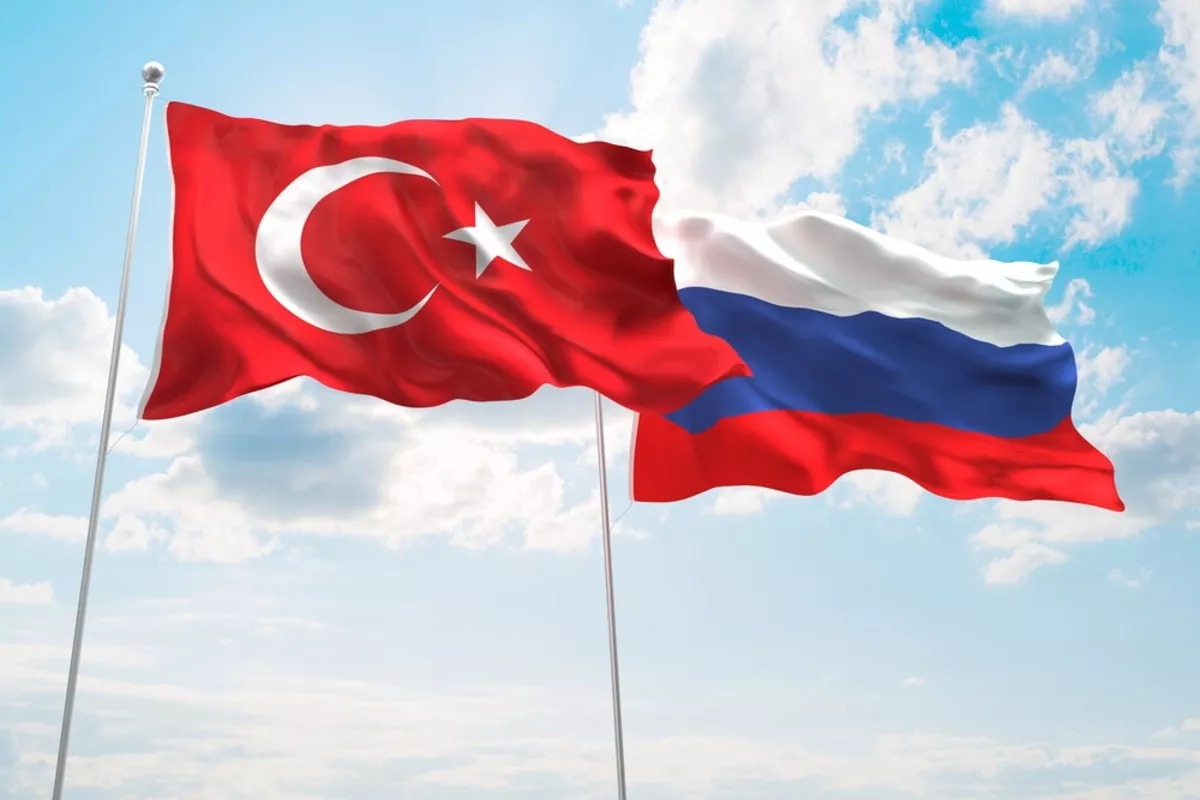
In this context, Foreign Minister Hakan Fidan’s visit to Moscow should not be seen merely as a diplomatic engagement assessing the current state of Türkiye-Russia relations. Rather, it should be viewed from a broader perspective, as it demonstrates how Türkiye seeks to position itself within shifting global power balances, not as an actor that simply follows developments, but as one capable of creating channels of communication between different power centers. Accordingly, the Moscow-Ankara talks were not limited to bilateral relations between the two countries. Black Sea security, the future of the war in Ukraine, energy corridors, developments in the Middle East and debates over a new global order all directly shaped the agenda of the meeting.
Therefore, this visit should be examined within a broad framework, and its underlying messages should be read carefully.
Focus of Talks: Black Sea
The timing of the visit was particularly critical, as it took place at a moment when global attention was focused on the cease-fire process between the U.S. and Iran, and just before the NATO summit to be held in Ankara. In this context, the talks primarily focused on efforts to end the Russia-Ukraine war.
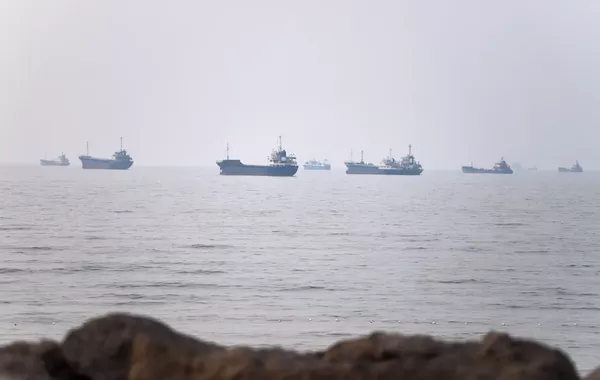
As a reflection of the expanding impact of wars, Black Sea security emerged as one of the most critical issues in the discussions. With the prolongation of the war in Ukraine, the Black Sea has become not only a zone of military competition but also a central space for energy security, trade routes and global supply chains.
For Ankara, the main priority is to prevent the Black Sea from turning into a confrontation zone between NATO and Russia, while preserving regional stability. In this regard, the Montreux Convention remains one of the key instruments allowing Türkiye to maintain a delicate balance in the Black Sea. Ankara’s policy since the beginning of the Ukraine war reflects an attempt to prevent uncontrolled militarization while preserving regional stability.
Accordingly, energy supply security, the protection of infrastructure and emerging energy balances continue to be among the key areas evaluated within the framework of mutual dependence between the two countries. Therefore, the main message of the visit can be read as follows: “In a new era in which wars are shaped not only on the battlefield but also at the diplomatic table, Türkiye continues to assert its claim to be not merely a party to crises, but one of the centers where crises are managed.”
Behind the Diplomatic Table
The most striking aspect of Fidan’s contacts in Russia was that the meetings did not remain within the boundaries of classical diplomatic protocol. Fidan met not only with his counterpart, Sergey Lavrov, but also with key figures at the center of Russia’s security, intelligence, energy and transportation architecture.
In addition to being received by President Vladimir Putin in Kazan, his contacts with Security Council Secretary Sergey Shoigu, Federal Security Service (FSB) Director Alexander Bortnikov, foreign intelligence agency SVR's Director Sergey Naryshkin, foreign military intelligence agency GRU's director Chief Igor Kostyukov, and Putin’s advisers Vladimir Medinsky and Igor Levitin show that the visit was not an ordinary courtesy call.
This picture produces meaning at three levels. First, when considered together with Fidan’s intelligence background, it becomes clear that Türkiye-Russia relations are conducted not only through the Foreign Ministry channel, but also through security and intelligence diplomacy. This channel remains closed to the public; however, in times of crisis, it performs a role at least as decisive as open diplomacy.
Second, the contacts with figures such as Medinsky and Levitin show that the talks were placed within a broader geopolitical framework beyond the war in Ukraine. Medinsky had come to the fore as Moscow’s chief negotiator in the 2022 Russia-Ukraine talks. Levitin, meanwhile, is one of Russia’s influential figures in transportation, infrastructure and connectivity files. Therefore, Fidan’s contact traffic suggests that the Ukraine negotiation file, corridors, energy lines and Eurasian connectivity were addressed within the same strategic picture.
Third, part of the visit took place in Kazan. At first glance, this may seem to be due to Putin’s presence in Kazan for the Russia-ASEAN Summit. However, the choice of Kazan should not be seen merely as a scheduling detail. Kazan, the capital of Tatarstan, is one of the central spaces of Russia’s symbolic relationship with the Turkic-Tatar world and the Islamic geography. Therefore, Fidan’s reception by Putin in Kazan shows that diplomatic contacts on the Ankara-Moscow line are also read on the ground of Eurasia-centered multipolar diplomacy.
The Russian press also framed the visit as a message of continuity rather than rupture in Türkiye-Russia relations. RIA Novosti reported that Putin described Türkiye-Russia relations as “friendly” and “developing with new content.” Tass wrote that the meeting took place on the margins of the visit due to Putin’s official program in Kazan and that Ankara had requested the Putin-Fidan meeting.
For Russia, Türkiye represents a unique diplomatic channel in a period of strategic isolation from the West. Ankara’s NATO membership, its role in the Black Sea, and its ability to communicate simultaneously with Western and non-Western actors increase its diplomatic value for Moscow. Therefore, Türkiye is not perceived merely as a regional actor, but as a geopolitical bridge in Russia’s search for alternative channels of engagement.
For this reason, Fidan’s visit to Russia should be read not only through visible diplomatic headlines, but also through less visible security and strategic communication channels. The real significance of the meetings emerges precisely here: In a new era in which wars are shaped not only on the battlefield, but also at diplomacy and intelligence tables, Türkiye continues to assert its claim to be not an actor outside crises, but one of the centers where crises are managed.
Find the original article here