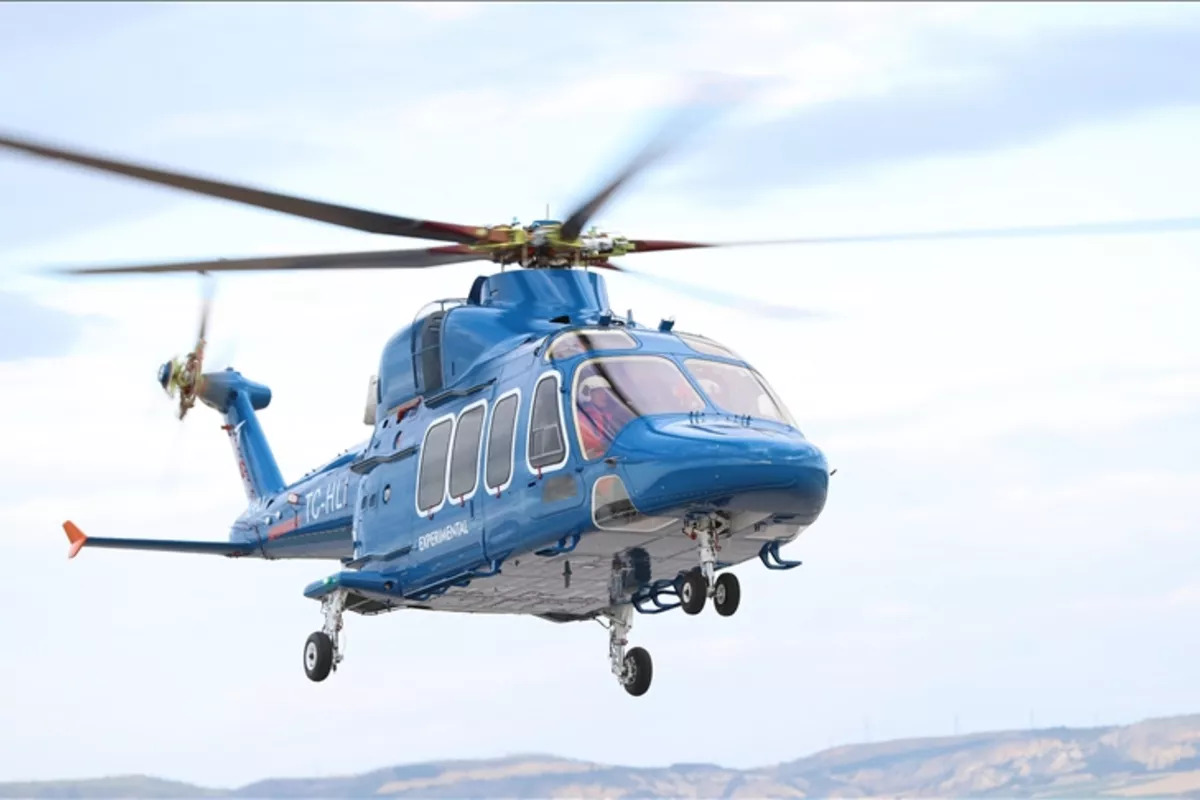
Türkiye has officially inducted its first domestically developed T625 GÖKBEY multirole helicopter into the inventory of the Turkish Land Forces, marking a significant milestone in the country’s push for defense self-sufficiency. The aircraft, produced by Turkish Aerospace Industries, represents years of investment in indigenous aviation technology and signals Türkiye’s growing capabilities in rotorcraft design and manufacturing.
The delivery forms part of a broader program that envisions the production and distribution of 83 GÖKBEY helicopters to various state institutions, including military, security, and civil agencies. With a localization rate already exceeding 70%, and expected to surpass 80% once equipped with the domestically developed TS1400 engine, the program underscores Türkiye’s ambition to reduce reliance on foreign defense systems.
GÖKBEY: A Versatile Multirole Platform
The T625 GÖKBEY is designed as a twin-engine, medium-class utility helicopter capable of operating in diverse and challenging environments. Built to meet both military and civilian needs, it offers flexibility across a wide range of missions, including troop transport, search and rescue, medical evacuation, VIP transport, and logistical support.
One of the helicopter’s defining features is its ability to operate effectively in “hot and high” conditions-environments characterized by high temperatures and altitudes that typically strain aircraft performance. This capability is particularly relevant for Türkiye’s varied geography, which includes mountainous regions and harsh climate zones.
The aircraft is equipped with advanced avionics systems, including a digital cockpit, integrated mission management systems, and enhanced flight control technologies. These features not only improve pilot situational awareness but also enhance operational safety and mission efficiency. Its spacious cabin allows for flexible configurations, enabling rapid adaptation to different mission profiles.
In addition, the GÖKBEY incorporates modern safety features such as crashworthy seats and fuel systems, as well as noise and vibration reduction technologies, making it suitable for both military and civilian operations.
Indigenous Engine and Localization Drive
A key milestone in the GÖKBEY program is the integration of the TS1400 turboshaft engine, developed domestically by TUSAŞ Engine Industries. While initial deliveries use foreign-made engines, the transition to the TS1400 is expected to significantly increase the helicopter’s local content and reduce external dependencies.
The TS1400 engine is designed to deliver high performance under demanding conditions while meeting modern efficiency and durability standards. Its integration will not only enhance the helicopter’s operational independence but also strengthen Türkiye’s position in the global aerospace supply chain.
Localization efforts extend beyond the engine. Critical components such as avionics, software, transmission systems, and structural elements are increasingly being produced domestically. This approach reduces procurement risks, shortens supply chains, and enables greater control over maintenance and upgrades.
Expanding Role in Türkiye’s Defense Ecosystem
The induction of GÖKBEY into active service reflects a broader transformation within Türkiye’s defense industry. Over the past decade, the country has significantly increased its domestic production capabilities across multiple sectors, including unmanned aerial vehicles, naval platforms, armored vehicles, and missile systems.
Organizations such as Presidency of Defense Industries have played a central role in coordinating these efforts, prioritizing local development and fostering collaboration between public institutions and private companies. As of 2026, Türkiye’s defense industry is characterized by a growing ecosystem of suppliers, engineers, and research institutions contributing to indigenous innovation.
The GÖKBEY program fits into this larger strategy by addressing a critical capability gap in utility helicopters. Previously reliant on imported platforms, Türkiye is now positioned to design, produce, and sustain its own aircraft, ensuring greater operational autonomy.
Moreover, the helicopter’s modular design and export potential make it an attractive option for international markets, particularly for countries seeking cost-effective and versatile rotorcraft solutions. This could further boost Türkiye’s defense exports, which have already seen steady growth in recent years.
Strategic Impact and Future Outlook
The delivery of the first GÖKBEY helicopter represents more than just the addition of a new aircraft to the fleet-it is a symbol of technological progress and strategic independence. By investing in indigenous platforms, Türkiye is not only enhancing its military capabilities but also building a sustainable defense industrial base.
Looking ahead, the continued rollout of the 83-unit program will expand the helicopter’s presence across various agencies, including law enforcement, disaster response units, and medical services. The integration of the TS1400 engine and further advancements in avionics and systems are expected to improve performance and reliability over time.
As Türkiye continues to prioritize local innovation, the GÖKBEY program is likely to serve as a foundation for future rotorcraft development, including more advanced or specialized variants. It also demonstrates how sustained investment, policy support, and industrial collaboration can yield tangible results in a relatively short period.
In a global environment where supply chain disruptions and geopolitical tensions can affect defense procurement, Türkiye’s emphasis on self-reliance positions it more securely. The GÖKBEY helicopter stands as a clear example of this approach in action-combining technological capability, industrial growth, and strategic foresight.