What Kazakhstan and Georgia's Strategic Partnership Means for Eurasia
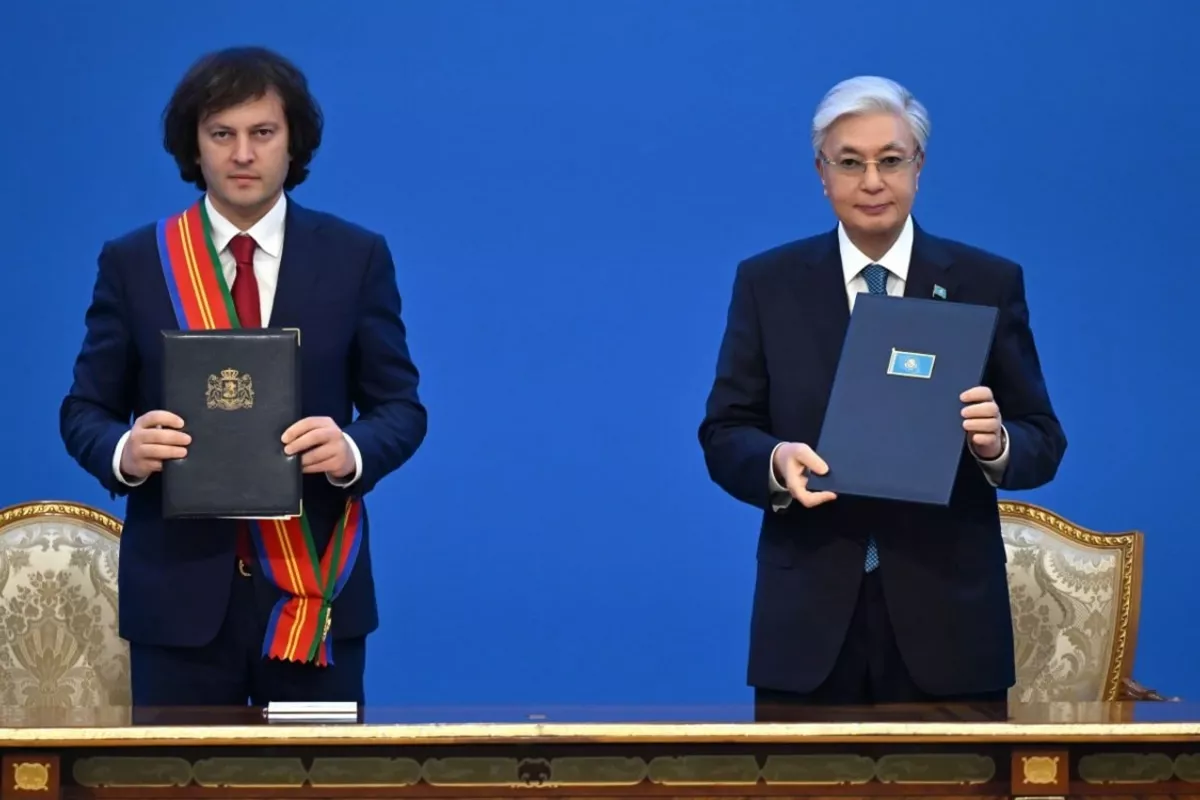
Kazakhstan and Georgia have elevated their bilateral relations to the level of a strategic partnership, marking a significant step in political, economic and regional cooperation between the two countries. The decision was formalized during talks in Astana between Kazakh President Kassym-Jomart Tokayev and Georgian Prime Minister Irakli Kobakhidze, culminating in the adoption of a Joint Statement on establishing a strategic partnership, according to Qazinform.
The move reflects growing cooperation between Central Asia and the South Caucasus at a time when both regions are seeking to strengthen connectivity, trade routes and economic ties.
What does a strategic partnership mean?
A strategic partnership is a formal political framework that signals a higher level of cooperation between countries across multiple sectors. While it does not constitute a military alliance, it typically involves closer coordination in areas such as trade, transportation, investment, culture, technology and diplomacy.
By elevating their relationship, Kazakhstan and Georgia have indicated their intention to deepen cooperation and establish more structured mechanisms for long-term engagement.
The agreement also highlights the increasing importance of the two countries as key transit and economic partners linking Central Asia with Europe and the Black Sea region.
Why are Kazakhstan and Georgia strengthening ties now?
The strengthening of bilateral relations comes amid growing efforts by countries in Central Asia and the South Caucasus to diversify trade routes and reduce dependence on traditional transport corridors.
Kazakhstan and Georgia play crucial roles in the so-called Middle Corridor, also known as the Trans-Caspian International Transport Route, which connects China and Central Asia with Europe through the Caspian Sea, the South Caucasus and Türkiye.
As geopolitical shifts reshape global trade patterns, both countries have sought to capitalize on their geographic positions by investing in transport infrastructure, logistics and regional connectivity projects.
The elevation of ties to a strategic partnership reflects the increasing importance of cooperation in these areas.
What agreements were signed?
Following the talks in Astana, the two sides exchanged several intergovernmental and interagency documents designed to expand bilateral cooperation across a range of sectors.
Among the agreements signed was a memorandum of understanding between Kazakhstan's Ministry of Culture and Information and Georgia's Ministry of Culture aimed at strengthening cultural cooperation and promoting exchanges in the arts, heritage preservation and cultural initiatives.
The two countries also signed a memorandum of cooperation between Kazakhstan's Ministry of Artificial Intelligence and Digital Development and Georgia's Ministry of Economy and Sustainable Development. The agreement underscores growing interest in digital transformation, emerging technologies and innovation-driven economic development.
In addition, Kazakhstan's Ministry of Tourism and Sports and Georgia's Ministry of Economy and Sustainable Development signed a memorandum aimed at expanding cooperation in tourism, one of the fastest-growing sectors of bilateral economic relations.
Why is digital cooperation significant?
One of the most notable aspects of the new agreements is the emphasis on digital technologies and artificial intelligence.
Kazakhstan has made digital transformation and artificial intelligence key priorities of its long-term economic strategy, while Georgia has also pursued reforms aimed at expanding its digital economy and attracting technology investment.
Cooperation in this field could lead to joint initiatives in digital infrastructure, innovation ecosystems, artificial intelligence applications and technology-driven public services.
The agreement also reflects a broader trend among countries in Eurasia to prioritize technological development as a driver of economic growth and competitiveness.
What role does tourism play?
Tourism cooperation has become increasingly important for both countries due to growing passenger traffic and business exchanges between Central Asia and the South Caucasus.
Enhanced cooperation in tourism could include joint promotional campaigns, improved transportation links, greater investment opportunities and the development of new tourism products targeting international visitors.
Both Kazakhstan and Georgia have sought to diversify their economies by expanding their tourism sectors and attracting greater numbers of foreign travelers.
What are the broader implications?
The establishment of a strategic partnership between Kazakhstan and Georgia underscores the growing importance of regional cooperation across Eurasia.
Beyond bilateral relations, the agreement strengthens connectivity between Central Asia, the South Caucasus and Europe, particularly through transport, trade and digital infrastructure initiatives.
As geopolitical and economic dynamics continue to evolve, closer cooperation between Kazakhstan and Georgia may contribute to the development of alternative trade corridors, increased investment flows and deeper regional integration, positioning both countries as important hubs in the emerging Eurasian economic landscape.