Georgia is once again demonstrating an economic paradox that has become one of the most intriguing stories in the South Caucasus. Against the backdrop of a prolonged political crisis, tensions with the European Union and the United States, street protests, disputes over the ruling party’s course, and a deteriorating international image, the Georgian economy continues to expand at a pace that would seem almost unattainable for many European countries.
According to preliminary data from Georgia’s National Statistics Office, the country’s real GDP grew by 10.7% year-on-year in March 2026, while average economic growth in the first quarter reached 9.1%. The figures were also highlighted by Georgia’s Ministry of Economy, which stressed that growth has remained strong despite external shocks, geopolitical uncertainty, and domestic challenges.
At first glance, such momentum may appear almost illogical. Georgia’s political system is going through one of its most difficult periods in recent years. Relations with Brussels have effectively been frozen amid sharp criticism from European institutions. Trust with Washington also remains fragile, even though Georgian officials have spoken about a possible “reset.” Domestically, debates continue over pressure on the opposition, the role of the ruling party, and the state of democratic institutions. Yet the economy, despite this political turbulence, continues to move forward.
The main question is not whether Georgia’s economy is growing. The numbers show that it is. The real question is why it is growing now, at a time when political risks would normally be expected to dampen investor sentiment, weaken business activity, and undermine consumer confidence.
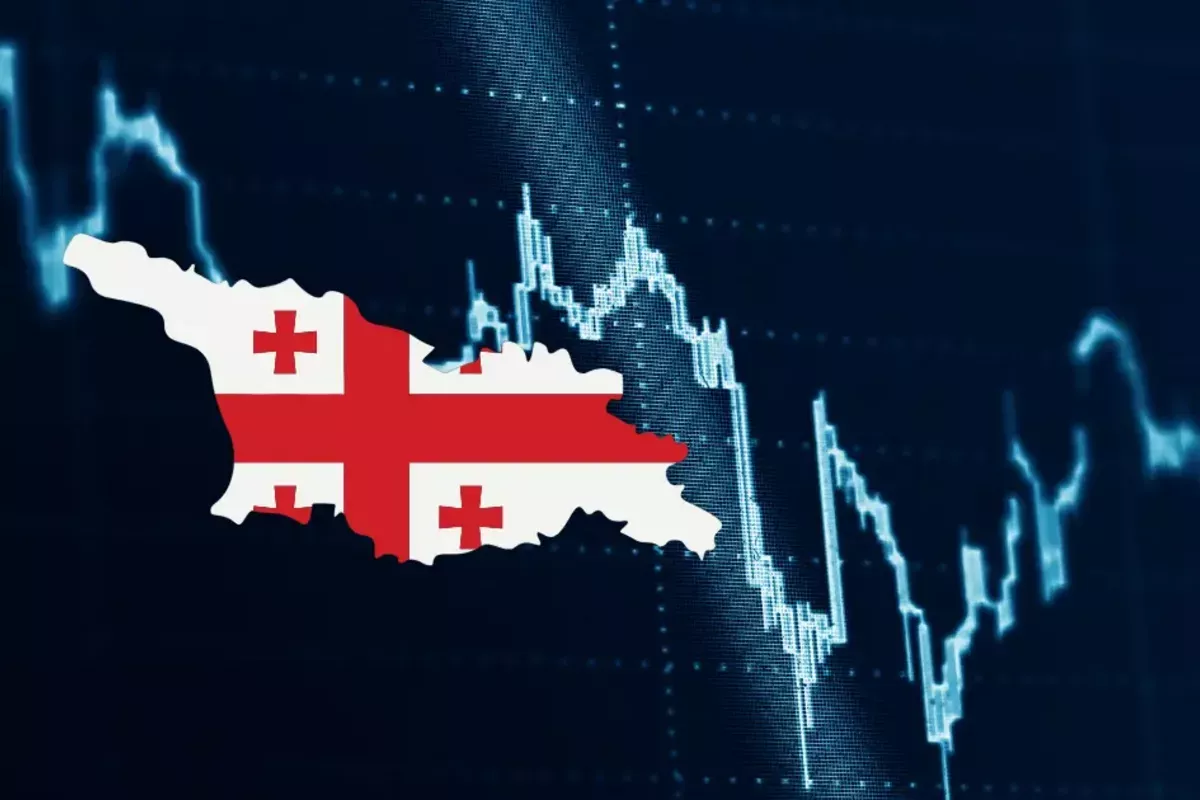
Shutterstock photo
The answer lies in the structure of Georgia’s economy. It is relatively small, flexible, and deeply connected to external flows - trade, tourism, remittances, transit, services, and regional logistics. These channels are allowing the country to sustain high growth even under political pressure.
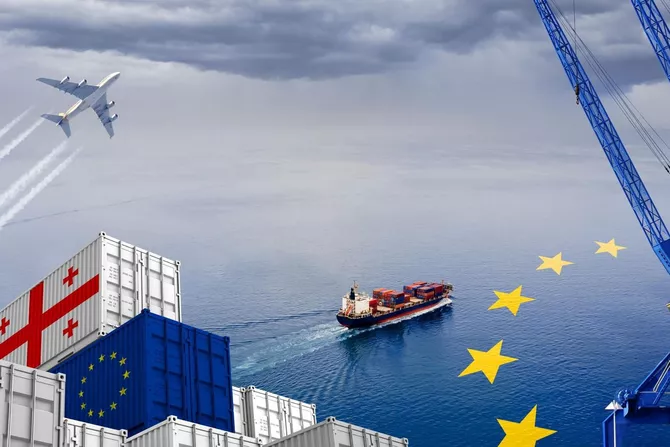
One of the key drivers has been exports. According to Geostat, Georgia’s foreign trade turnover in January-March 2026 stood at $5.867 billion, up 0.2% year-on-year. On the surface, this increase looks modest, but the structure of trade reveals an important shift: exports jumped by 23.4% to $1.723 billion, while imports fell by 7.1% to $4.143 billion. The trade deficit amounted to $2.419 billion, or 41.2% of total foreign trade turnover.
This is an important signal. For Georgia, a country that has traditionally run a large trade deficit, accelerating exports combined with declining imports points to an improvement in the external trade balance. Among Georgia’s largest export destinations in the first quarter of 2026 were China, Kyrgyzstan, and Russia: exports to China amounted to $203.2 million, to Kyrgyzstan $190.9 million, and to Russia $145.5 million. The country’s 10 largest trade partners accounted for 71.6% of total exports.
A second factor is the services sector, particularly information technology, professional and technical services, transport, warehousing, logistics, and construction. Geostat noted that in March 2026, significant contributions to growth came from manufacturing, information and communication, professional, scientific and technical activities, mining, construction, transport, and storage.
This means Georgia’s economy is not growing solely because of consumption or tourism. A broader growth base is emerging, built around logistics, services, processing industries, IT, and regional trade operations. Since the start of the war in Ukraine, Georgia has become one of the routes for business relocation, migration, corporate movement, and transit flows between Europe, Türkiye, the South Caucasus, Central Asia, and Russia. This effect no longer appears temporary; it is gradually becoming a structural advantage.
Credit: Georgia’s Economy
A third factor is tourism. Here, the picture is more mixed. In the first quarter of 2026, Georgia received around 994,800 international visitors, up 2.5% year-on-year. However, total spending by foreign visitors stood at 2.2 billion lari, down 5.2%, while average spending per visit fell by 5.1% to 1,897.1 lari, or about $705.
In other words, Georgia received slightly more visitors, but they spent less. For the economy, this is a warning sign, because tourism remains one of the country’s main sources of foreign currency revenue. Still, the situation does not appear critical: according to separate estimates, Georgia’s tourism income in the first quarter reached $829.8 million, marking a 0.5% increase year-on-year.
A fourth factor is remittances. In March 2026, money transfers to Georgia increased by 9.8%. This remains an important channel supporting domestic demand, especially for a small economy where many households depend on income from abroad. According to World Bank data for 2024, personal remittances accounted for around 11.9% of Georgia’s GDP.
A fifth factor is macroeconomic resilience. The World Bank notes that in 2025, Georgia’s current account deficit narrowed to 2.6% of GDP, compared with 4.6% in 2024. This was supported by a 7% increase in services exports and a 5% rise in remittances, while goods exports also grew, partly due to the re-export of cars. Tourism receipts rose by 6%, and international reserves increased by 57.3% year-on-year, reaching a level equivalent to 3.9 months of imports of goods and services.
Yet behind these strong figures, several vulnerabilities remain.
The first is inflation. According to Civil Georgia, annual inflation in April 2026 reached 5.9%, compared with 4.3% in March. This means that rapid economic growth is being accompanied by rising price pressures.
The second vulnerability is dependence on the external environment. The International Monetary Fund expects Georgia’s current account deficit to widen to 5% of GDP in 2026, due to higher oil prices and weaker tourism receipts. This means that the resilience of Georgia’s economy depends heavily on factors that Tbilisi does not fully control: energy prices, regional security, tourist flows, remittances, and external trade conditions.
Credit: Reuters
The third vulnerability is political risk. An economy can grow despite politics, but not indefinitely. If relations with the EU and the United States continue to deteriorate, this could affect long-term investment, financial support, access to Western markets, and the country’s reputation. One strong quarter of GDP growth does not remove the broader question of Georgia’s strategic direction.
This is where the central paradox emerges. Economically, Georgia is still benefiting from its geography and flexibility. It remains a corridor between regions, a platform for trade, services, tourism, financial flows, and logistics. Politically, however, the country risks losing what had long been considered its greatest asset: the reputation of being the most pro-Western and institutionally predictable state in the South Caucasus.
That is why the 10.7% growth recorded in March is not merely an economic headline. It is also a political signal. It shows that Georgia’s economy has strong momentum, but it also raises a more serious question: can the country turn this growth into long-term development if its foreign policy course becomes increasingly contested?
Today, Georgia is growing not because it has no problems. It is growing because its economy is embedded in regional flows that, for now, remain stronger than the domestic political crisis. But if that crisis becomes chronic, and if relations with Western partners continue to worsen, economic growth may prove not to be the foundation of future success, but a temporary window of opportunity that Tbilisi risks missing.
By Samir Muradov