The rivers of Central Asia may cause a crisis in the region. There are two important rivers in the five “stans” (Kyrgyzstan, Tajikistan, Turkmenistan, Uzbekistan, Kazakhstan), the Amu Darya and the Syr Darya. Still, there is no comprehensive agreement on water sharing between the countries. Today’s water politics here is a test of diplomacy.
Disagreements over dams, irrigation and water use between upstream and downstream countries could create the potential for conflict, including the risk of water-related disputes escalating into regional instability. Even Uzbekistan’s late President Islam Karimov, back in 2012, issued a warning about the “prospect of war” in Tajikistan over their Rogun dam. This article suggests that if water diplomacy does not take place, the world of Central Asia will become more water-scarce, leading to issues of food, energy, and stability, but also demonstrates that there are smart solutions and examples from outside the region that can offer a route forward. Recognising shared responsibility can motivate collective action and hope for a peaceful future, The Caspian Post reports via EurasiaReview.
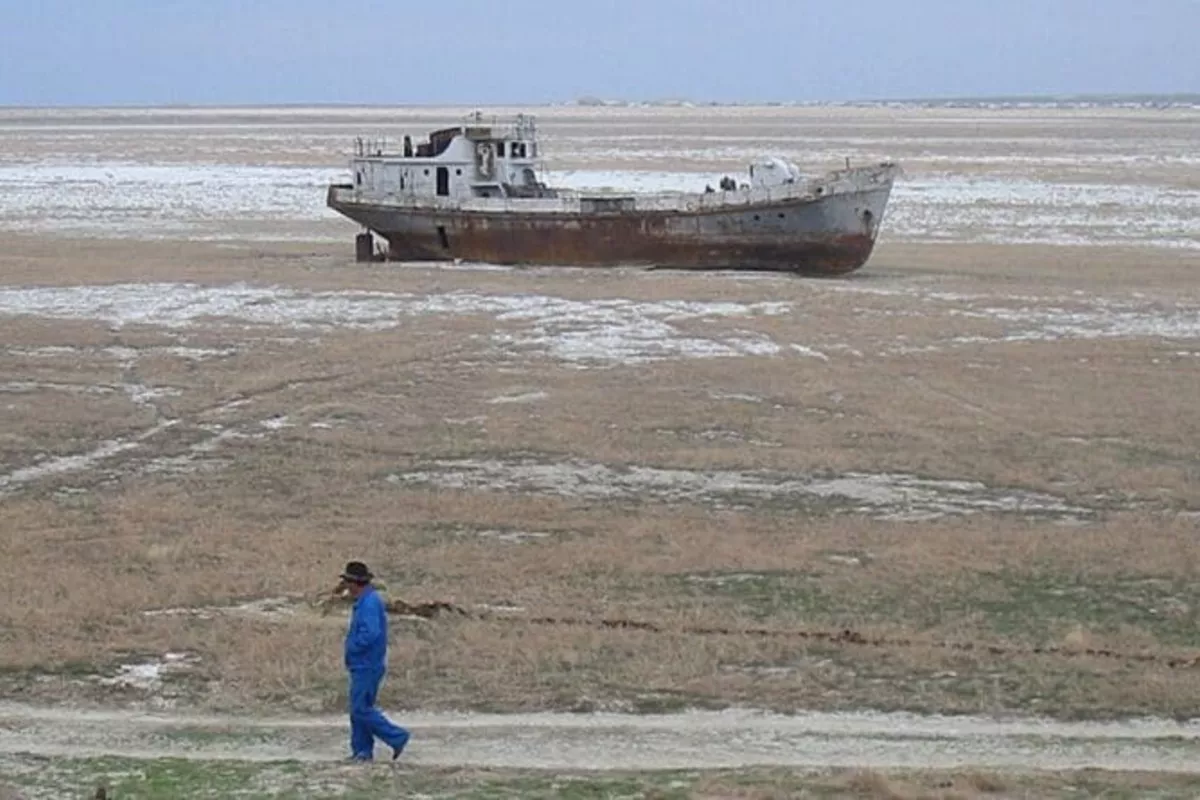
When the Soviet Union dissolved in 1991, the Central Asian republics inherited the Soviet Union’s vast irrigation projects. These canals were meant to channel water from the mountains of Kyrgyzstan and Tajikistan into cotton and wheat fields in Uzbekistan, Turkmenistan, and Kazakhstan. However, they were hastily constructed without consideration of efficiency. Nowadays, the region consumes “150% more water for irrigation than the recommended amount” because of its leaky canals and unsustainable practices, which not only depletes water resources but also damages the environment. The result was predictable: the Aral Sea, into which those rivers flow, lost over 90% of its volume and became a poisoned desert of salt and chemicals. The collapse of the Aral Sea is a dramatic example of the consequences of unchecked water politics, illustrating how mismanagement can threaten regional stability and ecological health.
Water is in short supply and is poorly managed. In Central Asia, the per capita annual renewable water availability was 8,400 cubic metres, but has now dropped to 2,500 m³ per person per year and is expected to decrease to less than 1,700 m³ by 2030. In contrast, the “water stress” threshold is typically considered to be approximately 1,700-1,700 m³ per second in the world (By comparison, the ‘water stress’ threshold is often used when water is brought in at around 1,700-1,700 m³). The five countries are already short of supplies due to legacy waste and rising demand. Water-intensive agriculture (primarily cotton) supports almost 30% of the population and has an immediate impact on livelihoods when flows are reduced.
Upstream vs Downstream: The Fault Lines
The conflict of today is evident: upstream countries need hydropower, while downstream countries need irrigation.
Upstream (mountains): Kyrgyzstan and Tajikistan. They are high-altitude, hydro-rich, and depend on reservoirs and dams for ~70% of their electricity. In winter, when the weather is harsh, they have to release water from the reservoir to generate heat and electricity.
Downstream (plains): Uzbekistan, Kazakhstan, Turkmenistan. The basins are arid, with huge stretches of cotton and wheat fields. These countries rely on the summer river flows for irrigation. On average, about 53 km³ of water is consumed annually, primarily for agriculture (45% of the region’s consumption). They are happy to give up gas or electricity this winter and more than willing to accept what is offered by their northern neighbours, but in the summer they need the rivers.
Seasonal tug of war: a conflict that is always ongoing. Every spring, Tajikistan and Kyrgyzstan release water from their dams to generate power later, while Uzbekistan and Kazakhstan do not have water for irrigation. This used to boil a little at us in the previous years. For instance, because of turmoil over the water releases, trains and flights were cancelled between Tajikistan and Uzbekistan, and there were even threats of war.
One recent flash point is the Rogun Dam on the Vakhsh River (Tajik Amu Darya), a tributary to Tajikistan. Tajikistan restarted the work on Rogun, and Uzbekistan protested that it would “severely harm” water supplies and crops downstream from it. This dispute escalated to the point that President Karimov spoke of war. The conflict also breaks out periodically along water infrastructure: in recent years, Kyrgyz and Tajik guards have clashed over water canals.
But this water-energy conflict has also resulted in collaboration. Kazakhstan and Uzbekistan, in late 2025, agreed to provide additional electricity to Kyrgyzstan to help conserve water in reservoirs for the 2026 irrigation season amid a drought and energy shortage. Namely, “If you can supply us with sufficient water for our crops by May, we will give you power in January.” The barter deals, dubbed ‘water-energy swap‘, demonstrate that if the political will is there, countries can find win-win options.
Climate Change and Melting Glaciers
Seasonal politics, of course, isn’t tough enough, but climate change is adding to the murky situation with water. The rivers of Central Asia are reliant on mountain snow and ice. About 80% of the flow of these rivers, the Amu and Syr Darya, is derived from the glaciers and snowmelt. However, glaciers are melting rapidly: The glaciers of the Tien Shan have lost about ¼ of their mass in the last 50 years, and it is estimated that half of them will be lost over the next 25 years. After that “ticking time bomb”, there won’t be a stable source of summer meltwater at all.
The immediate effect is a temporary rise in river flow due to the melting of ice, with the river flow decreasing more drastically later. That’s one mid-2000s study that suggested Central Asia’s water levels could plummet around 2030. At the same time, the region is warming faster than the global average. Just experienced severe droughts and heatwaves in Central Asia; Kazakhstan was impacted by an extreme weather event in 2024, resulting in a 26% loss of wheat. One report forecasts as many as two-month-long heatwaves by 2050, crops withering, and farm workers finding it hard to work in fields.
There’s a twist to Afghanistan’s new canal (Qosh Tepa). It will be able to divert up to a quarter of the Amu Darya’s flow out of Central Asia once it is completed. Also, upstream water diversion on rivers (such as the Volga, Ili and Irtysh) is being carried out by Russia and China, impacting Kazakhstan’s share. In summary, water supply is being attacked from all sides: climate change, new projects, population growth (Central Asia’s population increased by 60% since 1991), and misuse.
Who Cares and Why?
“So what? Who cares?” We should. These rivers impact 50 million people and the stability of a broad area. Central Asia is a region of peace between Russia, China, South Asia, and the Middle East; its peace is important. What if the cotton belts fail to produce? There could be a surge in food prices in Pakistan and Afghanistan, with repercussions including joblessness among farmers and discontent. Or in the event of power outages in Kyrgyzstan and Tajikistan throughout the winter (as during 2007-08), cold winters take lives and erode public confidence. The World Bank already predicts that by 2050, water stress could cause 5-6 million people to move.
Furthermore, dust storms from Central Asia, resulting from the shrinking of the Aral Sea and desertification, can carry salt and toxins over China and even into the Arctic. Water conflict here may involve major powers’ interests (energy, security); the US and EU have been backing damming and dialogue projects here. Then-U.S. Secretary of State Pompeo made water cooperation in Central Asia a foreign policy priority in 2018. In short, from the Uzbeks of Tashkent to Brussels, many see water-related wars as a nightmare scenario.
Building Trust Across Borders
It is worth keeping in mind that water conflicts are not necessarily followed by war. There are some positive lessons to take from history. Despite the hostility India and Pakistan have faced each other over the years, they have still managed to follow the Indus Waters Treaty to manage the river together, and it has transcended war. In 1994, Israel and Jordan signed a peace treaty under which they share responsibility for managing the Jordan River. The UNECE Water Convention (1992) and the EU Water Framework have promoted cooperation on the Danube, Rhine, and other rivers in Europe. The Mekong River Commission (with Cambodia, Laos, Thailand and Vietnam) operates regional projects even though China (the dominant upper riparian) is only a dialogue partner.
Key to these successes are treaties and institutions with monitoring and enforcement. Water basins with signed treaties rarely go to war, as scholars point out. Today, in Central Asia, there are only a few sub-basin-level pacts. But if the “stans” would sign a modern river treaty (for each river or for the whole of the basin) that includes transparency in the rules and maybe a neutral oversight institution, then trust would be established. The concept of trading water for energy, essentially a community benefit-sharing, is embedded in some proposals.
The news of the past few days is cautiously upbeat. In fact, in 2025, Uzbekistan and Kazakhstan signed bilateral agreements that ensure water releases downstream are timed to upstream farms. In an address, Kyrgyzstan’s President Japarov has appealed to create a Central Asian Water Commission, similar to the International Fund for Saving the Aral Sea (IFAS) established in 1993, to harmonise water management in the region. In 2025, leaders committed themselves to creating “solidarity… in water-energy exchange” (the words of Uzbekistan’s president) during a regional summit. As UNECE reports, in the last three years, four bilateral water agreements have been signed in Central Asia, a testament to rivalry yielding to routine water cooperation on some stretches.
What Must Be Done
But these are signs of life, and they must be translated into actual solutions.
Examples of actions to consider:
Enforce Water-Energy Swaps. Upstream countries (Kyrgyzstan and Tajikistan) supply electricity to their downstream neighbours at lower prices, provided they receive assurances of reservoir releases for irrigation. Indeed, during winter 2025, Kazakhstan and Uzbekistan exported surplus electricity to Kyrgyzstan to help it store water for the summer season. If this type of trade, formalised in an agreement, were institutionalised, it would help even out demand peaks.
Modernise Agriculture. Downstream farmers need to minimise the waste. Pilot projects for drip-irrigation and canal lining in Uzbekistan and Turkmenistan. Water prices were even introduced in Uzbekistan, and cotton is being diversified. The efficiency gains would reduce total demand by 10-20% (which would be sufficient to avoid a significant additional demand for river flow). The EU and the World Bank are ready to provide funds to upgrade Central Asian irrigation.
Revive Basin-wide Treaties. The five countries have to renegotiate or develop new Soviet-era agreements. The multilateral Syr Darya commission could ensure minimum flows, and a separate agreement for the Amu Darya would do the same. As one study recommends: “Draw up good Water management law… and enforce it by all States in the region”. That involves binding rules (not just ‘cooperation’) and possibly international observers to uphold them.
Joint Infrastructure Management. For projects that have competing interests (such as “Rogon”, “dams in Kyrgyzstan”), form a common operating Board with all riparians involved. But some Central Asian scholars suggest “neutral dams”, which would be financed by the different states. It is technically demanding, but basically, it is to make everybody a stakeholder to move away from the zero-sum mentality.
Climate Adaptation and Data-sharing. The governments should fully implement SDG Indicator 6.5.2 (reporting on transboundary water cooperation) as recommended by UNECE. This includes sharing data on reservoir levels and snowmelt in real time. With climate volatility, forecasting floods and droughts jointly is critical. With the flexibility to share and warn, even if flows are reduced overall, it can prevent sudden crises.
International Support. The UN, EU or OSCE can be honest brokers. Outside facilitation for Central Asia’s hard negotiations could take the form of the Indus Treaty, brokered by the World Bank. International law offers principles such as “equitable and reasonable use,” which could serve as a basis for new treaties, such as the 1997 UN Watercourses Convention, which Uzbekistan ratified.
These measures are not science fiction; regional experts discuss many of them. The goal is to offer solutions, not just a description of a problem. Better management of water sharing would benefit the five countries. Kyrgyzstan and Tajikistan could develop hydropower (to help them overcome energy poverty), without exhausting summer flows. Water quality would be enhanced for downstream countries (dams could improve water quality by trapping salts), and irrigation would be more reliable. A revitalisation of the Aral Sea (partial reflooding) should also be encouraged, as a healthier climate would lead to increased rainfall in the region and boost fisheries on both sides of the border.
Conclusion
The water crisis of Central Asia is grave. Additionally, it will cause political tensions and suffering. But hope is not lost. Through experience sharing and resource use (Soviet-era canals and electricity grids, IFAS legacy), and through world practice, it shows that treaties can and do endure. If the leaders of Central Asia take timely actions - increasing dialogue and updating agreements, increasing efficiency and putting water onto the foreign policy agenda - ‘water wars’ can be avoided.
Why do you think you should care, students and citizens? Global security often starts with local water. Keep in mind that a small fight over water upstream may lead to instability. Successful water diplomacy could serve as a model of cooperation in an increasingly fractious world. Central Asia will have to choose mutual survival over rivalry. We have all the tools we need; now we need the political will.
By Ravi Raj