Central Asian States Following China’s Lead on AI
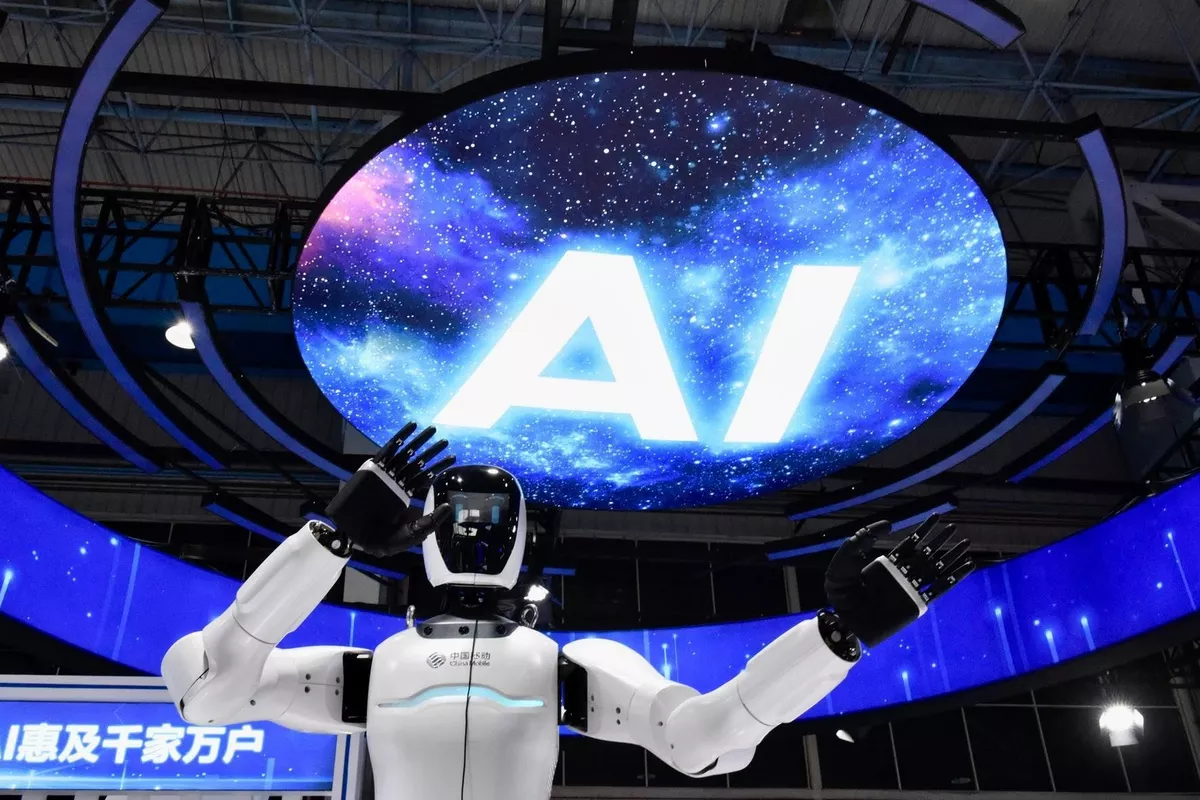
Central Asian states are tilting towards Beijing amid intensifying competition between United States and China for predominance in artificial intelligence development. Top officials from Kazakhstan, Kyrgyzstan, Tajikistan and Uzbekistan gathered recently in Shanghai to attend the World Artificial Intelligence Conference, where Chinese leader Xi Jinping presented an ambitious vision for the Beijing’s leadership in the global AI race. The American and Chinese models for AI development differ significantly. Ahead of the conference on July 16, officials from 29 countries, including the four participating Central Asian states, signed an agreement to establish the World Artificial Intelligence Cooperation Organization (WAICO), headquartered in Shanghai and apparently designed to help Beijing promote its global AI ambitions.
Kazakh President Kassym-Jomart Tokayev, who notably addressed the AI gathering right after Xi’s opening speech, praised China’s leadership on AI, saying that “more than half of the world’s AI researchers are from the PRC, Chinese innovators hold the largest number of AI-related patents, and the country’s dynamic innovation ecosystem is advancing at a breakthrough pace across many areas of cutting-edge technology.” To prove his point, Tokayev offered to host WAICO’s first annual meeting in Astana, as well as set up WAICO’s Central Asian office in the Kazakh capital. In addition, following Tokayev’s meetings with Xi and Chinese executives, more than 70 deals worth over $15 billion were signed, many of them dealing with AI, digital infrastructure and other high-tech initiatives.
Tajikistan’s Ministry of Industry and New Technologies also announced bilateral agreements with the PRC in Shanghai, while Uzbekistan’s digital development minister met with major Chinese entities to discuss joint AI projects. Those talks did not yield any specific deals, however. Meanwhile, Turkmenistan did not send a delegation to Shanghai, but the country’s Ministry of Communications signed a MoU with China’s National Development and Reform Commission, a powerful super-ministry, covering AI cooperation.
Kazakhstan
The $15 billion portfolio of deals signed in Shanghai also included agreements on transport, manufacturing, energy and critical minerals. While few specifics have been disclosed, some of the major deals included:
An investment agreement with China’s Guoyou Materials Group for the construction of a multifunctional terminal in Kazakhstan’s Caspian port of Kuryk, a key hub of the Middle Corridor.
An MoU with China Communications Construction Company for the construction of a 600 MW hydroelectric facility in the Almaty region.
A cooperation agreement signed by China’s Acre Coking & Refractory Engineering Consulting Corporation, Kazakhstan’s largest steel producer, Qarmet, and the Development Bank of Kazakhstan to construct two new coke battery complexes and a coke gas purification system in the Karaganda region.
A financial agreement between the Development Bank of Kazakhstan and China Central Depository & Clearing Co. to facilitate greater participation by Chinese investors in Kazakh financial instruments and strengthen links between the two countries’ financial systems.
An MoU signed by Samruk-Kazyna, Freedom Holding Corp., the Astana city administration, and China’s Geely Auto Group to develop EV-charging infrastructure and introduce AI solutions to Kazakhstan’s automotive industry.
A licensing agreement between Kazakhstan’s Astana Group and the PRC’s auto giant Chery Holding Group to manufacture Chinese EVs Omoda and Jaecoo at the Astana Motors Manufacturing plant.
An MoU between Kazakhstan National University (KazNU) and the Suzhou University to establish the former’s campus in China.
Separately, Kazakhstan’s prime minister instructed the Ministry of Ecology and other agencies to finalize negotiations with China Tianying Inc within two weeks and submit for approval an investment agreement for the construction of new waste management facilities in at least three major Kazakh cities.
Kyrgyzstan
Kyrgyzstan’s state-owned agricultural company Kyrgyz Agroholding signed an MoU with the China National Electric Engineering Corporation to build a fertilizer plant in the Central Asian nation with a capacity of up to 600,000 tons per year. The same Kyrgyz company also made a deal with Chinese biotechnology company Shijiazhuang Shineon to build a veterinary vaccine plant in Kyrgyzstan that will annually produce 25-30 million doses that meet international GMP standards.
Turkmenistan
Turkmenistan and China signed a package of agreements spanning energy, artificial intelligence, science and technology, education, healthcare, culture, transport, and logistics. Key deals included the establishment of a joint Turkmen-Chinese Energy Education Center, a new framework for AI cooperation, a 2026-2028 scientific and innovation partnership program, and a five-year bilateral cooperation plan covering 2026-2030.
Turkmen civil servants are taking part in China’s two-week specialized seminar, learning about operational mechanisms of the World Trade Organization and integration into the global economy, reports Orient. And Turkmen teachers and scholars underwent training in China, where they learned about modern teaching methodologies, the HSK testing system, and the use of digital technologies in education.