China Opens New Central Asia Rail Link to Strengthen Overland Trade Amid Shipping Risks
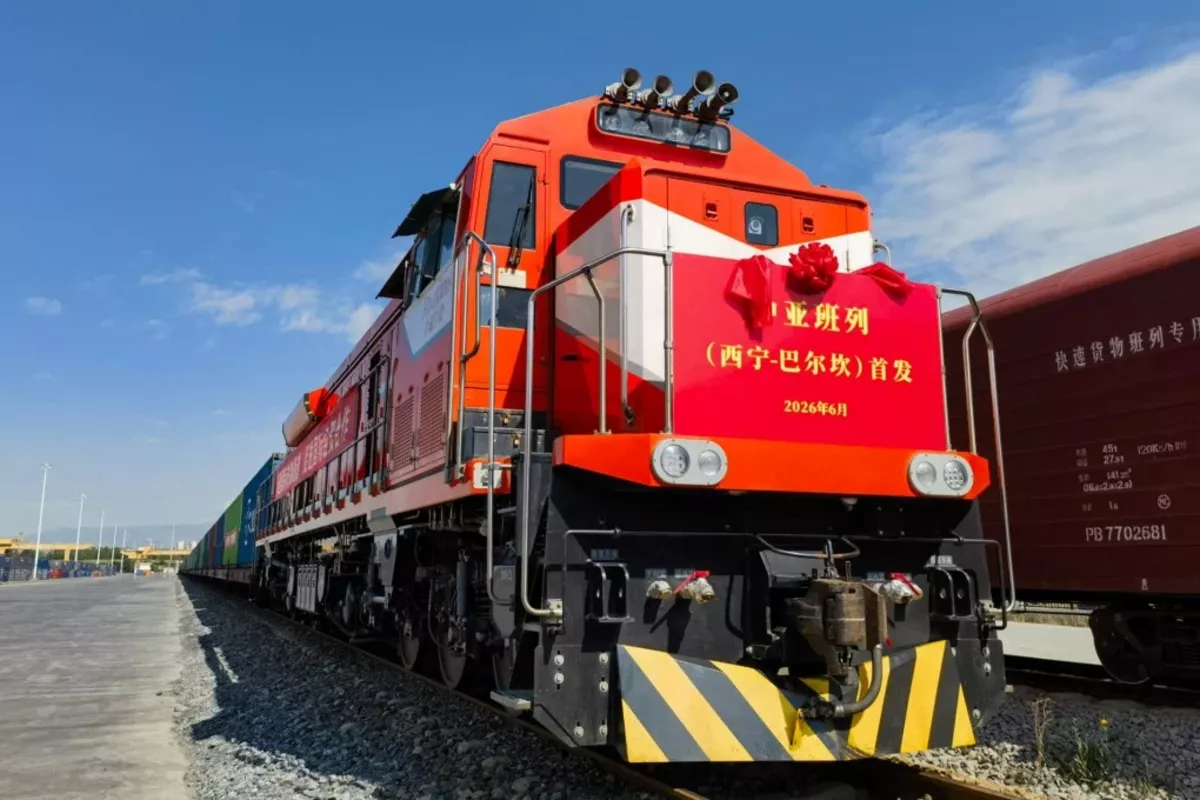
A new 5,420 km (3,367 miles) rail service connecting western China with Turkmenistan has launched, expanding the country’s trade network in Central Asia as part of Beijing’s intensifying efforts to diversify overland routes and bolster supply chain resilience.
The inaugural train departed on Sunday (June 28) from Xining, capital of Qinghai province, loaded with electrical appliances, auto parts, clothing and other daily necessities, state broadcaster CCTV reported. The 55-container goods train is expected to reach western Turkmenistan’s strategically-located freight rail terminal in Balkan Velayat in 14 to 15 days, The Caspian Post reports via South China Morning Post.
Since launching its first China-Europe goods train service in 2016, Qinghai has emerged as a gateway connecting western China with the Eurasian land mass, expanding international rail links to 16 cities across 10 countries. With the new service, the province’s Central Asian network now reaches Kazakhstan, Uzbekistan and Turkmenistan, broadening market access for exporters.
The new route will pass through the Horgos border crossing in the Xinjiang Uygur autonomous region and through Kazakhstan, and marks the latest step in Beijing’s push to build a land-based supply chain and trade network spanning Central Asia, Southeast Asia and Europe, deepening economic ties with resource-rich neighbours and reducing reliance on vulnerable maritime shipping lanes.
Beijing has accelerated investment in cross-border rail infrastructure for years under the Belt and Road Initiative, which links global economies into a China-centred trading network and promotes connectivity and infrastructure development with more than 150 partners across Asia, Africa, Europe and Latin America.
The rail network is seen as an important hedge against disruptions to global shipping, which has only taken on greater urgency since the effective closure of the Strait of Hormuz during the US-Israeli war on Iran.
“The railway has reduced China’s vulnerability to naval chokepoints such as the Malacca Strait and fosters economic interdependence with Central Asia and Europe,” wrote Bob Savic, head of international trade at the Global Policy Institute in London and visiting professor of international relations at the University of Nottingham, in an article in April.
“Politically, the railway offers Beijing a tangible tool for influence: countries along the route benefit from Chinese infrastructure loans and increased trade volumes, creating a web of mutual interest.”
The railway also benefits Europe, Savic added, highlighting Germany’s Duisburg, which had become the continent’s largest rail hub for Chinese freight despite concerns over dependence on Beijing.
Qinghai’s commerce department said the direct route would lower logistics costs and provide a more stable export channel for manufacturers, including producers of light industrial goods, salt lake chemicals and agricultural products seeking access to Central Asian markets.
The latest service followed the launch earlier this month of a new freight route from Chengdu, Sichuan province, also to Turkmenistan. By May 31, Horgos, the world’s biggest dry port, had processed more than 46,000 China-Europe goods train trips via Central Asia, with 87 operational routes linking 46 cities and regions across 18 countries, Xinhua reported.
In April, a cold-chain goods train began operating from Thailand and travelled through Laos to Kunming, the capital of Yunnan province in southwestern China.