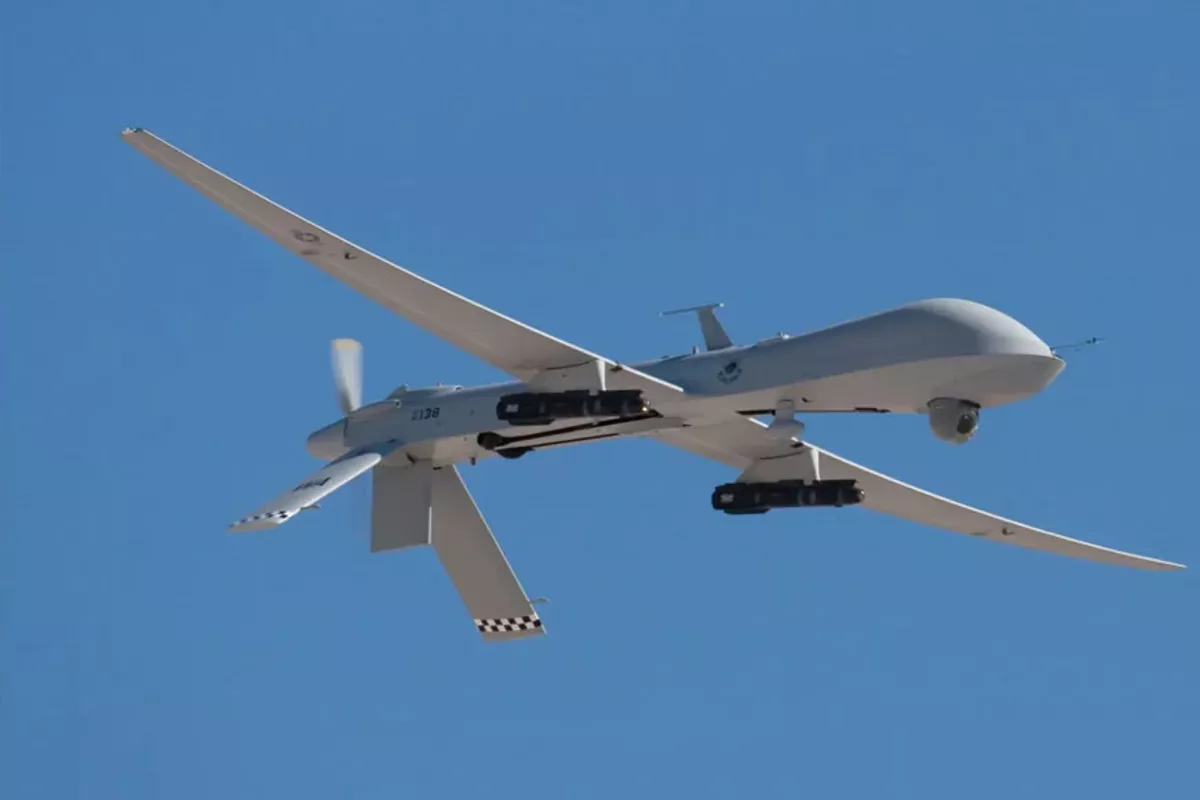
Today, the development of drone technologies and counter-drone systems is accelerating rapidly across Central Asian states, particularly in Uzbekistan. The growing role of unmanned aerial vehicles (UAVs) and their transformation into key instruments of asymmetric warfare have made this sector increasingly attractive to countries in the region. Against the backdrop of the ongoing Russia-Ukraine conflict and escalating tensions in the Middle East involving Israel, the United States, and Iran, the operational capabilities of military drones have expanded significantly. These developments are compelling Central Asian states to build modern, combat-ready armed forces grounded in advanced military technologies.
Asymmetric methods of warfare are increasingly providing strategic advantages to relatively less developed states. In this context, the role of UAVs is growing substantially, as is the need to develop effective countermeasures against them. Iranian drones such as the Shahed and Arash, with unit costs ranging from US$25,000 to US$50,000, are compelling the United States and Israel to deploy expensive interception systems such as THAAD and Patriot, each priced between US$1.5 million and US$15 million per unit. This dynamic not only imposes a significant financial burden but also leads to the rapid depletion of missile defence stockpiles. Although the US and Israel report that a number of Iranian drones are being destroyed using a new laser weapon called HELIOS, its effectiveness remains limited by weather-related factors.
Uzbekistan
Uzbekistan is one of the regional leaders in establishing a UAV industry. Since 2022, military unmanned aerial vehicles have been produced under the Lochin brand by the State Committee for Defense Industry. These systems are designed to carry out reconnaissance, surveillance, real-time data transmission, and intelligence-gathering missions. The Lochin HA-251 hexacopter, designed for tactical strike operations, can carry a payload of up to 10 kg for 30 minutes, with a combat radius of 5 km and a maximum altitude of 5,000 metres. In addition, these systems may be utilised in civilian sectors for monitoring natural resources and critical infrastructure. In the defence domain, Uzbekistan actively cooperates with Türkiye, employing Bayraktar-series UAVs for border security and aerial monitoring. Uzbekistan has also signed an agreement on the import of Turkish Anka UAVs.
Since 2022, military unmanned aerial vehicles have been produced under the Lochin brand by the State Committee for Defense Industry.
Furthermore, Uzbekistan is currently developing its own counter-UAV industry. The company Electronic Autonomous Solution (EAS), established in 2023, specialises in the design and production of electronic warfare systems intended to protect critical infrastructure from small UAVs.
One of the company's flagship products is the EAS Dome system, an integrated solution combining advanced sensor arrays, artificial intelligence components, and robust counter-UAV capabilities. The system provides airspace monitoring within a radius of 5-10 km and is capable of neutralising unmanned aerial vehicles at distances of up to 3-5 km. It is equipped with EAS Fowler devices, which enable the detection and suppression of UAVs through electronic countermeasures. In addition, the company has developed solutions such as EAS Aetherscan Full, EAS ADE A3M AIRWALL FULL, and EAS ADS AIRSHIELD, which allow for the automated, high-precision identification of drone parameters - including model, altitude, coordinates, and range - through radio frequency spectrum analysis. The company currently offers its products not only on the domestic market but is also actively expanding into international markets.
Kazakhstan
Kazakhstan is likewise among the leading states in the region in terms of UAV industry development. The country implements programmes for the deployment of unmanned systems in agriculture, industry, cartography, the private sector, and national defence.
In the military domain, Kazakhstan is advancing the production of the Anka UAV in collaboration with Turkish Aerospace Industries, designed for reconnaissance, strike, surveillance, and monitoring missions. In 2024, two years after the establishment of a dedicated UAV unit within the Airborne Forces, 100 FPV (First-Person View) drones were produced. FPV drones are unmanned aerial vehicles that provide real-time first-person-view control and are used for reconnaissance and surveillance.
Kyrgyzstan
Kyrgyzstan procures civilian unmanned aerial vehicles primarily from China, while sourcing military drones predominantly from Türkiye. As early as 2021, the country reached an agreement to acquire Bayraktar UAVs. Subsequently, in 2023, it procured the Akıncı and Aksungur multi-role combat UAVs. Kyrgyzstan is also an operator of Russian Orlan-series unmanned systems. In order to reduce external dependency in this domain, Kyrgyzstan is actively pursuing the establishment of a domestic UAV manufacturing industry. In April 2026, during a visit to the Dastan enterprise, President Sadyr Japarov announced plans to develop the country's defence-industrial complex and indicated that the facility would commence production of unmanned aerial vehicles as part of a broader high-technology industrial development agenda.
On 26 March 2026, representatives of the Kyrgyz Ministry of Water Resources and Agriculture met with the Chinese company Quanyibao to discuss the establishment of a local branch and the organisation of joint UAV production. These developments collectively indicate that Kyrgyzstan intends, in the near term, to establish its own production base for the manufacture of unmanned aerial vehicles across a range of applications.
Tajikistan and Turkmenistan
Tajikistan is among the states that impose strict restrictions on the import, storage, and civilian use of unmanned aerial vehicles. Drones in the country are employed primarily for military security purposes, with cooperation extended to Russia and Iran in this sphere. Reports emerged as early as 2022 regarding a potential agreement with Iran to localise Shahed-series UAV production. However, to date, no confirmed evidence exists of the actual manufacture of such systems on Tajik territory.
The military UAVs at the country's disposal are used for state border protection, as well as in the operations of security forces and law enforcement agencies. Nevertheless, during President Emomali Rahmon's November 2025 visit to the newly established Innovation Centre of the Ministry of Internal Affairs, it was announced that the centre would engage in specialist training and the development of small UAVs - indicating nascent national initiatives in the field of unmanned systems technology.
Turkmenistan, like Tajikistan, officially restricts the use of unmanned aerial vehicles on its territory. Nonetheless, the country actively employs military UAVs for border protection, security, and surveillance. Over the years, Turkmenistan has procured Bayraktar TB2 medium- and long-range reconnaissance and strike UAVs from Türkiye, and the Rainbow CH-3 and WJ-600A/D - heavy, high-speed reconnaissance and strike drones - from China. The country's inventory reportedly also includes tactical reconnaissance UAVs from various manufacturers, among them the Belarusian Busel MB2, the American ScanEagle 2, the Israeli Orbiter 2B and SkyStriker, and the Italian Falco XN. According to some sources, steps were taken as early as 2013 to establish UAV production centres in Turkmenistan. Despite significant demand for unmanned systems in sectors such as security, border control, and agriculture, verified information regarding large-scale state investment in the development of this industry remains limited.
The Strategic Rationale
The Central Asian region sits at the intersection of major geopolitical interests. In an environment where the use of force frequently takes precedence over international legal norms, security considerations assume paramount importance. The conflicts in Ukraine, the Persian Gulf, Afghanistan, and Pakistan are geographically proximate to the region, heightening the likelihood of their indirect impact.
The emergence and development of a UAV industry in Afghanistan may be a growing source of concern for Central Asian states. According to some reports, Afghan actors have established local production and testing of military unmanned aerial vehicles - modelled on the Shahed-136 and MQ-9 Reaper - on the outskirts of Kabul and in Logar Province.
Furthermore, the emergence and development of a UAV industry in Afghanistan may be a growing source of concern for Central Asian states. According to some reports, Afghan actors have established local production and testing of military unmanned aerial vehicles - modelled on the Shahed-136 and MQ-9 Reaper - on the outskirts of Kabul and in Logar Province. There is the concern that Tehrik-e-Taliban Pakistan (TTP) and Al-Qaeda may increasingly make use of drones produced by the Taliban. This raises the risk of proliferation of strike-capable drones among terrorist and separatist groups operating in the region. Under these circumstances, Central Asian states face an urgent need to strengthen security along their borders and within their national territories, and to prepare for potential asymmetric threats. This necessitates the development of indigenous UAV and counter-UAV technologies capable of effectively responding to emerging challenges.
Conclusion
Recent geopolitical tensions in Ukraine, the Middle East, and South Asia demonstrate that states must increasingly rely on their own defence capabilities to safeguard national security and sovereignty. In this context, the development of modern warfare technologies - particularly UAVs and counter-UAV systems - could become a strategically important factor for Central Asian states, despite their still-limited capabilities in this field.
For Central Asian countries, especially Uzbekistan, advancing a domestic counter-UAV industry could serve as a critical measure to mitigate evolving asymmetric threats and safeguard regional stability.
The growing operational significance of UAVs in contemporary conflicts underscores the need for adaptive defence strategies. For Central Asian countries, especially Uzbekistan, advancing a domestic counter-UAV industry could serve as a critical measure to mitigate evolving asymmetric threats and safeguard regional stability.
By Islomkhon Gafarov, Saidakbar Shamsiev