Trans-Caspian Corridor Sees Sharp Rise in Sea Freight Volumes

Source: iStock

Trans-Caspian Corridor Sees Sharp Rise in Sea Freight Volumes

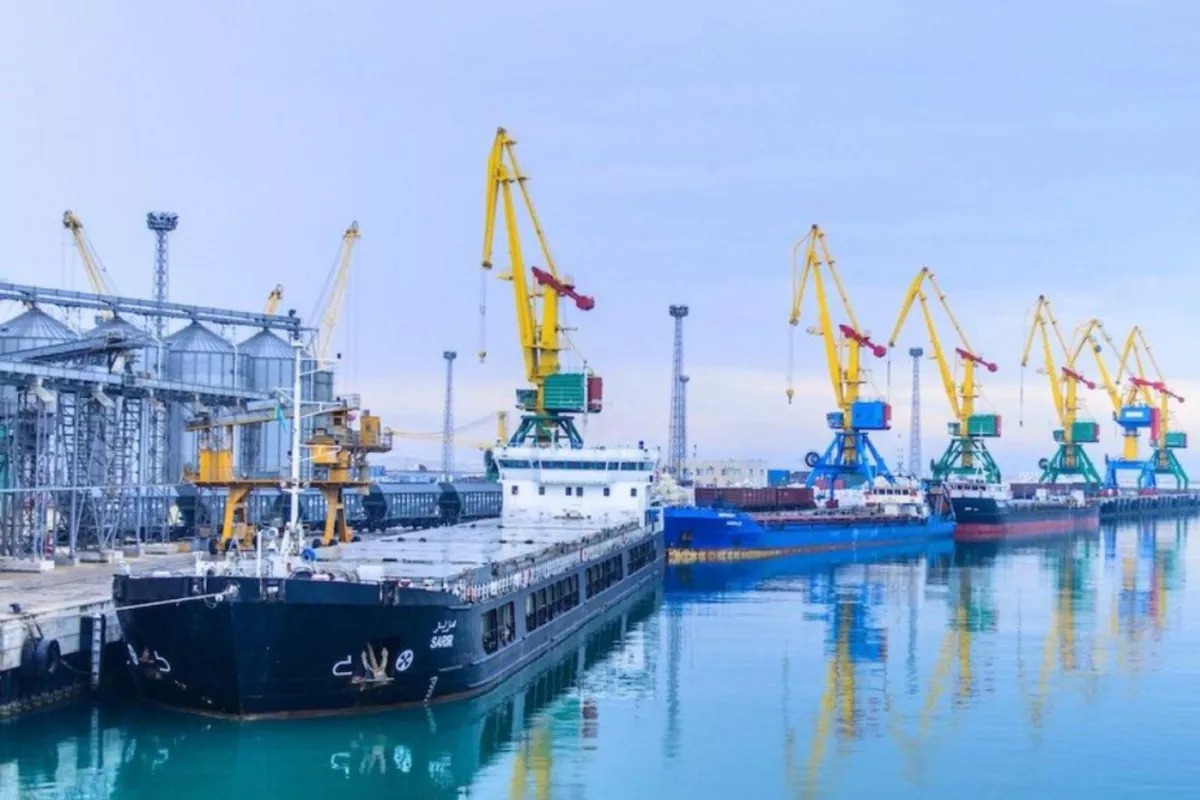
Sea freight volumes along the Trans-Caspian International Transport Route have exceeded 4.5 million metric tons in the first seven months of 2026, 60% more than the total recorded for all of last year.

The announcement was made by Chairman of the Board of the Eurasian Economic Commission (EEC) Bakytzhan Sagintayev following a meeting of the Eurasian Intergovernmental Council, The Caspian Post reports, citing TASS.

According to Sagintayev, the heads of government discussed the development of transport infrastructure along the east-west and north-south routes, including in connection with China’s Belt and Road Initiative.

He noted that a common transport space is being actively developed within the Eurasian Economic Union (EAEU), with the development of Eurasian transport corridors, including rail, road and port infrastructure, among the key areas of this work.

Sagintayev said the corridors account for around 70% of transit freight traffic, making it important to synchronize the development of national sections of transport infrastructure in each country.

“In 2025, freight traffic increased in virtually all [EAEU] member states. In particular, 21.5 million metric tons were transported along the North-South Corridor. The growth in sea freight along the Trans-Caspian route is impressive. In the first seven months of 2026, its volume exceeded 4.5 million metric tons. For comparison, that is 60% more than in all of 2025. According to expert estimates, infrastructure modernization will increase the capacity of the eastern route of this corridor to 20 million metric tons by 2030. This route has significant potential given our cooperation with China, Iran, the United Arab Emirates, and Mongolia,” he said.

Sagintayev also said the second stage of introducing electronic document management at Russian and Kazakh seaports had been completed, with paper documents becoming a thing of the past.

The EEC Board chairman noted that the introduction of digital tools simplifies procedures and reduces costs for businesses while accelerating the movement of goods as much as possible.

The Trans-Caspian International Transport Route, also known as the Middle Corridor, runs through China, Kazakhstan, the Caspian Sea, Azerbaijan, Georgia and onward to European countries. Container shipments along the route use both rail and maritime transport.

Related news

Trans-Caspian Corridor Sees Sharp Rise in Sea Freight Volumes

Sea freight volumes along the Trans-Caspian International Transport Route have exceeded 4.5 million metric tons in the first seven months of 2026, 60% more than the total recorded for all of last year.