Turkish Airlines Expands Fleet for Ultra-Long Routes
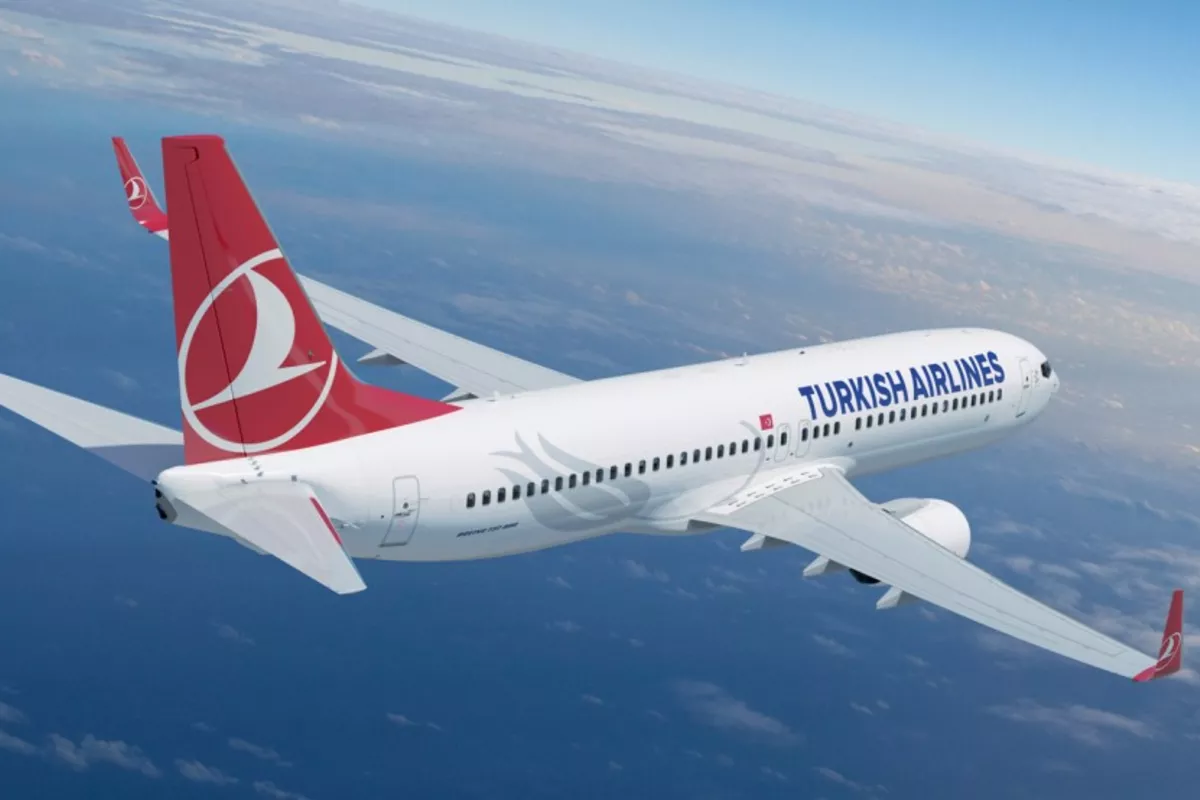
Turkish Airlines will launch non-stop ultra-long-haul flights connecting Istanbul with Australia and South America by late 2027, supported by a 420-aircraft fleet expansion involving specialized ultra-long-range Airbus jets, the airline’s chairman said, The Caspian Post reports, citing Anadolu.
Murat Seker made the remarks on the sidelines of the International Air Transport Association’s (IATA) 82nd Annual General Meeting and World Air Transport Summit in Rio de Janeiro on Monday, stating that the airline’s long-term growth strategy for 2033 remains on track despite rising global competition.
“Turkish Airlines has now ordered nearly 420 aircraft with the Airbus order placed in 2023 and the Boeing order placed last September - there’s no significant changes to our growth targets since we have a hub like Istanbul Airport,” he said.
The fleet expansion will include specialized ultra-long-range versions of the Airbus A350-1000, capable of operating non-stop flights of up to 17 hours.
Seker said these aircraft will allow the airline to use its extensive global network to introduce direct services to destinations such as Sydney, Melbourne, Buenos Aires, Santiago, and Lima.
“There will be some changes in the composition as this sector is highly competitive, with the circumstances becoming increasingly more difficult for airlines to grow by simply doing the same thing - more planes, more passengers, more revenue, while the profitability is declining, which is precisely why we will focus more on areas with higher added value,” he said.
The diversification strategy includes expanding the airline’s in-house digital wallet TKPAY, its door-to-door delivery service Widect, and the Turkish Holidays vacation package platform. The carrier is also exploring a potential strategic partnership with Spain’s Air Europa to strengthen its Transatlantic presence.
Seker said the flag carrier captured a new segment of global passengers amid recent regional dynamics, as the conflict in the Middle East temporarily disrupted Gulf carriers’ operations.
“There was an opportunity and we capitalized on it but only time will tell whether this will turn into a real and lasting opportunity in the long run,” he said, adding that he has been in close contact with the CEOs of Qatar Airways and Etihad Airways during the event.
He noted that Gulf carriers have since largely recovered capacity, with Qatar Airways reportedly at 85%, Etihad in a similar position, and Emirates at around 90% of pre-war levels, adding that demand has stabilized.
Seker emphasized that despite fluctuations in global energy markets affecting aviation, Türkiye faces no fuel supply risks due to its strong domestic refinery network. He added that Istanbul’s maritime location allows jet fuel imports by sea from northern markets, Iraq, and North Africa to ensure operational continuity.
“Our prices have been more favorable versus Asia, especially during periods when fuel reached up to $2,000 per ton. While we saw at most around $1,600-1,800 - currently they’re in the range of $1,200-1,300,” he said.
He added that high fuel costs will put financial pressure on the airline during the summer, potentially slowing annual capacity growth to around 2%. However, he expects a financial rebound by 2027, supported by the airline’s global transit network.