Chevron Confident on Kazakhstan Oil Exports Despite Attacks
Chevron said it remains optimistic that a key export pipeline transporting crude oil from the Tengiz field in Kazakhstan will continue operating despite disruptions caused by recent drone attacks.
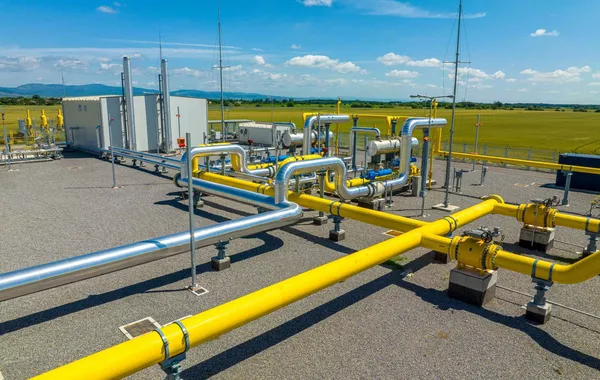
The Caspian Pipeline Consortium's line carries crude from Tengiz and Kazakhstan's two other Western-led developments, Karachaganak and Kashagan, as well as some Russian crude, to a marine terminal near the Russian Black Sea port of Novorossiysk, Upstream reported.
The 1500-kilometre pipeline transports around 80% of Kazakhstan's crude exports, and the equivalent of over 1% of total global oil exports. Tankers arriving at the Caspian Pipeline Consortium terminal, where crude from the pipeline is loaded on to vessels, have been targeted in recent drone attacks.
No country has taken the responsibility for the attacks, although Russia accused Ukraine of targeting the terminal as part of ongoing conflict between the two countries.
Ukraine has not confirmed or commented on suggestions of its involvement.
Speaking during a call with investors on Friday following the company's second quarter results, Chevron chief executive Mike Wirth said that he “does not think… there'd be an extended shut-in” of the pipeline's operations.
Wirth identified several smaller capacity alternative oil export routes from Kazakhstan to international markets but said that Caspian Pipeline remains “the primary route to market for oil production for Chevron and others [in Kazakhstan]”.
“We're clearly a big shipper on it, but not the only shipper,” he said. “We work with governments in the region, the US government, the Kazakh government, obviously other governments to be sure that that the pipeline stays flowing. It's critical to the world at a time when we need the energy.
“With the pipeline being the primary evacuation route, if it were to be shut down for an extended period of time, that will create issues for all the shippers on that line. That's a number of different projects in Kazakhstan and a little bit that comes in from Russia as well,” he added.
“You've seen creativity [with tankers passing] in the Strait of Hormuz over the years. We've had to use some creativity at times with Caspian Pipeline. But I will say the commitment to keeping it open from all the parties that rely on it and all the governments that rely on it, is very, very high,” Wirth said.
The Caspian Pipeline Consortium suspended tanker loadings at its terminal's two offshore loading buoys - known as single point mooring (SPM) units - last week after unidentified drones attacked two tankers, one loading oil at an SPM and another waiting.
This was the second suspension after the first wave of attacks between 17 and 20 July.
In a strongly worded statement on Friday, the Kazakh Energy Ministry said that the scenario of fully halting operations of this pipeline “is not being considered”.
Repeated drone attacks on oil tankers chartered to load Kazakh oil from the Caspian Pipeline have fuelled suggestions in Astana that the pipeline may have to shut down until the safety of its operations are guaranteed.
While acknowledging the halt of oil tanker loading operations on 31 July as a result of the attack, the ministry said the intake of Kazakh oil into the Caspian Pipeline continued on 1 August at a rate of about 800,000 barrels per day, with oil being diverted into storage.
According to Caspian Pipeline Consortium, the network is capable of transporting around 1.6 million bpd of oil from Kazakhstan and can handle a further 230,000 bpd from Russian oil producers.
The Kazakh Energy Ministry added that it remains in constant communication with the pipeline's volume suppliers, with a further increase in intake capacity possible as soon as tankers arrive at the Black Sea terminal.
Caspian Pipeline Consortium told Upstream it is not in a position to comment.