Kazakhstan Seeks Alternatives to Russian Oil Routes
Escalating drone attacks on Russian infrastructure amid the ongoing war in Ukraine, including key facilities in Novorossiysk and the Orenburg region, are prompting Kazakhstan to accelerate efforts to find alternative oil export routes.
The Caspian Pipeline Consortium (CPC), which transits Russian territory, is increasingly seen as an unreliable option for transporting the country’s crude oil, The Caspian Post reports, citing The Times of Central Asia.
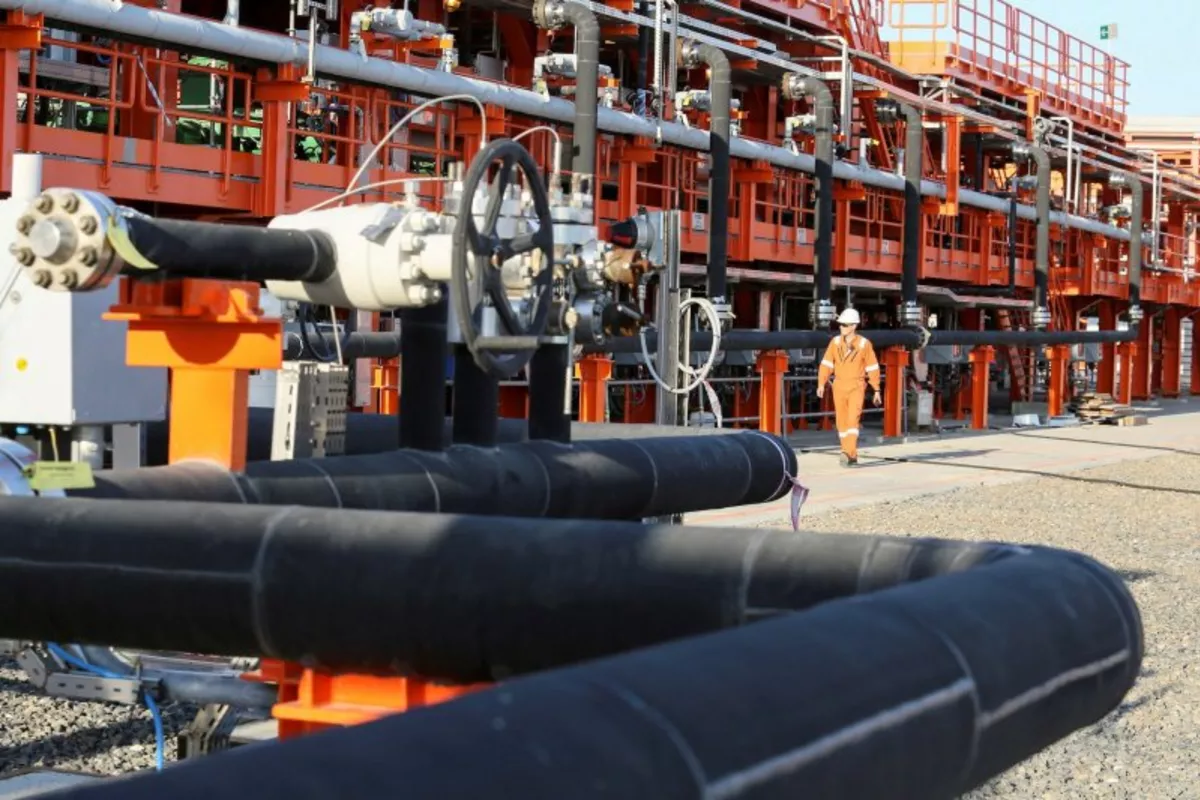
In November, damage to the VPU-2 single-point mooring at the Yuzhnaya Ozereyevka terminal near Novorossiysk disrupted operations. Only VPU-1 remains functional, while VPU-3 is undergoing scheduled maintenance. As a result, CPC oil shipments have dropped. The pipeline accounts for over 80% of Kazakhstan’s oil exports, more than 1% of global production. The Kazakh Ministry of Energy clarified that exports were not fully halted and that efforts are underway to reroute shipments.
On December 8, Reuters reported that Kazakhstan would begin exporting oil from the Kashagan field directly to China for the first time via the Atasu-Alashankou pipeline. The route, which leads to Xinjiang, has previously been used for other fields but not for Kashagan.
According to the report, Kazakhstan plans to export 50,000 tons of crude oil through this channel. Of that, the Chinese oil company, China National Petroleum Corporation (CNPC), will receive approximately 30,000 tons, while Japan’s Inpex will take 20,000 tons. Although the pipeline’s annual capacity is around 10 million tons, it has been operating below capacity, averaging 85,000-86,000 tons per month.
The Kazakh government had initially planned to ship 1 million tons via this pipeline in 2025, less than the 1.2 million tons exported in 2024. In the first ten months of 2025, shipments reached 858,000 tons, according to industry sources.
Kashagan is among Kazakhstan’s most strategic assets and one of the largest oil and gas fields discovered globally in the past 40 years. Operated by the NCOC consortium, which includes ExxonMobil, Shell, TotalEnergies, CNPC, Inpex, and KazMunayGas, the field produces more than 15 million tons of oil annually. Until now, nearly all of this was transported via the CPC.
On December 10, KazTransOil, the national oil pipeline operator, announced that it had redirected oil exports from the CPC system to alternative routes. In December 2025 alone, an additional 360,000 tons of oil are expected to be exported to Russia (via Samara), China, and across the Caspian Sea. Increases in exports from the original plan include: Atyrau-Samara pipeline: +232,000 tons; To China: +72,000 tons; and through the port of Aktau to the Baku-Tbilisi-Ceyhan (BTC) pipeline: +58,000 tons.
KazTransOil has also stated it will allow oil companies to temporarily store oil at its tank farm. This would enable greater flexibility in shipment scheduling, optimize pipeline operations, and help maintain uninterrupted deliveries. Rail transport is also being considered to further diversify logistics.
In 2024, Kazakhstan exported 54.9 million tons of oil through the CPC. Additional exports included 8.8 million tons via the Atyrau-Samara pipeline, 3.6 million tons via Aktau, and 1.2 million tons to China via Atasu-Alashankou.
The BTC pipeline, operational since 2006, stretches 1,768 kilometers, 443 km through Azerbaijan, 249 km through Georgia, and 1,076 km through Turkey. Some oil from Aktau port is routed into the BTC, offering an alternative pathway to the Mediterranean and Turkish markets. In 2024, 1.4 million tons of Kazakh crude were transported via this route.
The BTC pipeline’s capacity is 50 million tons per year. Under the current agreement, Kazakhstan is permitted to export 1.5 million tons annually through this channel, with Azerbaijan open to increasing this to 2.2 million tons.
Despite efforts to expand export options, Kazakhstan’s Energy Minister Yerlan Akkenzhenov admitted on December 9 that the country currently lacks a full-scale alternative to the CPC. “To date, there is no alternative to the CPC; we must admit this. Other routes cannot match the volume it transports, which is 65 million tons,” the minister said.