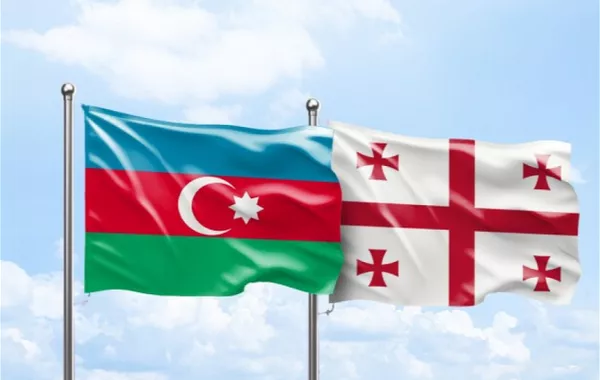
Exclusion from Peace Board and Davos Leaves Georgia Concerned
Analysts In Tbilisi Have Raised Concerns That Georgia’s Exclusion From The Board Of Peace And The World Economic Forum Reflects The Country’s Increasing International Isolation And Declining Regional Geopolitical Relevance.
Georgia was not among the 56 countries invited to join Donald Trump’s Board of Peace. Meanwhile, Armenia and Azerbaijan, Georgia’s neighbours in the South Caucasus, have joined, as well as almost every other country in the region, The Caspian Post reports, citing bne Intellinews.
In comments to Georgian channel Palitra News, international relations expert Giorgi Tumasyan accused Bidzina Ivanishvili, the billionaire founder of the ruling Georgian Dream party and widely seen as the country’s de facto ruler, of “deliberately removing” Georgia from the geopolitical arena.
“Where is Georgia? On which platform? In which discussions? Whose ally are we, after all?” Tumasyan asked. He argued that perceptions of GD’s growing pro-Russian stance have severely damaged Georgia’s reputation, credibility, and reliability as a transit partner, leaving the country sidelined in critical regional discussions and strategic corridors.
Georgian government officials, meanwhile, welcomed the non-invitation to the Board of Peace. GD MP Gia Volski highlighted that the Board of Peace was intended primarily for countries directly affected by war, therefore, not being included was a positive outcome
Echoing past GD rhetoric, Volski stressed that Georgia’s priority was to see peace efforts advance in general, and the country welcomed peacekeeping initiatives via any method and in any format.
Georgian officials were also absent from the World Economic Forum in Davos, after receiving no invitation for the second year in a row, amid allegations of election rigging, democratic backsliding, and repression by GD.
At the forum, Armenia President Vahagn Khachaturyan and Azerbaijani President Ilham Aliyev discussed possibilities for new freight traffic routes, which would bypass Georgia, in light of their newly improved strategic partnership.
Following a US-brokered peace agreement signed in August 2025, which resolved the frozen conflict between Azerbaijan and Armenia, Trump proposed the new TRIPP trading corridor, which would link Azerbaijan with its Nakhchivan exclave via southern Armenia, removing the need to pass through Georgia to reach Turkey and Europe.
According to a post by Trump on his social platform Truth Social, US Vice President JD Vance will visit Armenia and Azerbaijan in February with the goal of further strengthening peaceful relations between the two countries.
Giorgi Rukhadze, founder of Georgia’s Centre for Strategic Analysis, has voiced concerns about Georgia’s growing international isolation and exclusion from world geopolitics, noting that the country is “no longer at the table”.
Rukhadze pointed out that Georgia is today unrepresented at all major global forums, and is consequently losing out on opportunities, both in trade and elsewhere.
The analyst highlighted that GD’s international focus had shrunk to solely the UAE, where relations revolve mainly around investment opportunities, and Hungary, where Viktor Orbán is accused of pursuing a similarly pro-Russian course to the Georgian government.
Tumasyan echoed these concerns, highlighting Azerbaijan’s stated intention to redirect key transit routes through Armenia rather than Georgia.
According to Tumasyan, while Azerbaijan relies on Turkey and Armenia actively deepens ties with the EU, the US, and India, Georgia has been deliberately removed from major geopolitical processes.
Georgia’s Lelo opposition party made similar comments, warning that the country was “losing its position as a transit country” and “failing to acquire any new role” within new Western-backed transit routes like the TRIPP.
GD dismissed the concerns, noting that the newly established peace between Armenia and Azerbaijan would turn the entire South Caucasus region into a “strong centre of development”.
Tbilisi’s relations with the UK, EU and US have deteriorated considerably in recent years, with Brussels and European leaders accusing Georgian Dream of increased democratic backsliding, repression of anti-government protesters, and anti-European conduct.