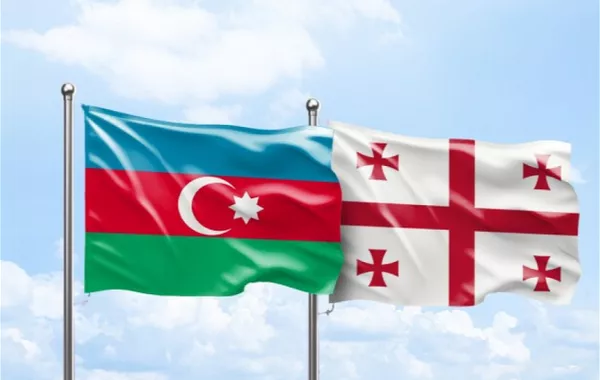
Georgia is a key strategic transit country in the South Caucasus and an important partner of the European Union in areas such as security, energy diversification, and the EU's enlargement policy.
For Poland, the political direction of Georgia and its position in the region are of particular importance, especially in the context of Russia’s aggressive policy and Europe’s search for stable supply routes, including in the energy sector, The Caspian Post reports, citing foreign media.
Despite this role, Georgia’s ruling party, Georgian Dream, has increasingly been placing its European partners in a difficult position. In recent months, pressure on the opposition has reached an unprecedented level, raising serious concerns among EU member states. Opposition leaders and civil society activists are regularly arrested or forced into exile. Actions are also being taken to exclude competing parties from political life and limit the participation of Georgian citizens living abroad in elections. At the same time, concerns are growing that ahead of the 2028 elections, the government will seek to transform the fragmented opposition into controlled, façade entities, thereby maintaining only the appearance of political competition.
In an interview with Tamar Kekenadze, a Georgian opposition politician For Georgia) and international security expert, a troubling picture emerges. Georgia appears to be drifting away from its European commitments, facing growing internal repression, and risking deeper isolation at a time when cooperation with partners such as Poland has never been more important.
Authoritarian Drift and the Collapse of Political Trust
In recent years, Georgia has experienced a growing concentration of power. In November, the prosecutor’s office announced criminal charges against eight leading opposition politicians, including former president Mikheil Saakashvili. At the same time, the ruling Georgian Dream party has been tightening its control over state institutions and the public discourse.
Kekenadze openly acknowledges mistakes made by the opposition - including the prolonged boycott of parliament - but defends her party’s decision to return to the legislature:
”The boycott did not work. Taking up our mandates was the only way to continue the fight and ensure that voices of dissent would still be heard.”
She also describes a climate of fear deliberately cultivated by the government:
”Georgian Dream shows people images of a devastated Ukraine and tells them that the same will happen to Georgia if the opposition comes to power.”
For Polish readers, these images are impossible to ignore. The case of Georgia illustrates the familiar paradox in which a government that pledges to protect stability systematically dismantles the institutions meant to guarantee it.
Why investors are turning away?
Just a decade ago, Georgia was portrayed as an easy entry point for European investors into the Caucasus. It was open to foreign capital, friendly to startups, and attractive in terms of tourism and logistics. Today, that model is beginning to unravel. The key issue is no longer profitability, but predictability. The judiciary is not independent. Laws can change unpredictably. Investors fear they may be unable to protect their businesses.
The myth of neutrality in a hard-power region
Georgia’s current authorities increasingly present their policy of „balance” or „neutrality” as a pragmatic choice. Undoubtedly, this narrative can resonate with parts of Georgian society. In reality, however, neutrality in the South Caucasus is neither a strategic position nor an achievable one. On the contrary, it creates a vacuum - one that is inevitably filled by stronger actors.
Can Georgia truly maintain a balance between the EU, the United States, Russia, and China?
Kekenadze’s answer is unequivocal:
”Neutrality is unreachable in our region. For us, integration with the EU and NATO is not an economic issue - it is an existential one.”
She also points to declining U.S. engagement, including the year-long absence of a U.S. ambassador in Tbilisi. For Poland, a strong transatlantic presence in Eastern Europe and the South Caucasus is seen as essential. Any withdrawal by Georgia from cooperation would most likely weaken the entire eastern flank, to the benefit of none of NATO’s member states.
A message to Europe - and to Poland
Asked what she expects from the European Union, Kekenadze issued a modest yet firm appeal:
”At the very least, do not sever formal ties - visa-free travel, free trade. If we lose them, it will be ordinary, pro-European Georgian citizens who suffer, not politicians.”
At this point, Poland’s role becomes crucial. Warsaw has consistently advocated for Eastern partners, understanding that abandoning them breeds greater instability in the region rather than reform. Supporting Georgian civil society, transparency mechanisms, and the enforcement of sanctions is not an act of charity - it is rather a matter of strategic self-interest.
Georgia is not merely a distant country in the Caucasus. Above all, it is a key transit state with a substantial impact on Europe’s energy security. At the same time, despite its strategic importance and positive role, it may become a test case for the credibility of the EU’s enlargement policy and a potential weak link in the sanctions regime against Russia.
What is happening in Georgia today has direct consequences for EU security, sanctions policy, and East-West transit routes - and thus also for Poland’s strategic interests. As Europe redraws its security map, the question remains whether Georgia will move closer to Europe or gradually drift into a grey zone in which Moscow feels most at home.
For Polish companies (especially SMEs) this is critical. Georgia is no longer an environment that can be managed with relative ease or one in which risk can be taken without serious concern. Although sectors such as tourism, renewable energy, and IT still hold potential, political risk has become the dominant factor. As Kekenadze warns, prolonged instability could push Georgia into self-isolation, cutting it off from European capital and expertise.