The Eastern Mediterranean has once again moved to the center of global geopolitics. Growing military activity around Cyprus, the arrival of new naval forces in the region, rising diplomatic tensions, and the shifting strategic positions of key actors are turning the Cyprus issue into one of the most important elements of the regional security equation. Against this background, the rivalry among major powers for influence in the Eastern Mediterranean is becoming increasingly visible, as the interests of Türkiye, the European Union, the United Kingdom, France, and several Middle Eastern countries intersect there.
What are the real reasons behind these developments? How is Ankara’s strategic line on the Cyprus issue evolving? What role do European and global powers play in the region’s new configuration?
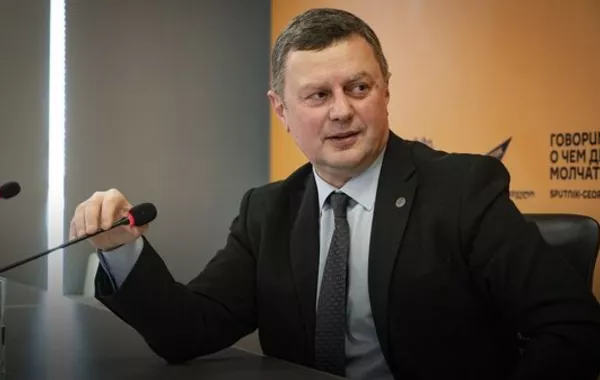
The Caspian Post discussed these and other questions with Cantürk Caner, an associate professor at Kütahya Dumlupınar University in Türkiye and a specialist in international relations.
- How do you assess the increased military and diplomatic activity around Cyprus in recent days? What do you believe is actually happening in the region now?
- In recent days, there has been a noticeable rise in military and diplomatic activity around Cyprus. These developments are largely linked to the European Union’s SAFE program and are aimed at preventing the possible fall of missiles launched by Iran onto the territory of the Greek Cypriot administration of Southern Cyprus - in other words, onto the territory of the so-called Republic of Cyprus, which is a member of the European Union.
At the same time, attention has been drawn to Greece’s intention to deploy air defense systems on the islands of the Aegean Sea. The deployment of such systems on these islands is regarded as contradicting the provisions of the Lausanne and Lausanne-Ouchy agreements, which regulate their demilitarized status.
Against this backdrop, Türkiye has sent six F-16 fighter jets to the region in order to ensure the security of the Turkish Republic of Northern Cyprus. In addition, according to available information, two frigates of the Turkish Navy may also be sent to the area in the coming days.
The United Kingdom also plays a special role in these developments, as it maintains three military bases on Cyprus. In accordance with international agreements, London is taking measures to protect its facilities. In this context, the observed increase in British military presence is also part of the security mechanisms provided for in these agreements.
Thus, the current developments largely represent planned and routine military and defensive measures. At the same time, if the situation escalates and develops into a broader regional conflict, it can be assumed that the European Union in the Eastern Mediterranean could adopt a position involving coordination with the US and Israeli coalition.
- What is Türkiye’s current political and strategic line on the Cyprus issue? From what perspective does Ankara approach this problem today compared to previous periods?
- Over the past 15 years, Türkiye’s political strategy on the Cyprus issue in terms of demographics and state structure has undergone noticeable changes. About 15 years ago, particularly in 2005, within the framework of the Annan Plan, Ankara actively supported the idea of a unified or federal state on the island. However, beginning around 2015, its position started to change significantly.
The key factor behind this shift was the accession of the Greek Cypriot administration to the European Union under the name of the “Republic of Cyprus.” As a result, Türkiye has increasingly promoted the concept of two states on the island. The idea of the existence of an independent and sovereign state called the Turkish Republic of Northern Cyprus has now become central to the political agenda.
The Turkish Republic of Northern Cyprus has already obtained observer status in several international structures. It is assumed that if a favorable political opportunity arises, other friendly and brotherly states may also recognize the TRNC, which would bring the two state model on the island closer to realization.
From the perspective of supporters of this concept, references to international law and United Nations resolutions have largely lost their practical relevance, since the island has de facto remained divided for more than 50 years. During this time, a new generation has grown up on both sides of the island. In northern Cyprus, its own state institutions have been formed and a sovereign legal system is functioning. In this context, the next stage is considered to be the question of international recognition of this state.
- What does it mean in the context of the Eastern Mediterranean and the Cyprus equation that France has become more visible in the region, has again emphasized an independent foreign policy, and that the Charles de Gaulle aircraft carrier has appeared in the region?
- I believe that France’s increased presence in the region and its desire to pursue a more independent foreign policy, somewhat distanced from the framework of the European Union, largely reflect an attempt to revive traditional French strategic thinking historically linked to its colonial presence in the Middle East.
It is particularly notable that France, which has largely been pushed out of the Syrian political equation, is now present in the region mainly through economic activity and investment projects. At the same time, amid renewed discussions about the possible fragmentation of Lebanon, it can be assumed that Paris is seeking to preserve or even expand its influence by trying to reassert itself as a political player in the Middle East.
At the same time, a broader trend can also be observed: the gradual weakening of the European Union’s role as a unified actor in global politics and a certain decline in Germany’s dominant position within the European bloc. This creates space for France, which is increasingly demonstrating its desire to return to a more independent global strategy.
At the same time, Paris hopes in the long term to restore some of its lost economic and political positions in Africa and supports the formation of stronger pan-European defense structures, including the idea of creating a full-fledged European Union army. In this context, the deployment of the French aircraft carrier to areas close to Cyprus can be seen as part of a broader strategy - an effort by France to reenter the emerging geopolitical configurations of the Eastern Mediterranean and to signal its presence in the region’s new strategic equations.
- What scenarios around the Cyprus issue do you consider more likely in the near future: diplomatic easing, controlled tension, or a more serious regional crisis?
- In the near future, several scenarios may emerge around the Cyprus issue. The likelihood of creating a Republic of Cypriot Turks at this stage appears relatively weak because the international environment is not yet favorable for such a decision. However, at the same time, it is becoming clear that no sustainable alternative solution effectively remains.
Despite the fact that new leadership came to power in Northern Cyprus after the recent elections, it is difficult in practice to imagine the implementation of other models of settlement. As I have already mentioned, there are two main peoples on Cyprus who have been living separately from each other for nearly 50 years. Under these conditions, their reintegration, the reunification of the island, or the creation of a single federal structure appears extremely unlikely.
In addition, the position of the Greek Cypriot administration and Greece regarding a return to the agreements of 1963 remains present in their political discourse. However, the reality is that two separate societies effectively exist on the island, and under current conditions they are not capable of full integration.
The demographic factor must also be taken into account. Over the past decades, nearly 300,000 Turks from Türkiye have moved to the Turkish Republic of Northern Cyprus and obtained citizenship there. If we hypothetically imagine that these 300,000 people were to return, the Turkish population on the island would become a significant minority. This, in turn, could create preconditions for a new Cyprus crisis in the future.
Thus, the Cyprus issue concerns not only Türkiye but the entire Turkic world. For this reason, the Turkish Republic of Northern Cyprus should be recognized as the Republic of Cypriot Turks.
- In some circles there is an opinion that after Iran the next country in the region that may face pressure could be Türkiye. How seriously is such a view perceived in Türkiye today, and in your opinion, how realistic is such a scenario?
- In some circles there are assumptions that after Iran the next country that could come under pressure in the region might be Türkiye. However, such assessments largely stem from biased anti-Turkish sentiments that periodically appear in certain political and expert circles, particularly in some environments in Greece, Armenia, and among certain radical groups in Israel, where openly hostile rhetoric toward Türkiye and Turks is sometimes encountered.
At the same time, many foreign experts, including American military analysts and strategists, emphasize that such comparisons are incorrect. Türkiye represents a state of a completely different scale and capability than Iran.
First of all, Türkiye is a member of NATO and part of the European security system. Any serious escalation around it would inevitably take on the character of a pan-European crisis. Moreover, a possible attack on Türkiye would inevitably affect the stability of the entire region, including Azerbaijan.
In such a situation, attempts by revanchist forces in Armenia to once again raise the issue of Karabakh cannot be ruled out, which could lead to a new cycle of conflict. This would also deal a serious blow to the processes of consolidation of the Turkic world and the development of the Organization of Turkic States.
Therefore, the stability and security of Türkiye are of critical importance not only for Türkiye itself but for the entire Turkic world. This applies not only to Türkiye: if similar pressure were exerted on Azerbaijan, Kazakhstan, or Kyrgyzstan, it should also be considered a common challenge.
It should be taken into account that Türkiye is a major regional power with strong armed forces, a developed navy, powerful air forces, modern air defense systems, and above all significant ground forces. From the point of view of military potential, it differs fundamentally from Iran.
Any attempt to exert military pressure on Türkiye would inevitably lead to a deep regional crisis capable of undermining the NATO system and Western alliances. Such a conflict could escalate into a large-scale war with consequences far beyond the region and potentially of global significance.
In addition, Türkiye’s strategic role in the Middle East remains crucial. Despite complicated periods in relations with the United States and Israel, Türkiye remains an important element of the regional security architecture, including in matters related to Israel’s security, which for decades has been one of the priorities of American policy in the region.
It is also evident that after the current political stage in Israel ends and the government of Benjamin Netanyahu leaves office, relations may eventually normalize. Azerbaijan, for its part, is already playing an active role in diplomatic interaction between the sides.
Overall, it can be said with confidence that Türkiye will not become a “new Iran.” Such scenarios are more a product of politicized and ideologically motivated statements by certain radical circles than a real strategic prospect.