Israel’s strikes on Iranian missile boats in the Caspian Sea have once again brought regional security discussions to the forefront. Amid escalating tensions between Iran and Israel, incidents in the Caspian direction raise the possibility of an expansion in the geographical scope of the conflict.
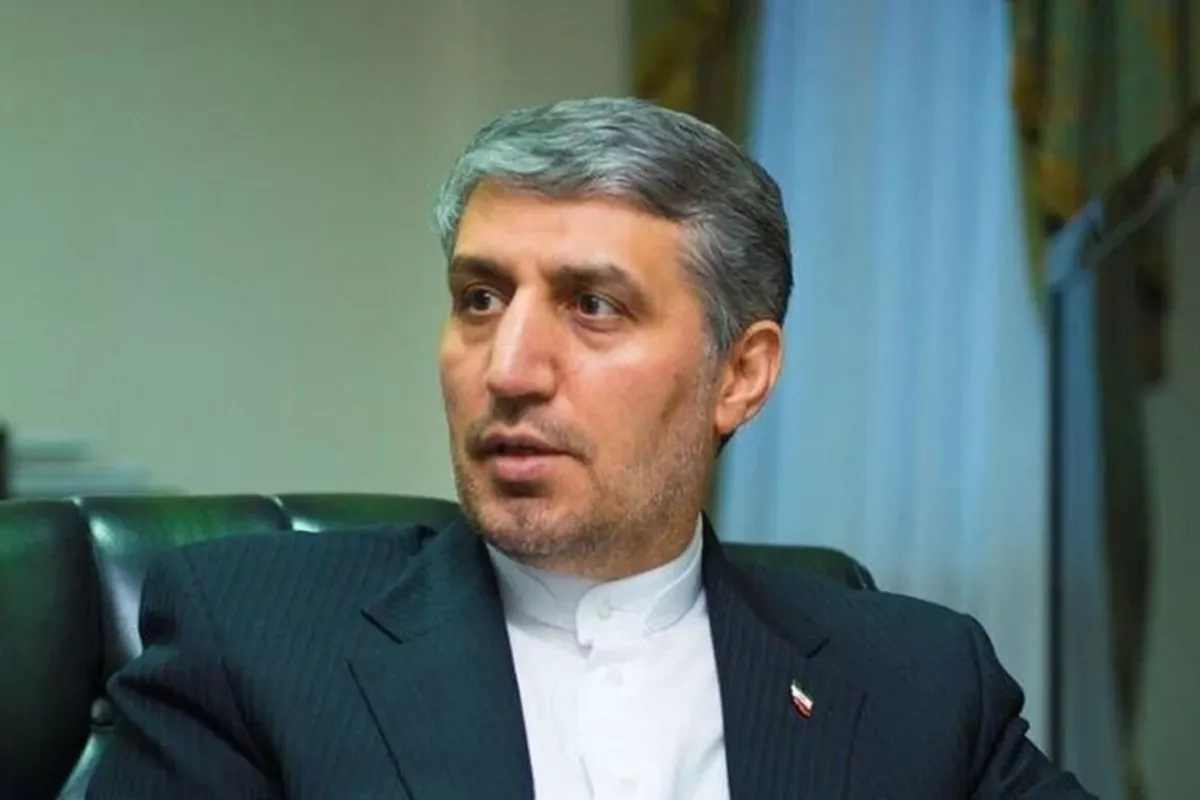
This process creates risks not only in military terms but also in economic and transport security. Potential impacts on civilian infrastructure and shifts in international routes pose additional challenges for the region. To analyze this issue in greater depth, the News.Az analytical portal interviewed the ambassador of the Islamic Republic of Iran to Azerbaijan, Mojtaba Demirchilou.
- Mr. Ambassador, given that the Caspian Sea has traditionally been considered a zone of stability and free from military operations, how does Tehran assess Israel’s strikes on Iranian vessels in the Caspian Sea? - Since February 28, Israel has launched military aggression against Iran. The main objective of this step is to create tension in the region and, within that context, achieve its strategic goals. The plan was designed in such a way that the initial strike would eliminate Iran’s top leadership and key officials, leading to the fragmentation of the system and depriving the country of its ability to defend itself. However, we observed that just two hours after the attack, Iran began taking defensive measures. This is natural, because under international practice, any state subjected to aggression has the right to self-defense. Within this framework, Iran responded by targeting the military facilities from which the attacks were carried out. The course of the war has shown that the attacking side has failed to achieve its primary objectives.
After that, we witnessed that non-military and civilian facilities were targeted. Schools, hospitals, rescue teams, ambulances, and even medical personnel came under attack. Later, energy infrastructure was also selected as a target. This indicates that when results were not achieved in the military sphere, attention shifted to other areas, including civilian sectors.
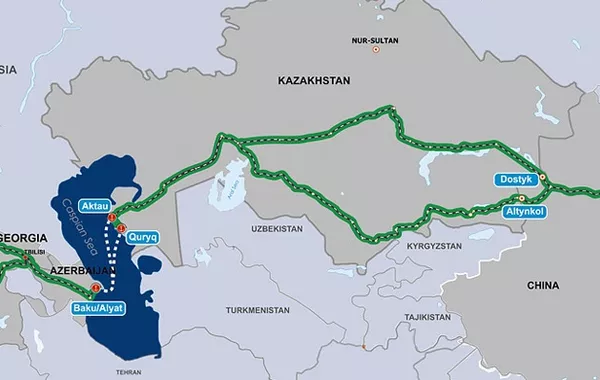
Currently, for nearly three weeks, Iran has been resisting, and the opposing side has been unable to fully achieve its objectives. For this reason, attempts to open new fronts are being observed. In particular, reports of attacks in northern Iran, in the direction of the Caspian Sea, are noteworthy. During recent incidents, not only military facilities but also civilian infrastructure - customs checkpoints, the shipping sector, and commercial facilities - have been targeted.
This shows that there are attempts to expand the conflict both geographically and functionally. At the same time, the risk of involving regional countries in this process is increasing. Targeting non-military sectors could further widen the scale of the conflict.
Another important issue concerns airspace. Following the closure of Iran’s airspace, several international flight routes have been altered. Currently, some flights are operated from Central Asia to Europe via Azerbaijan, Georgia, and Türkiye, and these routes pass over the Caspian Sea. In such conditions, military operations in the region pose serious risks to civil aviation.
The Caspian Sea has so far been regarded as a zone of peace and cooperation. There is cooperation among littoral states, and the absence of third-party involvement in this area has been one of the main factors ensuring regional stability. However, the increasing activity of external actors in this region may disrupt that stability. This creates serious risks not only for security, but also for economic activities, energy projects, and the overall future of the region.
- Given that military operations are now affecting the Caspian region, which holds strategic importance for Azerbaijan and other littoral states, can it be said that the Iran-Israel conflict is entering a new phase?
- This situation suggests that Israel and the United States appear interested in expanding the geography of the conflict, increasing the likelihood of new areas being drawn into this confrontation. However, from our perspective, such a scenario is absolutely undesirable, and we strongly oppose it.
Opening a new military front, especially along our northern borders, poses a serious threat to the region and is considered unacceptable.
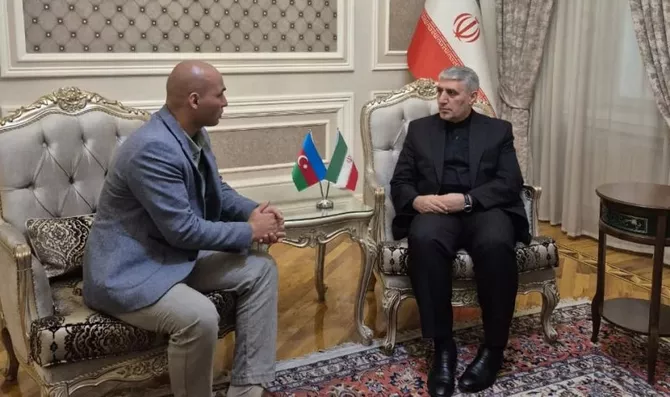
Source: News.Az
Therefore, naturally, all possible means must be used to prevent such developments. However, the course of events largely depends on whether Israel and the United States will continue their military activities in this region. If attacks continue in this direction, Iran’s defensive response will be inevitable. This would effectively mean the transfer of the conflict to the region and its expansion on a broader scale.
Such a scenario creates serious security and economic risks for regional countries and could undermine overall stability. In this regard, at the current stage, the primary priority of regional states should be to prevent escalation, limit the spread of tensions, and promote diplomatic solutions as much as possible.
- Following these events, does Iran see risks to maritime security, energy projects, and infrastructure in the Caspian Sea, and what measures are planned to prevent escalation?
- In my opinion, if this process continues, the region will inevitably face serious threats. If we want to preserve stability in the region, it is not enough to simply wait and see what steps Iran will take.
Regional countries must adopt a more active position. They should both openly express their protest against this aggression and formally appeal to Israel and the United States, emphasizing that the expansion of tensions is unacceptable. The main goal should be to prevent the conflict from spreading to the region.
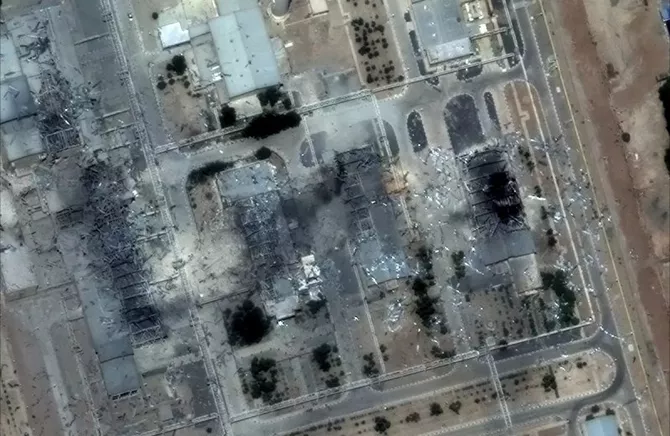
Satellite image of the Isfahan nuclear technology site in Iran on Sunday after U.S. strikes. (Maxar Technologies via the Associated Press)
At the same time, it is important to utilize the potential of international and regional organizations operating in the region. Coordination within these platforms should be strengthened, a common position should be formed, and joint steps should be taken.
In addition, regional countries should not limit themselves to appealing to external actors, but should also hold consultations among themselves, assess possible risks, and develop a concrete action plan. The objective is to minimize the impact of such aggression and prevent possible escalation.
Ultimately, only a coordinated, principled, and proactive approach can preserve stability in the region.
- In a situation where military activity has affected the region for the first time, how does Iran plan to build dialogue with Azerbaijan and other Caspian littoral states?
- The steady expansion of relations based on a good neighborly policy with all neighbors is in the interest of both sides. Within this framework, the main goal is to promptly resolve emerging issues and ensure the sustainable development of relations. Fortunately, no serious problems have arisen so far, and relations are developing naturally. We hope that this positive dynamic will continue in the future.
One of the positive aspects is that the official structures of the Republic of Azerbaijan have clearly stated that the country’s territory has not been and will not be used against Iran. This is a principled and important position for maintaining regional stability.
The continuation of such a policy can significantly contribute to preventing escalation. This is because aggressive forces seek to create tension between Iran and its neighbors. In this regard, Azerbaijan's principled stance - not allowing its territory to be used by any third party against Iran - is an important factor in maintaining regional stability.
As a result, the consistent continuation of this policy will contribute to reducing tensions in the region, strengthening mutual trust, and preserving the overall security environment.
- Is Iran prepared to repel a possible ground operation by the United States and Israel, and how does Tehran assess the position of European countries, given that their statements suggest they do not wish to be drawn into this conflict?
- Iran has repeatedly stated officially that it does not want war and is against it. Despite this, while negotiations were ongoing, a military attack was carried out against it in June. Nevertheless, Iran returned to negotiations, which shows that it is interested in resolving the conflict through political and diplomatic means rather than military ones.
However, past experience shows that in some cases negotiations are used not to achieve real results, but to buy time and simultaneously continue military preparations.
For this reason, Iran has also been compelled to strengthen its defense capabilities. Developments over the past three weeks have shown that Iran has significant defensive capacity and considerable potential in this field.
The situation in the maritime domain is particularly noteworthy. Iran has effectively strengthened control over the strategically important Strait of Hormuz and is imposing restrictions on the passage of vessels belonging to countries involved in military operations against it.
At the same time, vessels of countries that are not participating in the conflict are allowed to pass. This demonstrates Iran’s selective and strategic approach.
On the other hand, although the opposing side has attempted to overcome these restrictions through various initiatives, including forming coalitions and seeking support from other countries, these efforts have not yet produced significant results. This indicates that the claimed advantages in certain areas are not fully reflected in practice.
At the same time, conducting large-scale military operations from thousands of kilometers away carries serious technical and strategic risks. Such operations may involve a high probability of losses, and these risks are well understood by those countries.
In conclusion, the current situation shows that while Iran keeps diplomatic solutions open, it is simultaneously strengthening its preparedness for possible military scenarios. This indicates that the confrontation is continuing in parallel both in political and military dimensions.