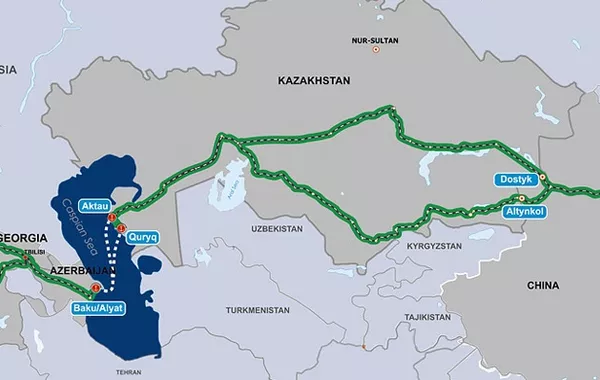
Repeated disruptions to the Caspian Pipeline Consortium have once again exposed the vulnerability of Kazakhstan’s oil export model, which remains critically dependent on a single route. How serious could the economic consequences be? Can the Aktau-Baku-Tbilisi-Ceyhan corridor become a fully fledged alternative to the CPC? And how will the new energy reality change Azerbaijan’s strategic importance for Kazakhstan? The Caspian Post discusses these issues with Kazakh expert Farhad Kassenov, head of the A+Analytics research centre.
- How serious could the consequences of a CPC shutdown be for Kazakhstan’s economy?
- The consequences could be extremely serious, potentially among the most severe Kazakhstan’s economy could face. As has rightly been noted, approximately 80 percent of Kazakhstan’s oil exports are transported through the Caspian Pipeline Consortium (CPC).
Should the CPC become unable to handle its previous volumes, Kazakhstan would be left with two principal options. The first would be to redirect part of its exports through alternative routes. The second would be to reduce production, potentially shutting in and mothballing individual oil wells and fields.
- Why is the situation so serious?
- Because, given the existing infrastructure, neither option can fully resolve the problem. Kazakhstan currently has no alternative route capable of replacing the CPC in terms of throughput capacity.
Approximately 60-65 million tonnes of oil are transported through the CPC system annually. It is impossible to redirect such volumes to other routes at short notice. The alternative infrastructure is simply not designed to absorb such a sharp increase in traffic.
Nor can oil be stored indefinitely when export opportunities are unavailable. It obviously cannot be discharged into the Caspian Sea or onto land, as that would cause a major environmental disaster. Therefore, if the CPC shutdown continues for an extended period, Kazakhstan will be forced to reduce production and mothball wells.
If the problems are resolved within a week or slightly longer, the consequences may still remain relatively manageable. However, if the disruption lasts for several months, it would deliver an extremely serious blow to Kazakhstan’s economy, as oil exports through the CPC generate a substantial share of government revenue.
The scale of Kazakhstan’s dependence becomes clear from the figures. The country exported approximately 78.7 million tonnes of oil in 2025, of which around 65 million tonnes were transported through the CPC system. In other words, the overwhelming majority of Kazakhstan’s oil exports pass through this route.
A prolonged CPC shutdown would first lead to a decline in export earnings and, consequently, government revenue. Oil-producing companies would receive less income, which would reduce the amount of tax they pay.
At the same time, foreign currency inflows, which are critically important to Kazakhstan’s economy, would begin to decline. This could intensify pressure on the national currency, increase devaluation risks and accelerate inflation.
Another consequence would be a forced reduction in oil production and the shutdown of wells. This process is itself associated with serious technical and financial risks. Following a lengthy period of inactivity, it is not always possible to restore production to previous levels. Some wells may lose productivity, while restarting them could require substantial investment.
Logistical costs would also rise. Redirecting oil through alternative routes would require the use of railway tank cars and place additional pressure on ports, oil terminals and the tanker fleet. All these operations are considerably more expensive than pipeline transportation. Additional spending would also be required for cargo insurance and the mitigation of transport-related risks.
Major international operators involved in the development of fields such as Kashagan, Tengiz and Karachaganak would also suffer losses. A decline in their revenues would have indirect socioeconomic consequences, as these companies are major taxpayers, employers and participants in social and infrastructure projects.
We can therefore only hope that the CPC shutdown proves temporary and does not last longer than one or two weeks. A more prolonged period of disruption could already cause tangible damage to Kazakhstan’s economy.
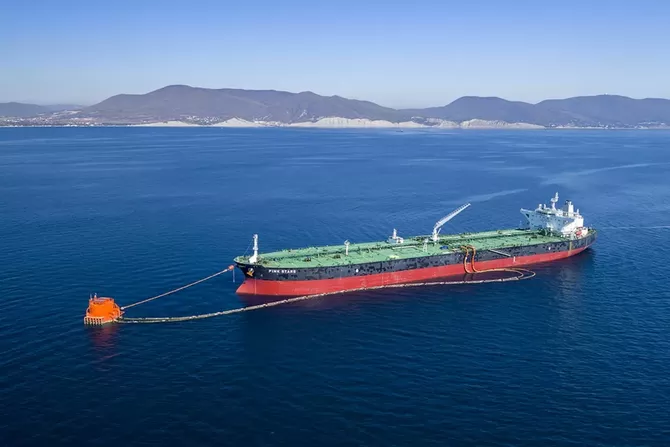
photo: getty images
- Can Kazakhstan rapidly increase oil shipments through Aktau in the direction of Baku?
- It would be extremely difficult to increase oil shipments through Aktau to Baku rapidly and by several times. Even assuming that Azerbaijan could receive substantially larger volumes of Kazakh oil, Kazakhstan’s existing fleet, port infrastructure and oil-transport system cannot immediately expand shipments to the required level.
Had such an opportunity existed, the relevant volumes would have been redirected across the Caspian long ago. The problem, however, is not limited to the capacity of the receiving side. Oil must first be delivered to Kazakhstan’s ports, stored there, loaded onto tankers, transported across the Caspian, unloaded in Baku and then carried onward through Azerbaijan’s infrastructure.
Despite the modernisation of the ports of Aktau and Kuryk, they are not yet capable of handling volumes comparable to the CPC’s capacity. Kazakhstan has been steadily increasing exports across the Caspian, but it is impossible to expand them rapidly by several dozen times.
For comparison, approximately 60-65 million tonnes of oil are exported through the CPC annually, whereas Kazakhstan can currently transport around two million tonnes through the Azerbaijani route. Fully compensating for a CPC shutdown would therefore require an increase of more than 30 times. This is unrealistic in the short term.
Strategically, however, the Trans-Caspian route through Aktau and Baku is of enormous importance to Kazakhstan. The current risks once again demonstrate the need to diversify oil exports and reduce the country’s critical dependence on a single transport corridor.
In the longer term, Kazakhstan should work jointly with Azerbaijan to develop port, tanker and pipeline infrastructure, gradually increasing transportation volumes across the Caspian. In theory, a strategic target could be to raise the route’s capacity to 25-30 million tonnes per year - roughly half the volume currently transported through the CPC.
This would require large-scale investment, the expansion of the ports of Aktau and Kuryk, the construction of new oil terminals, an increase in the number of tankers, the modernisation of railway infrastructure and the expansion of route capacity within Azerbaijan.
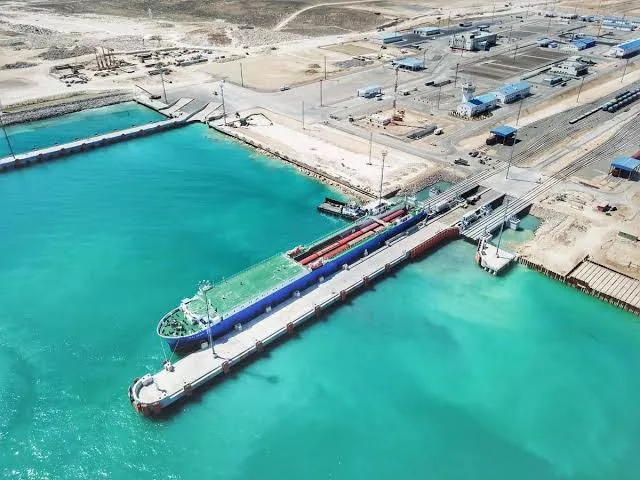
photo: getty images
- How much oil can realistically be redirected through the Aktau-Baku-Tbilisi-Ceyhan route?
- At present, approximately two million tonnes of Kazakh oil can realistically be transported through this route annually. A certain increase is already possible, but sharply expanding the volumes would be considerably more difficult.
The reason is a whole range of infrastructure and technical constraints. First and foremost, these involve the capacity of Kazakhstan’s ports of Aktau and Kuryk, as well as the capabilities of transport operators.
There are currently not enough specialised oil tankers on the Caspian to transport substantially larger volumes of crude. The Caspian is a landlocked body of water, making it extremely difficult to bring in new vessels from other maritime basins. This requires special logistical and technical solutions. Tankers must therefore either be built within the region or transported through inland waterways, which involves numerous restrictions.
There are also serious constraints associated with oil transshipment at ports. Any increase in Kazakhstan’s exports must be synchronised with Azerbaijan’s receiving capacity, terminal operations, tanker schedules and the utilisation of the Baku-Tbilisi-Ceyhan pipeline.
The Baku-Tbilisi-Ceyhan route itself has limitations relating both to transportation volumes and the quality characteristics of the crude. Different grades of oil cannot be mixed arbitrarily. Kazakh oil must comply with the technical parameters of the transportation system and the requirements governing the formation of the export blend. Otherwise, mixing different grades could reduce the quality and commercial value of the final product.
Looking further ahead, transportation through the Trans-Caspian route could be increased substantially. Kazakhstan plans to expand the capacity of its Caspian ports by approximately 50 percent by 2028.
- Will Azerbaijan become Kazakhstan’s principal alternative energy corridor?
- Yes, undoubtedly, particularly if we are referring to the main alternative route for Kazakhstan’s oil exports.
Azerbaijan is already performing this function. The route across the Caspian through Baku, Tbilisi and Ceyhan gives Kazakhstan an opportunity to respond rapidly to disruptions affecting the Caspian Pipeline Consortium. It allows the country to redirect part of its export flows and avoid a sharp reduction in oil production when problems arise along the main route.
Kazakhstan places a high value on this opportunity. As port infrastructure expands, the tanker fleet grows and the relevant technical issues are resolved, Azerbaijan’s importance to Kazakhstan will continue to increase.
In the longer term, transit through Azerbaijan will enable Kazakhstan to build a more resilient and diversified system for supplying hydrocarbons to European and global markets. The principal objective is to reduce the country’s critical dependence on a single export route, as has been the case with the CPC.
The problem is that approximately 80 per cent of Kazakhstan’s exported oil is transported through the Caspian Pipeline Consortium. If part of these volumes can be redistributed among other routes, the country’s export model will become significantly more resilient.
The well-known saying about not putting all one’s eggs in one basket is particularly relevant here. At one point, Kazakhstan effectively did just that by concentrating the bulk of its oil exports on the CPC route.
The CPC was, of course, the most profitable and efficient option for many years. It is an international consortium providing Kazakh oil with direct access to the Black Sea. Excessive dependence on a single pipeline, however, has created a systemic risk.
Kazakhstan must avoid repeating this situation in the future. In this context, Azerbaijan is becoming its principal alternative energy and transit corridor.
- Should Kazakhstan seek political guarantees that the CPC will be excluded from the Russia-Ukraine conflict zone?
- Kazakhstan is clearly already making efforts in this direction. The Kazakh authorities are appealing to both Russia and Ukraine, emphasising the international nature of the CPC and the pipeline’s critical importance to the country’s economy.
However, the realities on the ground must also be taken into account. How realistic is it to guarantee that the CPC will remain outside the conflict zone while hostilities continue?
Russia is carrying out large-scale strikes against Ukrainian infrastructure. Ukraine, in turn, is conducting retaliatory operations and seeking to reduce Russian export revenues that could potentially be used to finance military operations.
From Ukraine’s perspective, facilities connected to oil exports through Russian territory and Russian maritime terminals may be regarded as part of the economic infrastructure supporting Russia’s ability to continue the war. Although most of the oil transported through the CPC originates in Kazakhstan, part of the consortium’s infrastructure is located on Russian territory, while its marine terminal is situated near Novorossiysk.
Ukraine may therefore be prepared to risk complicating its relations with Kazakhstan if it concludes that action against the relevant infrastructure could weaken Russia’s economic and military capabilities. For Kyiv, the issue of national survival will take precedence over hypothetical diplomatic costs in its relations with Astana.
This is well understood in Kazakhstan. Given the CPC’s enormous economic importance, the country’s leadership will use every available diplomatic and political channel to have the pipeline excluded from the list of potential targets.
Whether this can be achieved in practice before the hostilities end, however, remains a major question.
The situation is further complicated by Kazakhstan’s particular geopolitical position. On the one hand, the country is a strategic partner of Russia and a member of both the Eurasian Economic Union and the Collective Security Treaty Organisation. Kazakhstan and Russia maintain close political, economic, military and strategic ties.
On the other hand, Kazakhstan maintains relations with Ukraine and consistently supports adherence to the UN Charter and the principles of state sovereignty, independence and territorial integrity. These principles are also of fundamental importance to Kazakhstan itself.
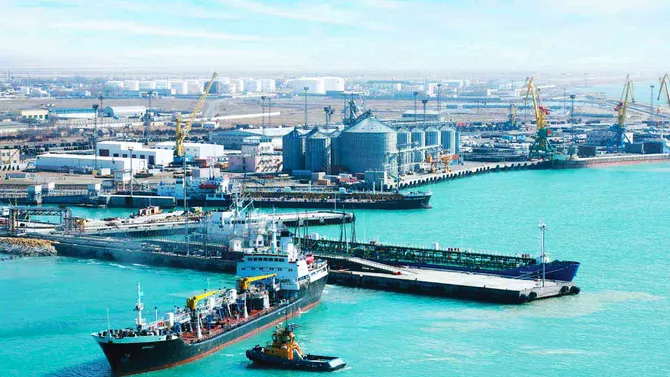
photo: transport events
- Will the current situation accelerate the construction of new tankers and the expansion of Caspian ports?
- Yes, undoubtedly. Questions had already been raised in Kazakhstan about why approximately 80 percent of the country’s oil exports depend on a single route. Repeated disruptions to the CPC have demonstrated the risks of this dependence even more clearly.
As a result, the construction and acquisition of new oil tankers for the Caspian will most likely be accelerated. Kazakhstan, as well as other countries and companies involved in transporting oil through the Trans-Caspian route, has a direct interest in this process.
Port infrastructure will also be expanded. This applies both to the ports of departure on the Kazakh side, primarily Aktau and Kuryk, and to receiving facilities in Azerbaijan.
Kazakhstan will be extremely interested in accelerating this process. We can expect efforts to build new tankers, increase port capacity, modernise oil terminals and coordinate all related logistical operations.
This is a complex system in which modernising only one component is not enough. Port capacity must be expanded, the fleet enlarged, crude transshipment operations secured, delivery schedules coordinated and pipeline infrastructure adapted simultaneously.
- How will all of this affect Azerbaijan’s role for Kazakhstan?
- In the long term, the current situation will strengthen Azerbaijan’s role and status as a strategic partner of Kazakhstan.
Cooperation with Azerbaijan will increasingly determine Kazakhstan’s ability to address key economic and transport challenges, particularly the diversification of hydrocarbon exports.
The two countries already enjoy strong political relations based on mutual trust, cultural and historical affinity, and a convergence of strategic interests. The expansion of energy cooperation will be a natural continuation of this political trend.
For Kazakhstan, Azerbaijan is becoming more than merely a transit country. It is emerging as a crucial element of a new export architecture. Kazakhstan’s ability to reduce its excessive dependence on the CPC and secure reliable access to European and global markets will depend to a significant degree on the capacity of Azerbaijan’s ports, terminals and pipelines.
This is why Azerbaijan’s importance to Kazakhstan will continue to grow steadily in the coming years.