At a time when wars increasingly begin not with a shot but with calculation, not with tanks but with the architecture of power, the voices of those who can read the hidden logic of global confrontation matter more than ever.
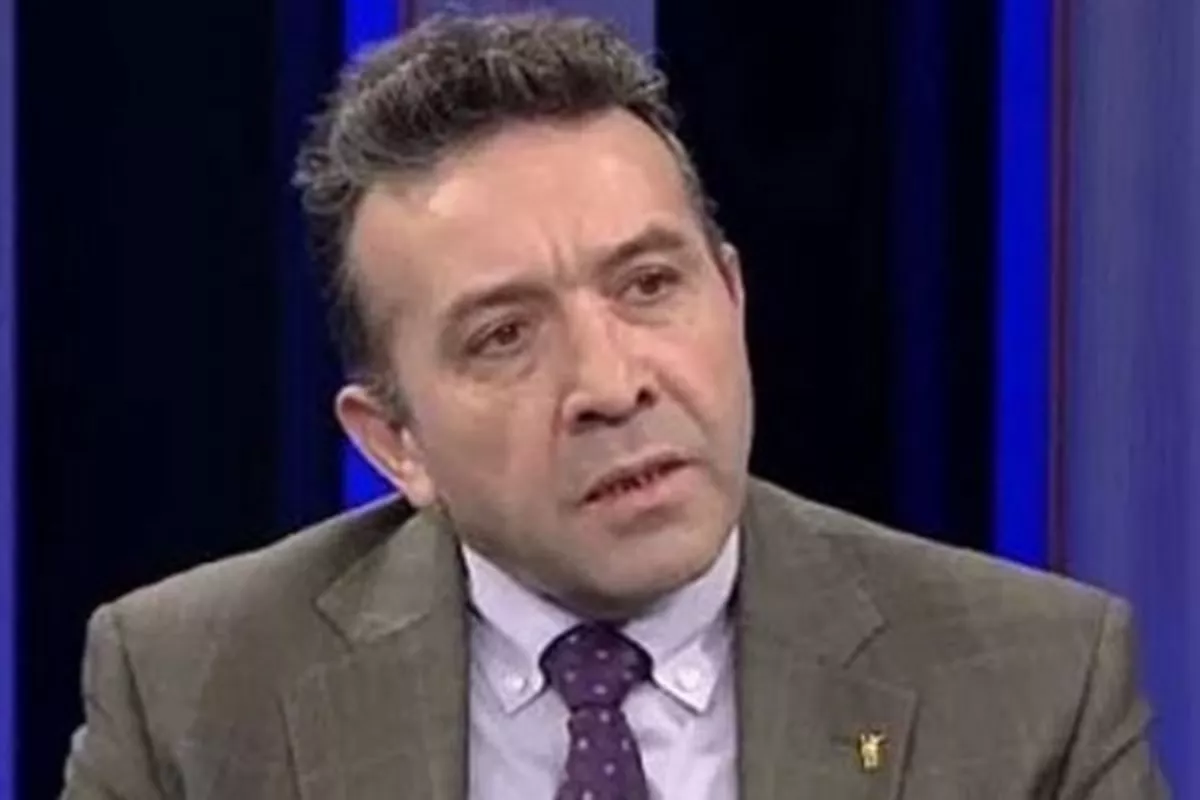
Today’s guest at The Caspian Post is Abdullah Ağar, a Turkish military expert and specialist in security, strategy, and the cybernetics of power systems, who views global turbulence as an interconnected system. In this interview, we discuss NATO, the United States, Türkiye, Israel, and how the very matrix of security is evolving in a world where old formulas are already beginning to crack.
- Mr Ağar, if we assume that the United States is indeed considering withdrawing from NATO as a tool for greater strategic manoeuvrability, would this imply a fundamental revision of the entire architecture of Western security?
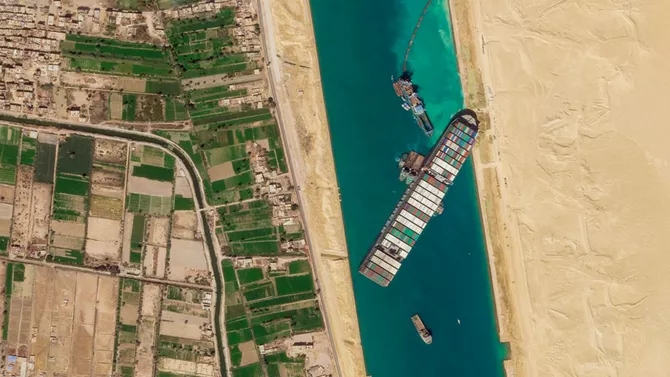
- First of all, I do not consider a US withdrawal from NATO likely and, frankly, I see no clear signs that Washington genuinely intends to take such a step. Trump is acting in his usual manner as a political dealmaker, combining threats, bluff, and strategic calculation. Yes, the United States is currently facing objective difficulties. In particular, since the Suez crisis, it has no longer been capable of conducting large-scale military operations on its own in the way it once did.
Washington has lost the ability to formulate genuinely independent and sustainable global strategies. At the same time, however, America needs allies no less than its allies need America. Moreover, it is precisely through its network of partners and military alliances that the United States preserves its global dominance. In other words, allies are a vital strategic resource for America. There is also another side to the issue: financing. Washington needs that as well.
Source: Reuters
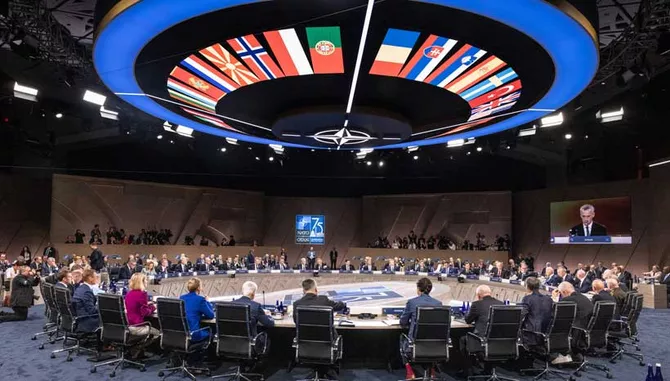
Even though many countries have already increased defence spending from 2 per cent to 3 per cent and above, the United States still covers around 60 per cent of NATO's requirements. However, if other member states do raise their spending to 5 per cent, a new and more balanced configuration will begin to take shape within the alliance.
In that case, the vast resources the United States invests in sustaining its global hegemony - and, as is well known, the Pentagon has requested a budget of roughly $1.5 trillion for 2026-2027 - would effectively be complemented by comparable resources from the European Union. As a result, a combined military, political, and financial capacity approaching $3 trillion could emerge.
Trump, of course, calculates such scenarios very carefully. In essence, he is trying to push allies towards greater activism, using his strongest cards to bind them even more tightly into the American orbit. This is a political and strategic manoeuvre conducted through the language of pressure, threats, and bluff. That is why I do not believe this reflects a genuine intention to leave NATO.
As for your question about whether the United States has alternative alliance models beyond NATO, such models certainly exist. Washington has long been developing parallel formats of regional cooperation. One need only recall AUKUS, ANZUS, the Five Eyes intelligence partnership, and a number of other mechanisms in different parts of the world. This is precisely why I do not consider a scenario in which the United States actually abandons NATO to be realistic. It would be too costly even for America.
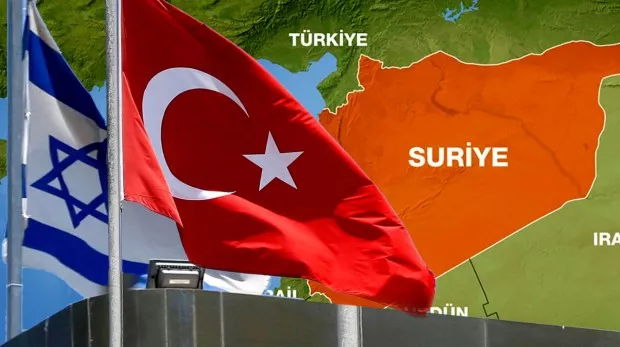
- In your view, how realistic is the scenario of a direct confrontation between Türkiye and Israel on Syrian territory, and what military, political, or strategic factors could trigger such an escalation?
- I believe we are currently dealing with a form of discourse engineering. In other words, what we are seeing between Türkiye and Israel at present is controlled rhetorical tension. It does not amount to a real confrontation.
Of course, Israel is strategically strong and enjoys full US support. It has used these advantages in Syria and will likely continue to do so. However, I do not see Israel as seeking direct confrontation with Türkiye.
On the other hand, even in its own theopolitical texts, references to the Turks carry a distinctly cautionary tone. Therefore, I believe that, even from a theopolitical perspective, Israel would prefer to keep its distance.
In other words, unless Türkiye were to act first, I do not think there would be any impulse from Israel to initiate an attack. In the theopolitical sense, this aligns with its own understanding of risks and consequences. From a geopolitical point of view, if we consider alliances, Israel is already a partner of NATO. While it is not a member, it does have a partnership framework with the alliance in the Mediterranean.
In this regard, it is worth recalling the 2020 crisis with Greece, when Türkiye and Greece approached a dangerous threshold beyond which war could have broken out. Who prevented that? First and foremost, the United States and other NATO countries, because such a development would have created serious vulnerabilities within the alliance itself. This can be summarised as follows:
If Israel and Türkiye were to enter into a serious conflict, what would Türkiye do? It would begin charting its own path. In order to ensure its security amid deep distrust, internal fractures, and hostility within the current alliance, it could start moving towards a different system of alliances. For the United States and Israel, this would risk the beginning of the erosion of their broader geopolitical structure.
Source: AA
In other words, geopolitical reasoning cannot regard such a scenario as rational. It is worth recalling who brought Türkiye into NATO after the Second World War: it was American strategic thinking. Türkiye remains critically important to the United States.
From the standpoint of geopolitics, demography, topography, Türkiye’s material capabilities, and its intellectual capacity, it is far too significant to be written off or sacrificed.
- If the United States were outside the NATO framework, would that automatically mean weaker security guarantees for Türkiye as a former ally?
- As I have already noted, I do not believe the United States will leave NATO.
I do not hold such a view because it runs counter to the logic of geopolitical competition. However, even if we assume that this does happen, Türkiye’s position within NATO would become far more pronounced and significantly stronger. Both the Turkish Armed Forces and Türkiye’s geopolitical position are of exceptional importance to the other members of the alliance.
Moreover, as is well known, Türkiye is a frontline state. From that perspective, the allies would under no circumstances wish to lose it.
Therefore, if ties with the United States built through NATO mechanisms were weakened or severed, the need to establish another framework of interaction would inevitably arise. In such a scenario, the United States would be compelled to seek ways to create a new mechanism of cooperation.
- Can such a scenario be seen as a signal that Washington is prepared to sacrifice its relationship with Türkiye in favour of a strategic alliance with Israel?
- At present, certain figures in the American debate, such as Joe Kent, are voicing specific theses, and some senators are making similar statements. In my view, all of this forms part of the current tension and reflects a broader politics of perception.
What is effectively underway is a contest over narratives, within which there are attempts to shape Türkiye in line with American interests - in essence, to impose a particular version of reality. I do not see a rational basis for this.
After all, individual statements do not necessarily amount to a coherent state policy. Frankly, I do not see evidence of such a policy. As for the alliance with Israel, it is already at its peak.
In the Middle East, who ensures Israel’s qualitative and strategic superiority? It is the United States. From that perspective, US-Israel relations are clearly at a higher level than US-Türkiye relations.
In effect, the United States has assigned Israel the role of an advanced outpost in the Middle East, and its strategic dominance in the region is therefore of vital importance to Washington. In many respects, this underpins the logic of ongoing conflicts. Especially after the events of 7 October, one of Israel’s key tasks has been to restore its deterrence capacity.
Therefore, the US alliance with Israel differs in nature from its alliance relationship with Türkiye. Can these two tracks influence one another? Certainly, we will continue to see attempts to shape the agenda and exert pressure through rhetoric. However, all of this should be understood within the framework of the alliance system itself and the logic of its internal configuration. We have already seen indications of this, for example, in recent developments in Türkiye linked to earlier NATO strategic planning.
- How would a possible US withdrawal from NATO affect the balance of power in the Middle East and the Eastern Mediterranean?
- We are dealing with a hypothetical scenario. Is it possible? As I have said, I consider it unlikely. But let us assume, for the sake of argument, that it does occur.
Source: moderndiplomacy
In that case, countries facing a new geopolitical reality - especially Türkiye - would begin to develop a markedly different model of behaviour. In fact, even today, despite being a NATO member, Türkiye has managed, against the backdrop of crises of trust and its own geopolitical specificity, to build distinct formats of relations with the Arab world, Iran, Russia, and China.
Until the Gaza crisis, a similar pattern could also be observed in relations with Israel.
However, after the events in Gaza, that configuration was, as we know, disrupted. It should also be borne in mind that Türkiye is a state bordered by three seas and spanning three river basins, which gives it an exceptionally broad geopolitical range of options. In other words, many strategic directions remain open to it.
There is another important point: no actor seeks Türkiye as an adversary. No one is interested in confronting the level of uncertainty that Türkiye is capable of generating. That is why various actors seek, in one way or another, to build relations with Ankara on the basis of balance - an active balance grounded in mutual conditions, pragmatic cooperation, and the search for points of convergence. This process is already underway.
We saw this, for example, in Syria, where the Astana format became one of the clearest models of such interaction. Relations with Russia combined controlled tension and elements of confrontation, yet mechanisms of engagement continued to function within this complex framework.
Such approaches are already part of the multidirectional strategy that Türkiye has been consistently developing. Therefore, in my view, even in the event of a conflict involving a NATO member state - provided that Article 5 is not invoked - this model of Turkish behaviour would most likely remain in place.