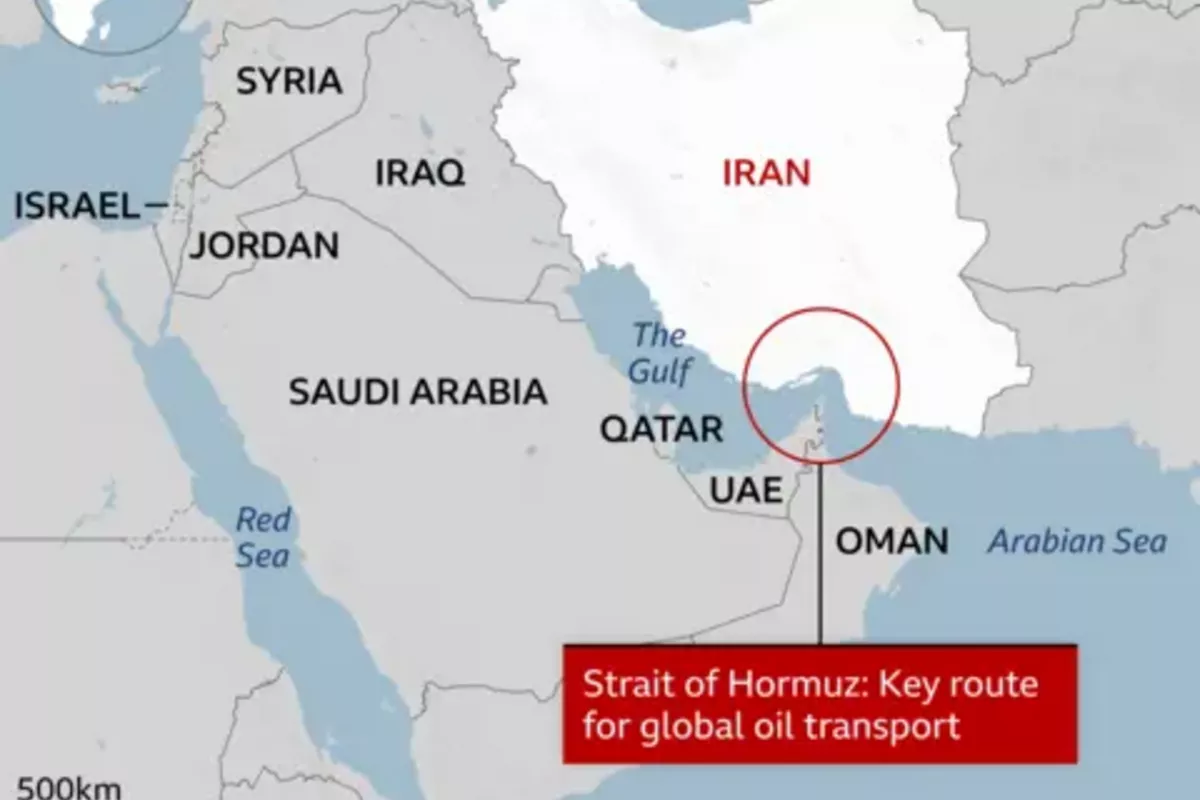
Recently, a weakening of unity within the North Atlantic Alliance has been observed. This has become especially evident during the conflict in the Middle East, which resulted in the closure of the Strait of Hormuz.
From the very beginning, leading NATO countries did not show much enthusiasm regarding the developments around Iran. In this context, US President Donald Trump stated that he could manage without European allies, whom he described as a “paper tiger.” As early as March 17, the Axios portal reported on the reluctance of US allies to join a coalition regarding the Strait of Hormuz.
However, the position of Japanese Prime Minister Takaichi forced them to somewhat adjust their rhetoric. During her visit to the United States on March 19, 2026, she informed President Trump of her country’s agreement to participate in efforts to unblock the strait’s waters. Following this, representatives of NATO countries began active discussions on lifting the blockade of this important maritime artery.
As NATO Secretary General Mark Rutte stated: “Allies, as always, will do everything possible to protect our common interests and find a solution. This is important for the global economy. It is unacceptable for a key shipping route to remain blocked or for passage through it to be accompanied by major difficulties.”
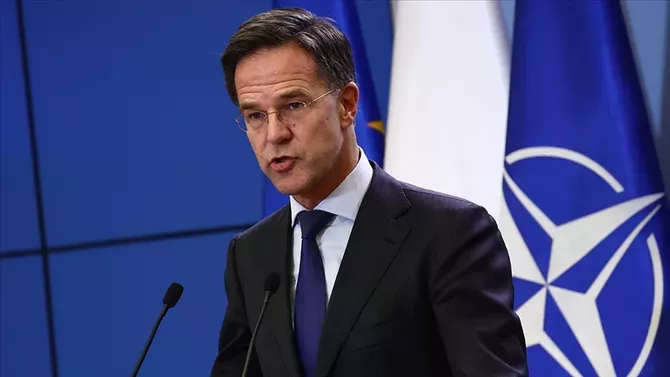
Photo: NATO Secretary General Mark Rutte
Under the influence of the rapidly changing situation, the United Kingdom, France, Germany, Italy, the Netherlands, Japan, and Canada declared their readiness to ensure the safe passage of vessels through the Strait of Hormuz. This was stated in a joint declaration by the countries’ leaders published on March 19 on the UK government’s website.
According to CBS News, US and British military forces are currently jointly studying the issue of restoring navigation in the Strait of Hormuz. The Times reports the same, noting that British military personnel have already arrived in the United States to develop an appropriate strategy.
According to The Times, a group of British specialists is located at the headquarters of the US Central Command (CENTCOM) at MacDill Air Force Base in Florida. They will assist American colleagues in developing options to ensure the passage of ships through the strait, which is believed to be mined.
Despite this activity, the UK is unlikely to send Royal Navy ships to escort vessels in the Strait of Hormuz due to the risks associated with such a mission, according to The Times. Nevertheless, London is discussing with Washington and other European allies how it can contribute to containing the conflict.
A senior official from the UK Ministry of Defence told journalists that the situation is “extremely volatile.” “I don’t see many countries ready to send their warships into the center of this threat right now,” he said.
Such statements reflect London’s uncertain position, which is linked to serious internal challenges. It should be noted that up to 20% of global oil and more than 30% of liquefied natural gas pass through the Strait of Hormuz.
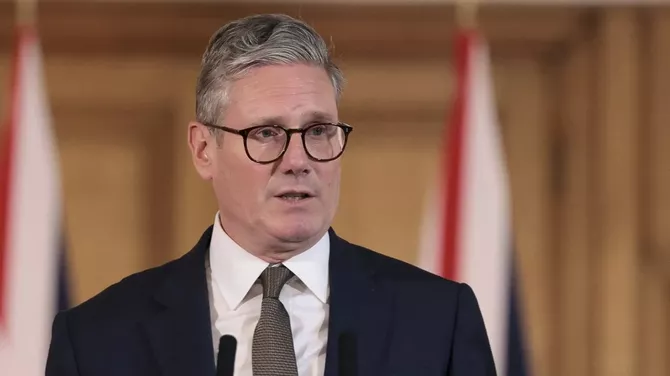
Photo: UK Prime Minister Keir Starmer
For this reason, UK Minister for the Armed Forces Al Carns believes that ensuring the safety of navigation will require a “multinational solution.” According to him, when the strait was closed in 1987, about 30 ships were needed to address navigation issues in its waters.
Today, the situation is further complicated by the fact that Iran’s arsenal includes fast boats, various types of mines, ballistic missiles, and drones.
At the same time, UK Prime Minister Keir Starmer had previously opposed involving the UK in the conflict and supported a diplomatic resolution. German Foreign Minister Johann Wadephul also viewed the idea “very skeptically.” The same applied to French President Emmanuel Macron, who refused from the outset to join the operation to protect the Strait of Hormuz.
Perhaps this is why President Trump described relations between Washington and its allies as a “one-way street.” “We will protect them, but they will do nothing for us, especially in difficult times,” the American leader complained.
According to Finnish President Alexander Stubb, NATO members did not respond to the US request for assistance in the Strait of Hormuz.
Meanwhile, the situation around oil supplies continues to worsen. Before the war, 25.1 million barrels of oil per day- about one-fifth of global consumption - passed through the strait. After the blockade, exports from the region fell to 9.7 million barrels per day.
The net loss of supply amounted to 8 million barrels per day - equivalent to the entire production of Saudi Arabia. At the same time, reserves of IEA countries can compensate for losses for approximately 50 days. The price of Omani oil, which does not depend on Hormuz, has already risen above $150.
Currently, 15.4 million barrels per day of transit have been removed from the market. Transit shock and net supply loss are not the same. Some volumes have been rerouted via alternative routes, while others are being offset by reserves.
Saudi Arabia and the UAE have bypass pipelines. The kingdom has a pipeline to the Red Sea with a capacity of up to 7 million barrels per day, and by March 9 shipments through it had increased to 5.9 million barrels per day, according to S&P. The UAE has a bypass pipeline with a capacity of up to 1.8 million barrels per day.
Together, this provides around 7-8 million barrels per day - about half of the 15.4 million barrels per day lost in transit. Other exporters cannot increase supplies to the required level. The IEA notes that supply growth outside OPEC+, including Russia and Kazakhstan, only partially compensates for Middle Eastern losses.
Reuters reported on March 18 that shipments from Russia’s western ports in March are expected to reach 1.7 million barrels per day - below previous estimates due to storms and military actions.
Against this backdrop, oil inventories in various countries have noticeably declined. In Japan, they amount to approximately 254 days of consumption, even though it is one of the most secure importers in the world. According to The Japan Times, the government has pledged to release 80 million barrels from reserves.
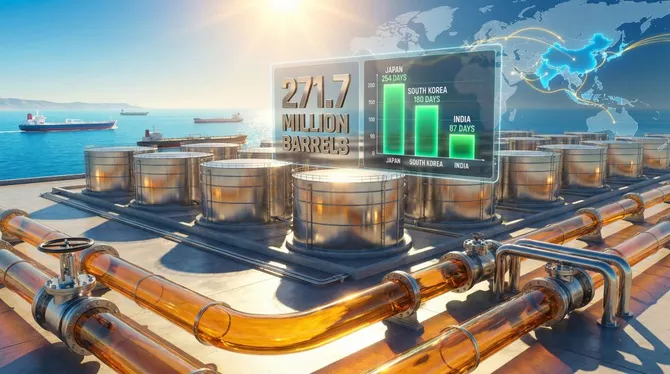
photo: discoveryalert
South Korea has combined strategic and private reserves covering 200-208 days, and the government is ready to release 22.46 million barrels. The United States has about 125 days of protection based on net oil imports, with around 416 million barrels currently in its strategic reserve. Washington has already announced the release of up to 172 million barrels.
Germany maintains reserves for 90 days of demand and has approved the sale of 19.51 million barrels. India officially has reserves for about 74 days, but Reuters notes that actual operational reserves held by refineries and traders cover only 20-25 days, making India one of the most vulnerable countries in the event of a prolonged crisis.
IEA countries as a whole have agreed to release 400 million barrels from emergency reserves.
According to available data, most of the oil transported through the Strait of Hormuz goes to Asian countries. China is the largest buyer, accounting for 5.4 million barrels, or about 38% of the total volume. Significant shares also go to India, South Korea, and Japan - 15%, 12%, and 11% respectively. Another 14% is directed to other Asian countries.
The United States and Europe account for only about 0.9 million barrels, or 0.6% of total supplies through the strait. This likely explains why the conflict around the Strait of Hormuz does not pose a serious economic threat to Europeans and may be a decisive factor in their limited participation.
As for Asian countries, they are not members of NATO and will most likely provide assistance in restoring navigation through the Strait of Hormuz on an individual basis.