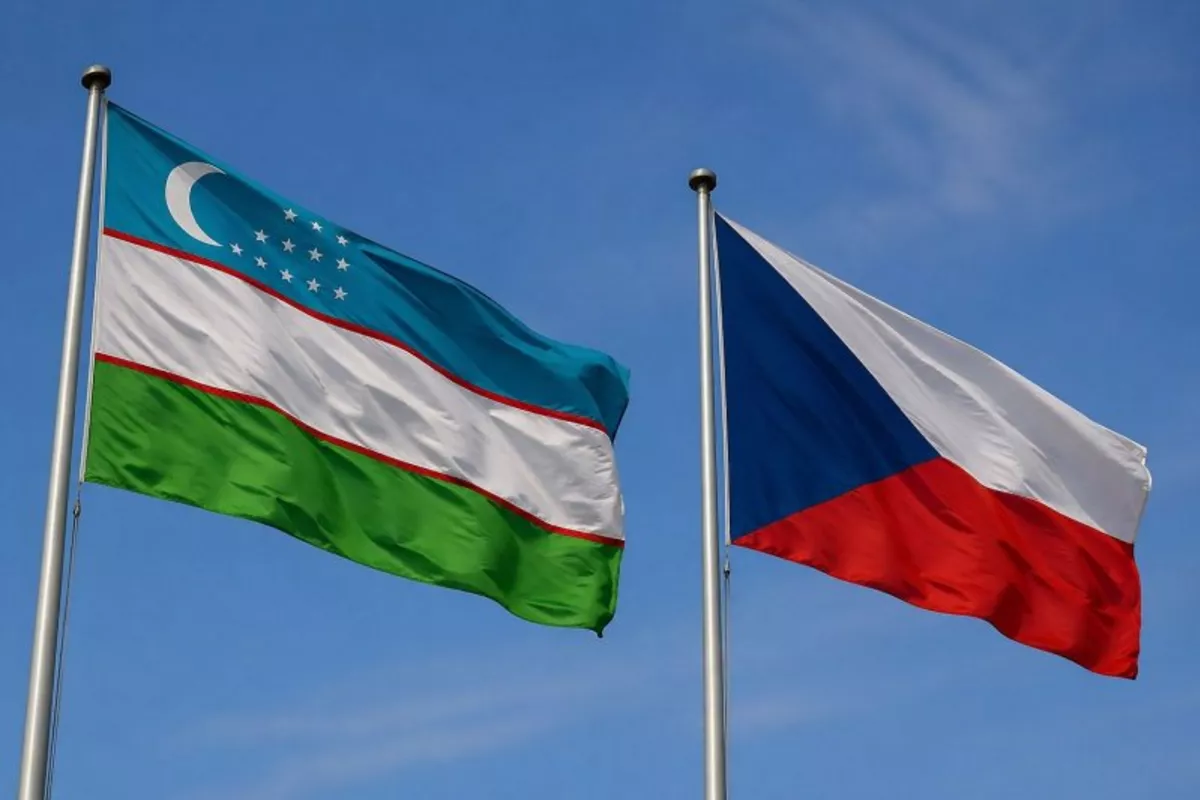
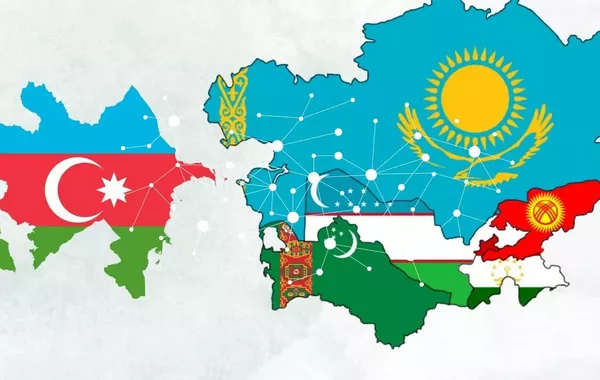
Czech Prime Minister Andrej Babiš’s visit to Uzbekistan on 29-30 April 2026 was not a routine protocol event, but part of Prague’s broader foreign economic strategy towards the Caucasus and Central Asia. The Czech prime minister arrived in Tashkent after visits to Azerbaijan and Kazakhstan, completing a regional tour that the Czech government directly linked to economic diplomacy, export promotion, the search for new markets, and the strengthening of ties with countries outside the European Union.
According to the Czech government’s official programme, Babiš was accompanied by First Deputy Prime Minister and Minister of Industry and Trade Karel Havlíček, as well as a business mission of around 50 company representatives from the energy, transport, mechanical engineering and defence industries.
To understand the significance of this visit, it is important to note that Babiš did not travel to Uzbekistan with an abstract political agenda. His objective was highly practical: to open doors for Czech business in one of Central Asia’s fastest-growing markets. Even before the trip, he effectively contrasted his approach with so-called “values-based” foreign policy, stating that his government would pursue a pragmatic foreign policy, including through visits to Azerbaijan, Kazakhstan and Uzbekistan, “for our companies, so that they can do business”. Czech media presented this statement as an important marker of the foreign policy style of Babiš’s government: less ideological rhetoric, more commercial results.
The Uzbekistan leg of the visit began on 29 April. According to the Uzbek outlet Kun.uz, the Czech prime minister was expected to arrive in Uzbekistan on 29-30 April with a large business delegation. The publication highlighted several key areas in advance: trade development, industrial partnership, transport, energy, mechanical engineering and the defence industry. Kun.uz paid particular attention to Škoda’s railway project, involving the supply and assembly of electric trains in Uzbekistan, the gradual localisation of components, and the opening of a Škoda Academy at Tashkent State Transport University to train local specialists.
Credit: kun.uz
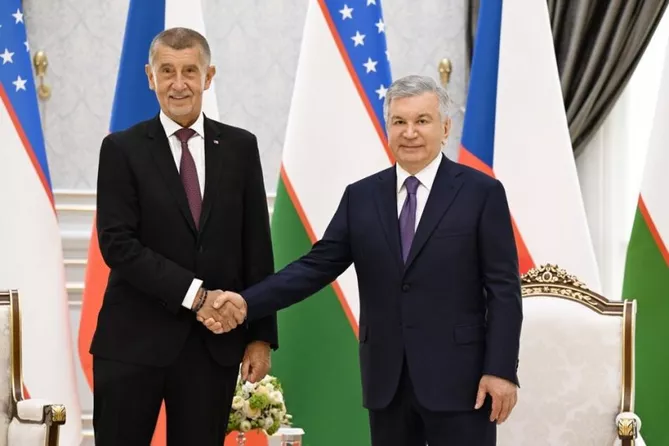
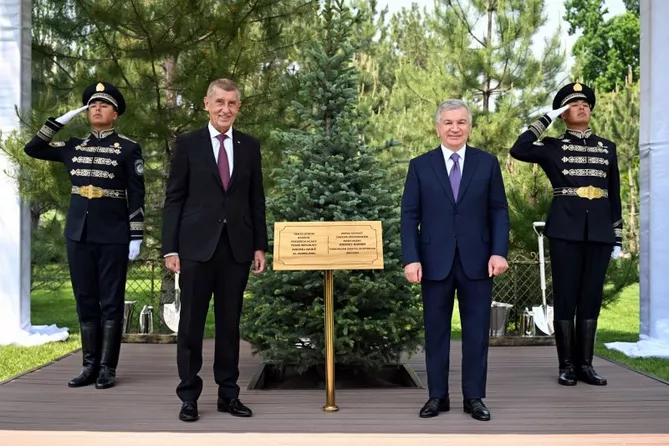
On 30 April, talks between Uzbek President Shavkat Mirziyoyev and Czech Prime Minister Andrej Babiš were held at the Kuksaroy residence. The official website of the President of Uzbekistan reported that the negotiations took place both in a narrow format and with the participation of delegations. The wording used by the Uzbek side was itself revealing: the visit was described as “breakthrough” and as opening a “qualitatively new stage” in the history of multifaceted Uzbek-Czech relations. This suggests that Tashkent views Prague not merely as one of its European partners, but as a country with which it can build a more structured economic and technological partnership.
The main economic goal set by the two sides was a sharp increase in mutual trade. According to official data from Tashkent, trade turnover between Uzbekistan and the Czech Republic has almost doubled in recent years, but a far more ambitious target has now been set: to bring it to $1 billion. For Uzbekistan, this matters not only as a statistical indicator. Tashkent is seeking to expand its export and import ties with the EU, attract European technologies, diversify its partners and reduce dependence on traditional markets.
For the Czech Republic, Uzbekistan is becoming a promising platform for the export of equipment, transport solutions, industrial technologies, pharmaceuticals and engineering services.
One of the most important outcomes of the visit was the signing of a joint declaration on advancing expanded cooperation. In addition, the two sides signed a package of bilateral agreements covering the economy, industry, science, technology, diplomatic training, the creation of a metrology laboratory, scientific and innovation cooperation in metrology and geology, and the supply of electric trains. This set of documents shows that the visit was not built around a single deal. On the contrary, Prague and Tashkent are seeking to create a broader institutional foundation for long-term partnership.
Uzbek media generally presented Babiš’s visit as a step towards raising the level of relations with the Czech Republic. Kursiv Uzbekistan highlighted in its headline the goal of bringing trade to €1 billion and separately noted that the new agreements cover the economy, industry, science and culture. The outlet also emphasised the supply of electric trains for Uzbekistan’s railway network and technical assistance in creating a modern metrology laboratory.
An important nuance is that Kursiv linked the visit not only to bilateral economic relations, but also to Babiš’s broader regional mission, through which the Czech Republic is seeking stable supplies of energy resources and new opportunities beyond the EU.
Credit: kun.uz
The Czech side, in turn, focused on concrete results for its companies. The official statement from the Czech government directly stated that the visit to Uzbekistan brought “economic cooperation and concrete results for Czech firms”.
The delegation took part in a Czech-Uzbek business forum attended by around 150 entrepreneurs from both countries. The forum’s agenda included transport, mechanical engineering, tourism, investment and industrial cooperation. For Babiš, this was also important in domestic political terms: the trip was intended to show that his government can do more than talk about foreign policy - it can deliver contracts.
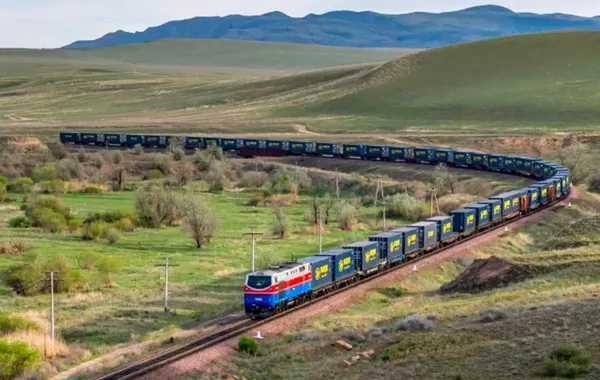
The most visible contract is linked to Škoda Transportation. During the visit, a framework agreement was signed on cooperation and the supply of 10 electric trains for Uzbekistan’s railways, worth more than three billion Czech koruna. The project includes not only delivery, but also subsequent maintenance. The Czech government separately emphasised that this deal opens the way for further development of railway cooperation, including in the context of the European Global Gateway initiative.
The railway sector may well become a symbol of this new stage in relations. Uzbekistan is actively modernising its infrastructure, developing transport corridors and seeking to become one of Central Asia’s key logistics hubs. The Czech Republic, with its strong industrial and mechanical engineering expertise, is offering not a raw-material model of cooperation, but a high value-added technological product. For Tashkent, this fits the logic of economic modernisation. For Prague, it supports the strategy of promoting Czech industry in markets where competition is already extremely intense.
It is revealing that Babiš himself acknowledged the strength of that competition in the region. According to the Czech government, he said that competition from Asia is “incredibly strong”, that China is present everywhere, invests billions of dollars and seeks major influence. That is why, according to Babiš, securing contracts in Uzbekistan is a major success. This is an important political detail: the visit to Tashkent was not only an economic mission, but also an attempt by the Czech Republic to secure a place in a region where China, Russia, Türkiye, the Gulf states, South Korea and other players are already highly active.
A separate block of negotiations was devoted to technological cooperation. According to the official website of the President of Uzbekistan, the two sides agreed to prepare a technological cooperation programme with leading Czech companies. The areas mentioned include mechanical engineering, green energy, geology and critical raw materials, chemistry, pharmaceuticals and other sectors. Infrastructure development, smart cities, engineering and digitalisation were also discussed. This indicates that Tashkent is interested not simply in purchasing individual goods, but in attracting technological solutions that can be integrated into the country’s reforms and industrial modernisation.
Prague, for its part, sees Uzbekistan not only as a sales market, but also as a potential industrial base. The Czech government’s official statement says that Uzbekistan has strengthened its position in recent years as one of Central Asia’s key players, while the country’s dynamic economic growth creates significant opportunities for Czech companies, especially in the supply of technologically advanced, high value-added solutions.
Another important aspect is education, healthcare and labour migration. During the visit, Babiš visited an international educational institution focused on preparing students to work abroad. He separately noted that Europe has a long-term demand for qualified medical personnel, while the Czech Republic faces a shortage of nurses. According to him, Prague must understand what scale of foreign specialist recruitment it may need. This shows that Uzbek-Czech cooperation may go beyond trade and transport, touching on the labour market, professional training and legal mechanisms for organised migration.
Tashkent also confirmed its interest in educational and humanitarian exchanges, including double-degree programmes, cultural and film days, exhibitions, concerts, growth in tourist flows and the possible restoration of direct flights between the capitals of the two countries.
For Uzbekistan, this is part of a broader policy of opening the country to the world. For the Czech Republic, it is an opportunity to strengthen its long-term presence not only through business, but also through educational and cultural ties.
In geopolitical terms, Babiš’s visit is important for several reasons. First, it shows that Central Asia is becoming not a peripheral, but a practical direction of foreign policy for the Czech Republic and parts of Europe. Second, Prague is looking for partners beyond the EU amid challenges related to energy security, supply chains and competition for raw materials. Third, Uzbekistan is seeking to use the growing interest of European countries to accelerate modernisation, attract investment and strengthen its independent role in the region.
Thus, Andrej Babiš’s visit to Uzbekistan was above all a visit of economic pragmatism. The Czech side came in search of contracts, markets, industrial opportunities and strategic resources. The Uzbek side gained an opportunity to strengthen ties with a European country, attract technologies, develop transport infrastructure, expand trade and create new formats of cooperation.
In this sense, Babiš’s trip was not simply a diplomatic event, but part of a larger process: Central Asia is becoming a space of active competition among external players, while Uzbekistan is increasingly turning its market, geography and reforms into instruments of foreign policy influence.