America’s Next Supply Chain Runs Through the Caucasus
For years, proponents of the Middle Corridor argued that any transit architecture dependent on Russian or Iranian territory was one crisis away from collapse.
They were right, The Caspian Post reports via Newsweek.
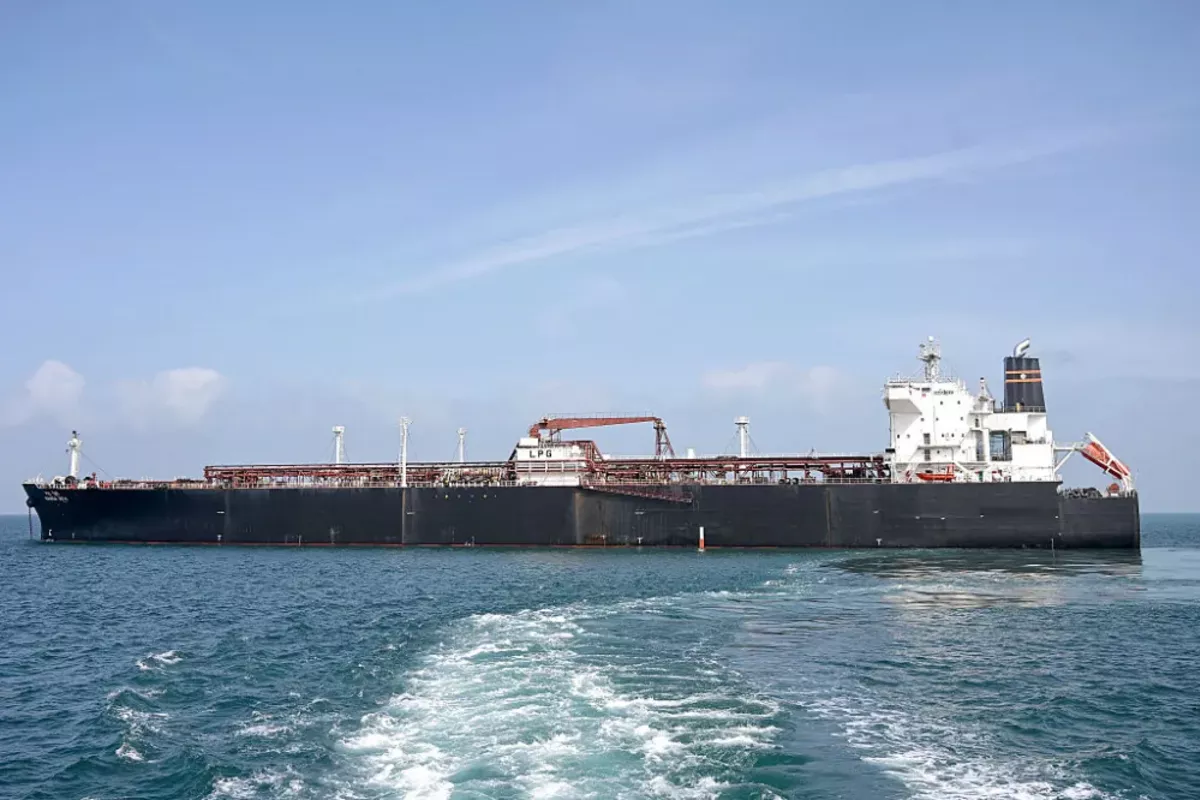
The Strait of Hormuz remains closed-first by Iranian blockade, now by American policy-taking roughly 20 percent of global petroleum transit offline. Southern routes through Iran that Central Asian states had been building as alternatives to Russian infrastructure are worthless. The only east-west corridor that bypasses both is the Middle Corridor, running through the South Caucasus. Iran grasped this before Congress did: On March 5, its drones struck Azerbaijan's Nakhchivan airport, targeting the precise route where the Trump Route for International Peace and Prosperity- TRIPP-is planned.
The corridor's geography concentrates its vulnerability. Between Russia to the north and Iran to the south, there exists a transit window of roughly 120 miles through Azerbaijan and Armenia, one of the world's most important chokepoints. The TRIPP corridor would run through this same stretch.
For three decades, American policy toward the South Caucasus and Central Asia has been intermittent and reactive. That needs to change, for three reasons that align squarely with U.S. economic and security interests.
The first is critical minerals. China controls more than 90 percent of global rare earth processing capacity and has twice imposed export restrictions on materials essential to American defense systems. Its most recent controls target dual-use rare earths, including samarium, a key component in F-35 fighter jets, submarines, and precision-guided munitions. Beijing’s monopoly is a supply-chain chokepoint that can be weaponized at will.
Central Asia offers one of the most viable paths to diversification. The region's critical mineral wealth is vast. Kazakhstan holds an estimated 28.2 million tons of rare earth reserves-second globally only to China-and the U.S. Geological Survey has identified 384 rare earth deposits and occurrences across the region. But the opportunity extends beyond rare earths. Cove Capital is already developing one of the world's largest tungsten deposits in Kazakhstan, part of a bilateral cooperation framework that now spans critical minerals, digital infrastructure, and advanced manufacturing. Uzbekistan signed memoranda with the U.S. and the EU on strategic mineral partnerships. These are the supply chains the Pentagon needs, located in countries actively seeking American investment.
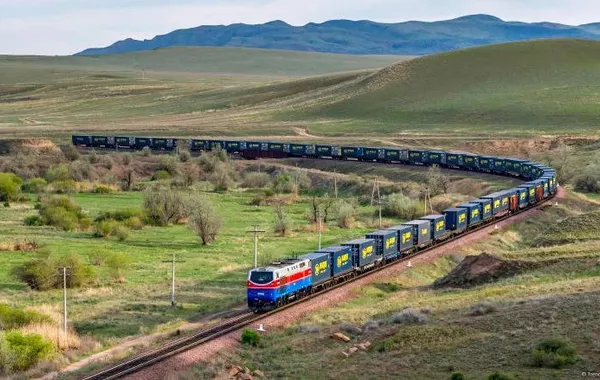
The second is the corridor itself. Russia's invasion of Ukraine accelerated a shift that had been building behind the scenes for years. Central Asian and South Caucasus states, historically locked into Soviet-era transport networks running north through Russia, began pursuing alternative connectivity. The Middle Corridor's cargo volumes have increased significantly since 2022, and European and international financial institutions have pledged roughly $10.8 billion in development investment.
The war in Iran has made this diversification urgent. Kazakhstan, the region's largest economy, has positioned itself as the corridor's anchor, upgrading Caspian port capacity. Armenia and Azerbaijan, whose peace agreement was brokered under U.S. sponsorship, are on the verge of normalizing relations-opening new transit connections that would reduce the corridor's vulnerability to single-point failure.
These countries are not passively waiting for external direction. Kazakhstan was the first nation of President Trump's second term to join the Abraham Accords and committed troops to the Gaza International Stabilization Force. Armenia, Azerbaijan, Kazakhstan, and Uzbekistan all joined the Board of Peace as founding members. In an op-ed for The National Interest, Kazakh President Kassym-Jomart Tokayev pledged his country would be a "reliable and honest partner to the United States"-language backed by $7 billion in Boeing procurement and $3.7 billion in partnerships with U.S. technology firms.
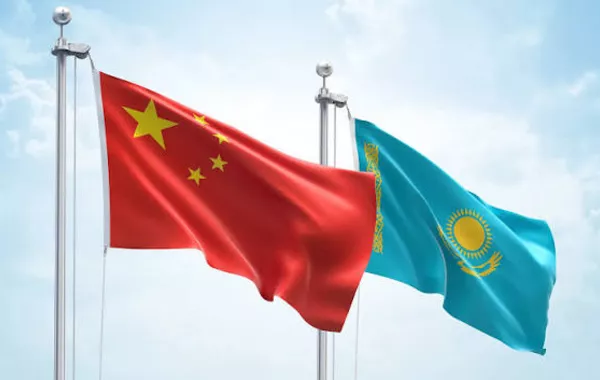
The third is China. The 2026 DNI Annual Threat Assessment flagged growing Chinese influence in Central Asia, partly at Russia's expense, and identified the region's critical minerals, energy resources, and transit corridors as strategic assets. China already views the Middle Corridor as an extension of its Belt and Road Initiative. Its cumulative investments in Central Asia exceed $66 billion, dwarfing a $12 billion pledge from European partners. If the United States does not present a competitive alternative, these countries-which have no desire to exchange Russian dependency for Chinese dependency-will have little choice but to accept the capital on offer.
Yet Washington is undermining its own position through legislative inertia. The Jackson-Vanik Amendment, enacted in 1974 to pressure the Soviet Union over Jewish emigration, still applies to Kazakhstan, Uzbekistan, Tajikistan, Turkmenistan, and Azerbaijan-countries that have been independent for over three decades and from which Jewish emigration occurs freely. Secretary of State Rubio has called it "an absurd relic of the past." Bipartisan repeal legislation has been introduced but remains stalled. As Eric Rudenshiold of the Caspian Policy Center noted, Jackson-Vanik has made Washington a "least-favored trading partner" in Central Asia, not through policy design but through congressional neglect.
Similarly, Section 907 of the Freedom Support Act continues to restrict U.S. assistance to Azerbaijan-a NATO energy partner, one of Israel's top oil suppliers, and a country whose sovereign territory was just struck by Iranian drones. The underlying conflict that prompted Section 907 ended with a U.S.-brokered peace deal. The restriction serves no strategic purpose.
The policy prescription is straightforward. Congress should repeal Jackson-Vanik and grant permanent normal trade relations to Central Asian states and Azerbaijan. It should repeal Section 907. And it should authorize strategic investment in the TRIPP and Middle Corridor infrastructure-not as foreign aid, but as supply-chain security with direct returns for American industry and defense.
The window created by Russia's overextension and Iran's degradation will not remain open indefinitely. The South Caucasus and Central Asia are available to the United States in a way they have not been since independence. The question is whether Washington will treat this as the strategic opportunity it is, or allow it to become another case study in deferred engagement.
By Director of the Turan Research Center and Senior Fellow at the Yorktown Institute Joseph Epstein