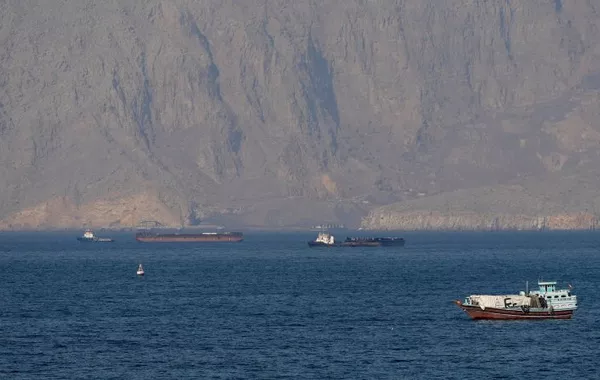
The Strait of Hormuz remains one of the most strategically vital maritime chokepoints in the world, linking the Persian Gulf to global markets and carrying roughly 20% of global oil and liquefied natural gas (LNG) trade under normal conditions.
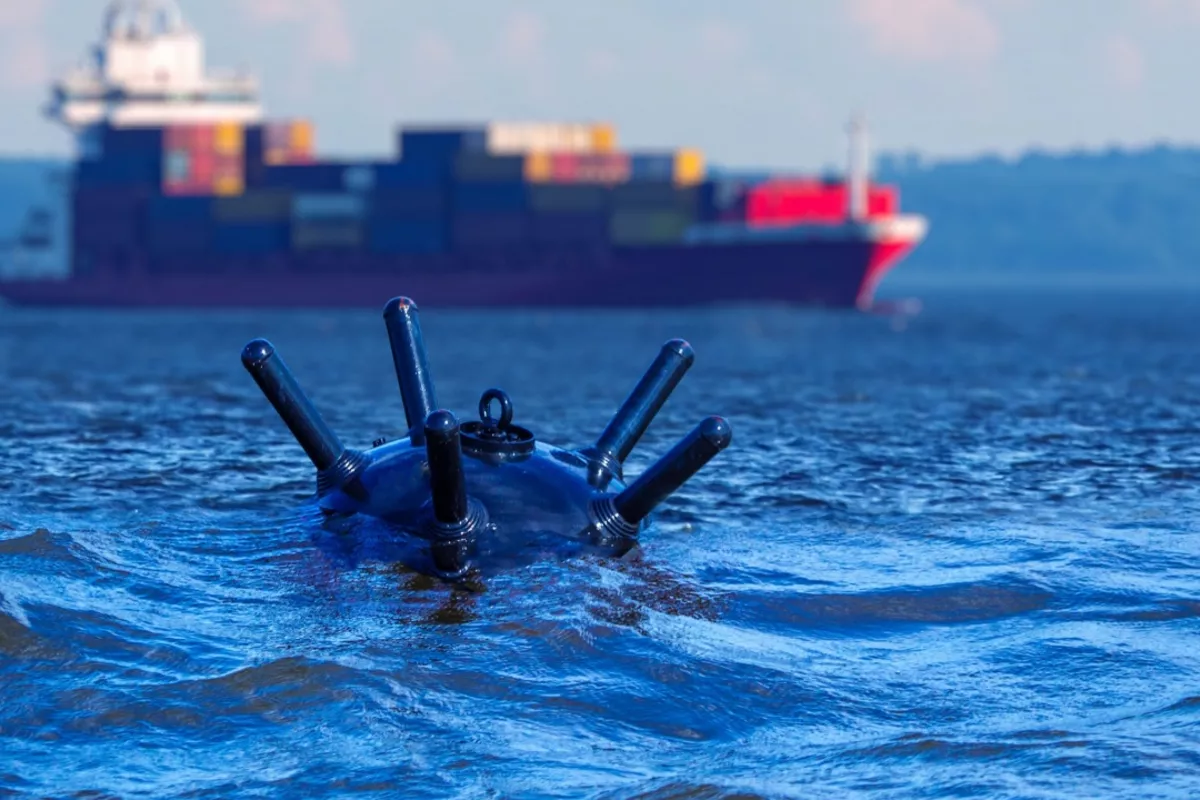
In 2026, amid heightened tensions involving Iran, the United States, and regional actors, attention has once again turned to one of the most disruptive naval weapons ever devised: sea mines. Though relatively simple and inexpensive, these weapons have demonstrated an outsized ability to destabilize global trade, trigger military escalation, and reshape maritime security dynamics.
Strategic Disruption with Minimal Deployment
Recent developments indicate that Iran has deployed fewer than a dozen naval mines in the Strait of Hormuz. While this number may appear limited, it is important to place it in context: Iran is believed to possess between 2,000 and 6,000 mines in total, highlighting a vast latent capability. The limited deployment suggests a deliberate strategy-not to fully block the strait, but to create uncertainty and controlled disruption.
This approach aligns with a broader doctrine of asymmetric warfare. Rather than seeking outright closure, even a small number of mines can force shipping companies, insurers, and naval forces to treat the entire waterway as unsafe. As a result, maritime traffic has dropped sharply in recent weeks, with reports indicating that hundreds of vessels have delayed or rerouted voyages due to security concerns. In some cases, shipping activity has nearly ground to a halt.
This strategy underscores a critical reality: in a narrow chokepoint like Hormuz-only about 48 kilometers wide at its narrowest point-even minimal mining can have disproportionate effects. The goal is not physical denial alone, but psychological and economic deterrence.
Economic Shockwaves Across Global Markets
The impact of sea mines in the Strait of Hormuz extends far beyond the immediate region. As a central artery of global energy supply, any disruption translates rapidly into economic volatility.
In 2026, the mere threat of mines has already contributed to:
- Oil prices rising toward or exceeding $100 per barrel
- Significant increases in maritime insurance premiums
- Disruptions to refinery operations dependent on Gulf crude
- Delays in LNG shipments to key markets in Asia and Europe
Unlike past crises, today’s global energy system is more tightly interconnected and less resilient to sudden shocks. Even short-term disruptions can ripple through supply chains, affecting everything from fuel prices to industrial production.
Importantly, the economic impact is driven not only by actual damage, but by risk perception. Shipping companies are often unwilling to transit mined or potentially mined waters without military escort, and insurers may refuse coverage altogether. This amplifies the strategic value of even a small number of mines.
Military and Operational Challenges
Clearing naval mines is one of the most complex and time-consuming tasks in modern naval warfare. The current situation in the Strait of Hormuz highlights several operational challenges facing international forces.
First, detection remains difficult. Modern mines can be triggered by magnetic, acoustic, or pressure signatures, and are often designed to blend into the seabed. Advanced sonar systems and unmanned underwater vehicles are required to locate them, but even these technologies are not foolproof.
Second, clearance operations are inherently slow. Even a handful of mines can take days or weeks to neutralize safely, particularly in a high-risk environment where additional mines may be present.
Third, mine countermeasure vessels themselves are vulnerable. These ships typically operate at slow speeds and must work in predictable patterns, making them potential targets for missiles, drones, or fast attack craft. In the current crisis, even warships not specifically designed for mine warfare have been drawn into these operations, highlighting capability gaps.
Finally, the situation is complicated by uncertainty. Some reports suggest that even those who deployed the mines may lack precise knowledge of their locations. This increases the risk for all vessels, including neutral shipping, and prolongs the disruption.
Escalation Risks and Strategic Implications
Sea mines are inherently escalatory weapons. They are indiscriminate, persistent, and capable of affecting civilian and military vessels alike. In the current context, their use raises the risk of a broader regional conflict.
The United States and its allies have already initiated mine-clearing and maritime security operations, while Iran has signaled its willingness to respond to perceived threats. This creates a volatile environment in which even a single incident-such as a tanker striking a mine-could trigger a wider العسكري escalation.
Moreover, mines complicate attribution. While their deployment may be suspected, proving responsibility in real time can be challenging. This ambiguity can delay response decisions or, conversely, lead to miscalculation.
From a strategic perspective, the 2026 crisis demonstrates that sea mines remain one of the most effective tools of asymmetric maritime warfare. With minimal investment, a պետ actor can threaten a critical global chokepoint, impose significant economic costs, and challenge even the most advanced naval powers.
Conclusion
The renewed use of sea mines in the Strait of Hormuz highlights a fundamental vulnerability in the global economic system: its dependence on narrow maritime corridors that are difficult to secure بالكامل. The latest data shows that even fewer than a dozen mines have been sufficient to disrupt shipping patterns, drive up energy prices, and trigger complex military responses.
What makes sea mines particularly dangerous is not their destructive power alone, but their ability to create uncertainty, fear, and strategic paralysis. As tensions in the region persist, the threat they pose will remain a central concern-not only for regional security, but for the stability of global trade as a whole.
In this sense, the Strait of Hormuz crisis serves as a stark reminder that in modern conflict, low-cost, low-visibility weapons can yield high-impact results, reshaping the balance between conventional military strength and asymmetric tactics.