The emerging U.S. approach to the Strait of Hormuz is not a traditional wartime blockade designed to fully shut down maritime traffic. Instead, it is best understood as a “selective pressure system” aimed at restricting Iran’s economic and maritime leverage while minimizing disruption to global shipping.
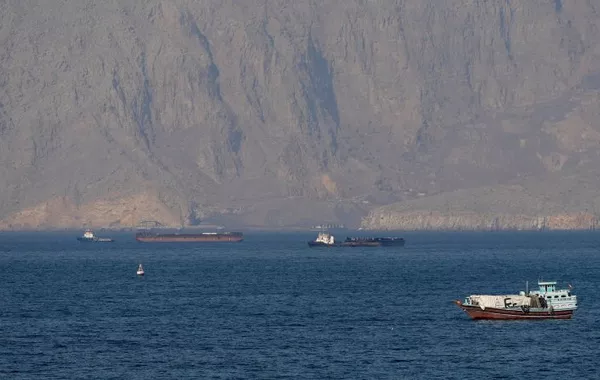
The Strait of Hormuz remains one of the most important energy chokepoints in the world, with roughly one-fifth of global oil and liquefied natural gas flows passing through it. Because of this, any attempt to impose a total closure would immediately trigger a global energy shock and likely unite multiple maritime powers against the enforcement actor. For this reason, the U.S. strategy is built around controlled escalation rather than absolute denial of access.
The primary objectives of this approach include limiting Iran’s ability to export oil through sanctioned or “shadow fleet” channels, reducing Tehran’s capacity to impose informal transit fees or coercive shipping controls, and reinforcing U.S. dominance over critical sea lanes. At the same time, Washington aims to preserve enough maritime continuity to avoid triggering a full-scale global supply crisis unless escalation forces that outcome.
This creates a hybrid model: not a sealed chokepoint, but a heavily monitored and selectively enforced maritime corridor where access is shaped by political alignment, vessel identity, and compliance with sanctions regimes.
Operational Structure: Interdiction, Surveillance, and Forward Control
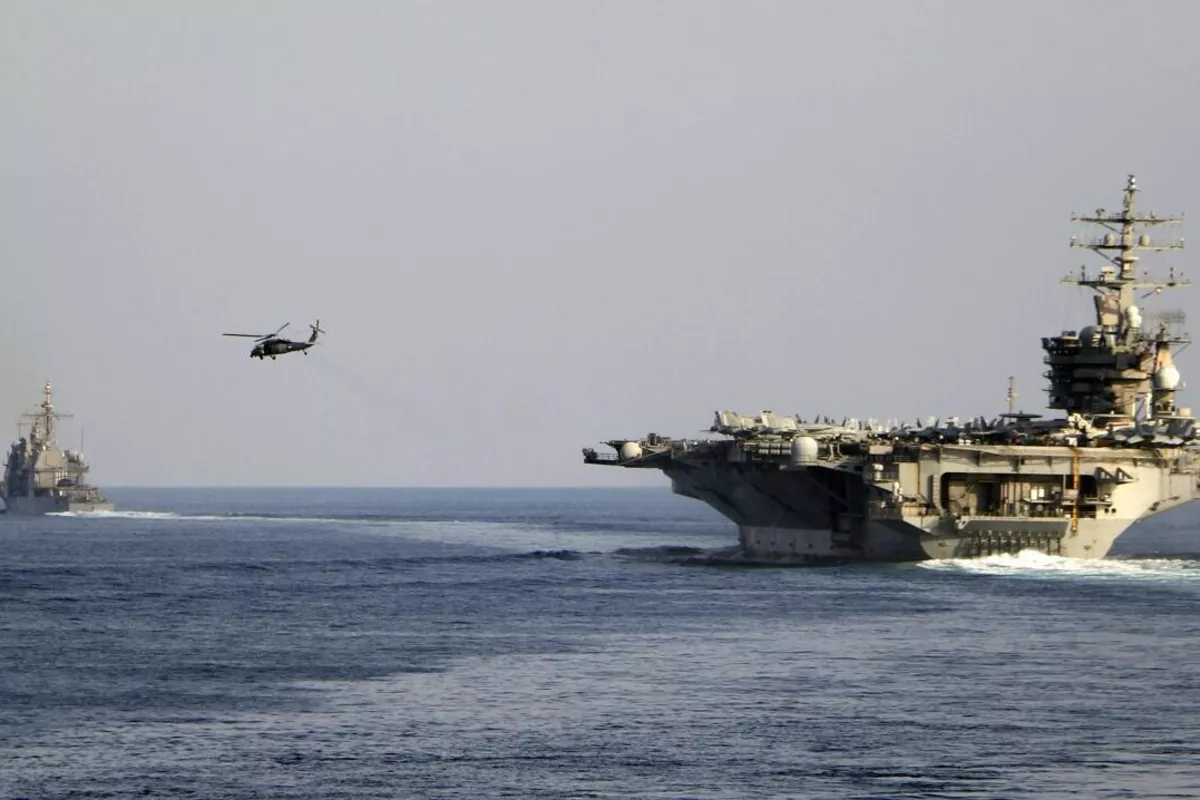
The enforcement mechanism for this strategy relies on layered naval and technological control rather than a physical barrier across the Strait itself. The U.S. Navy’s role centers on interception, inspection, and tracking of vessels suspected of violating sanctions or engaging in Iranian-linked trade.
A key feature of this model is forward deployment beyond the narrow Strait of Hormuz into the Gulf of Oman and parts of the Arabian Sea. This extended operational zone allows naval forces to intercept tankers before they reach the chokepoint, reducing congestion risks and increasing the effectiveness of inspections. Instead of waiting at a single bottleneck, enforcement is distributed across a wider maritime region.
Surveillance is equally important. The system integrates satellite monitoring, real-time tracking of Automatic Identification System (AIS) signals, and intelligence-sharing with regional partners. Ships that disable tracking systems, change identity patterns, or engage in ship-to-ship transfers are flagged for further inspection. In addition, cyber and electronic monitoring capabilities are used to detect irregular maritime coordination networks often associated with sanctioned oil transport.
Boarding operations remain the most direct enforcement tool. U.S. naval units may divert or inspect vessels suspected of Iranian ties, particularly those linked to sanctioned oil exports. However, the operational doctrine is calibrated to avoid indiscriminate disruption, focusing instead on targeted interdictions that signal deterrence without fully closing maritime traffic.
Rules of Engagement and Escalation Thresholds
The U.S. approach relies heavily on conditional enforcement rules designed to manage escalation risk. Under this framework, not all vessels are treated equally, and not all violations trigger the same response.
Neutral commercial shipping is generally allowed to continue passage under monitoring, provided it complies with identification and tracking requirements. Humanitarian cargo is typically exempt from aggressive enforcement actions, although it may still be subject to inspection. The strictest scrutiny is reserved for Iranian-flagged vessels, ships owned by sanctioned entities, and tankers suspected of transporting oil outside approved channels.
Escalation thresholds are clearly defined. Actions such as interference with U.S. naval units, deployment of naval mines, or coordinated disruption of shipping lanes would likely trigger a more forceful response. In such scenarios, the strategy could shift from selective interdiction to broader kinetic operations, including strikes against maritime infrastructure or fast-attack capabilities used for harassment operations.
This tiered escalation model is designed to maintain strategic ambiguity. It signals deterrence to Iran while avoiding an immediate transition into full-scale naval warfare. However, the inherent risk is that miscalculation or localized incidents could rapidly escalate beyond intended limits, given the proximity of opposing forces in a confined maritime environment.
Global Consequences and Strategic Vulnerabilities
The implementation of a selective blockade in the Strait of Hormuz carries significant global consequences, even if it stops short of a full closure. Because the waterway is central to global energy transport, even partial disruptions can trigger sharp volatility in oil and gas markets, increase shipping insurance costs, and force rerouting of global supply chains.
From a geopolitical perspective, the strategy places the United States in a high-stakes balancing act. On one hand, it seeks to assert control over a critical maritime corridor and weaken Iran’s economic leverage. On the other hand, it risks destabilizing energy markets that are vital not only to adversaries but also to allies and global economic stability.
Iran’s likely response further complicates the picture. Rather than attempting full closure of the Strait, Tehran has historically relied on asymmetric maritime tactics such as harassment of vessels, limited disruption operations, and strategic signaling through military exercises. These actions do not need to shut down the Strait entirely to create significant uncertainty and market disruption.
The vulnerability of the U.S. strategy lies in this very asymmetry. A selective blockade requires constant enforcement, extensive intelligence coordination, and high operational presence in a confined and contested environment. Any degradation in surveillance coverage or political support from allies could reduce its effectiveness. At the same time, even limited escalation events could transform a controlled pressure campaign into a broader regional confrontation.
Ultimately, the Strait of Hormuz remains a structural flashpoint where military strategy, global trade, and energy security intersect. The U.S. approach reflects an attempt to manage this complexity through calibrated pressure rather than outright closure-but in such a strategically sensitive chokepoint, control is never absolute, and stability is always conditional.