U.S. President Donald Trump is doing everything to make China the world’s number one superpower. U.S. ex-President Jimmy Carter is probably turning in his grave at the sight of today’s Trump policies in the Persian Gulf.
In January 1980, he announced the Carter Doctrine, declaring that the entire Persian Gulf region - particularly the free passage through the Strait of Hormuz - was a vital U.S. interest, The Caspian Post reports via Russian news website.
As outlined in the doctrine, any attempt to threaten these interests would be met by Washington with “all necessary means, including military force.”
The first real application of the Carter Doctrine came in the late 1980s during the “Tanker Wars,” after the Islamic Republic of Iran temporarily blocked the Strait of Hormuz. The United States played a leading role in reopening the strait and ensuring freedom of navigation.
However, the geopolitical context of the Middle East - and the world in general - in 1980 was very different from today. One year before the Carter Doctrine was announced, the Soviet Union invaded Afghanistan, which borders Iran. At the time, President Jimmy Carter was concerned about the growing Soviet influence in Gulf countries, which had strengthened in the 1970s based on a consolidated stance against what he viewed as Israeli militarism and Zionism.
Secondly - and most importantly - in 1980, the United States was heavily dependent on the gas, oil, and related products exported from the Persian Gulf. At that time, the U.S. found itself in the same vulnerable position that many European and Asian countries face today: reliant on foreign energy supplies.
Today, however, the United States is the world’s largest producer of oil and gas, making it far less dependent on energy resources from Gulf countries.
Since 1980, the Carter Doctrine has dominated, ensuring free navigation through the Strait of Hormuz, a critical chokepoint for global trade. For over 46 years, it formed the backbone of U.S. Middle East policy.
However, in recent weeks, Trump has completely turned this cornerstone doctrine on its head. He now claims that European and Asian countries should be responsible for freeing, patrolling, and securing the Strait of Hormuz, arguing that they are the ones using it while the U.S. is not.
But this is simply not true. Last year, the U.S. imported nearly 500,000 barrels of oil per day from Gulf countries. Beyond oil, America also imported fertilizers, helium, aluminum, iron, steel, and numerous other goods totaling $8.5 billion from the region.
The United States is the world’s largest importer, with last year’s imports valued at over $4 trillion. Even a partial closure of the Strait of Hormuz drives global inflation, naturally raising prices in the U.S. on everything from gasoline and airline tickets to medicine, clothing, fertilizers, manufacturing components, and food - the effects ripple across the economy.
Most strikingly, Trump completely ignores the clear cause-and-effect chain: if he hadn’t provoked this conflict with Iran, the Islamic Republic would not have closed the Strait of Hormuz, attacked Gulf countries, or triggered the global economic crisis we are witnessing today.
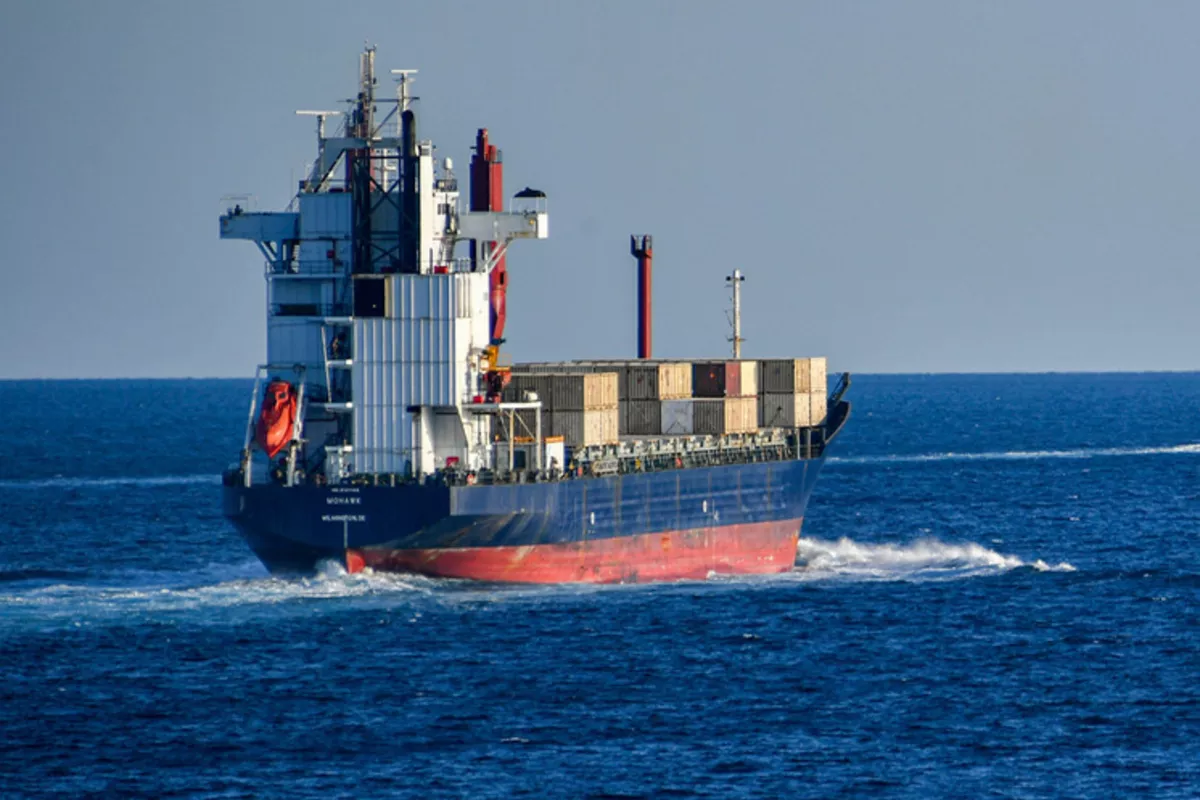
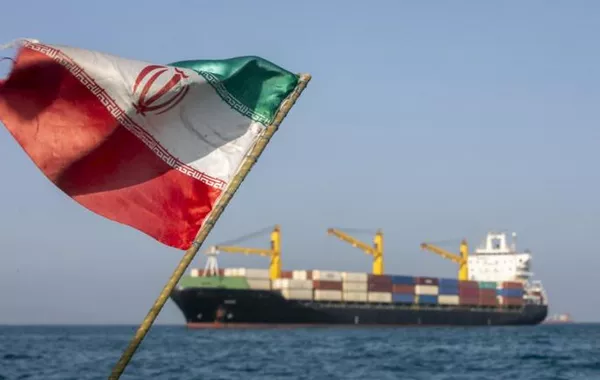
As a result of the recent agreement between the U.S. and Iran on a two-week ceasefire, Tehran still retains control over the Strait of Hormuz. This means Trump cannot achieve the main objective of his ultimatum, which expired on Tuesday (April 7) - completely freeing the strait from Iranian control.
Shockingly, a week before issuing the ultimatum, Trump refused to take responsibility for the serious consequences of a closure of the Strait of Hormuz. Instead, he essentially told other countries: “Now it’s your problem! Immediately send your warships and clear the strait.”
In effect, the Carter Doctrine has been replaced by a purely cynical and reckless “Trump Doctrine.” Under this approach, the U.S. president first creates massive global problems through clumsy and reckless foreign adventures, then demands that other countries solve them.
This is one reason why European and Asian nations, as well as the Gulf monarchies, were initially opposed to Trump’s war with Iran. From the very beginning, they suspected that Trump would stir up a dangerous mess, leaving them to deal with the serious consequences.
And on top of it all, Trump is calling countries “cowards” for refusing to use military force to free the Strait of Hormuz. Addressing European and Asian nations on social media, he wrote that by striking Iran from the air, the United States had already done the hardest part of the job, and that now the easiest part - freeing the Strait of Hormuz - was up to other countries.
Truly, what a task, right?
Interestingly, back in 1987, Trump ran a full-page ad in major U.S. newspapers urging then-President Ronald Reagan to show courage and free the Strait of Hormuz after Iran blocked it. One can’t help but ask: where is that same courage now, Mr. Trump?
Ultimately, Trump’s clumsy and reckless policies regarding the Strait of Hormuz and the Persian Gulf as a whole are set to deal a massive blow to the U.S. reputation as a superpower. Since the eras of the Spanish, French, and especially the British empires, a hallmark of a global superpower has been the ability to use its naval forces to guarantee free navigation - not only for itself but also for its allies and trading partners.
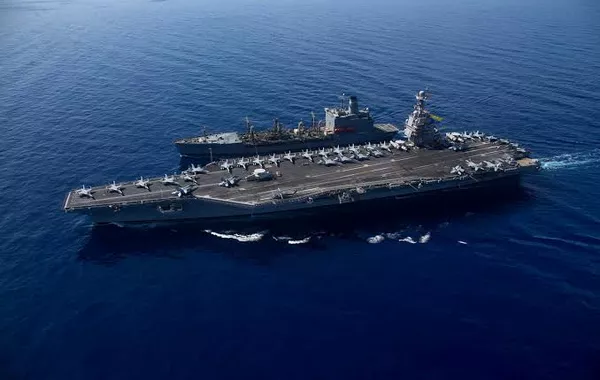
The United States has certainly followed this tradition. Since World War II, the U.S. Navy has maintained a global presence, ensuring free passage across key waterways, including the Persian Gulf. To this end, the U.S. established military bases in Bahrain, Kuwait, Qatar, Saudi Arabia, the UAE, and Iraq.
At the heart of this close cooperation with the Gulf monarchies was a simple understanding: the U.S. would provide security and guarantee free navigation through the Strait of Hormuz in exchange for their massive direct investments in America and large purchases of U.S. weapons.
Now, Trump has dealt a severe blow to this long-standing, mutually beneficial partnership, which had flourished for decades.
The fact is, under the current president, the U.S. has failed to adequately protect its Gulf allies from Iranian missiles and drones or ensure their free passage through the Strait of Hormuz. As a result, their economies teeter on the brink of collapse, and it remains uncertain when they will fully recover, even after the conflict ends.
Moreover, Iranian authorities themselves have stated that they intend to maintain control over the Strait of Hormuz long after hostilities end. Most likely, they will continue to allow passage only to friendly nations, while charging huge fees-or outright denying access-to others. It’s also entirely possible that military clashes could erupt again in the Persian Gulf, once more closing the Strait of Hormuz.
As long as Iran controls access to the strait, Trump cannot convincingly claim victory to the American public, no matter how he spins it. Citizens are unlikely to fall for his narrative of a “great victory,” especially considering that within a year, Iran’s current regime will likely restore its military arsenal, continue funding its militias in Gaza, Lebanon, Yemen, and Iraq, and intensify its push toward developing nuclear weapons.
Indeed, Trump’s military gamble in Iran creates numerous long-lasting problems-for him personally and for the world at large. Among the most significant consequences is the systematic neglect of security for America’s key Middle Eastern allies, which has far-reaching implications for global stability. European nations have long realized that relying on U.S. security guarantees is no longer safe, at least while Trump-or a “Trumpist” successor-holds office. Now, Japan, South Korea, Taiwan, the Philippines, and Australia are reaching the same conclusion.
As a result, many of these countries are now seriously considering abandoning the Nuclear Non-Proliferation Treaty to develop their own nuclear arsenals, fully aware that the once-reliable American nuclear umbrella is no longer dependable.
Another consequence of the reputational damage caused by Trump’s reckless and poorly planned military adventure in Iran is that China emerges in a far stronger position. Against the backdrop of Trump’s impulsive and unpredictable behavior, China appears to most nations as a beacon of global stability, predictability, and reliability.
Indeed, China’s foreign policy is far more cautious. Unlike the U.S., the People’s Republic avoids risky, high-stakes military gambles. Meanwhile, Beijing can observe Trump floundering in the Middle East with growing satisfaction.
While Trump struggles in this Persian Gulf quagmire, China continues to advance at a blistering pace, particularly in artificial intelligence, green energy, robotics, biotech, chip production, quantum computing, and rare-earth metals development. At the same time, China is strengthening its military capabilities, an equally crucial factor.
This contrast between a rising superpower and a stumbling one echoes the late 19th and early 20th centuries. Back then, the British Empire was the world’s top superpower, but it became entangled in various overseas adventures, including in the Middle East. Meanwhile, the U.S., taking advantage of Britain’s overstretch and exhaustion from its colonial commitments, focused on its own economic and industrial development. The result: the U.S. soon became the world’s largest economy, while the vast British Empire-once the largest in history-had, by the 1960s, been reduced to a regional power of modest influence.
China clearly aims to repeat this historical trajectory relative to the U.S. and establish itself as the world’s number-one superpower. And, one must admit, Trump, like a bull in a china shop, is doing everything to help make this strategic goal a reality.
In this sense, China is fortunate to have Trump in office. As long as he remains president, Beijing will continue to follow the old strategic maxim: “Do not interfere when your opponent is making monumental mistakes.”
By US journalist Michael Bohm