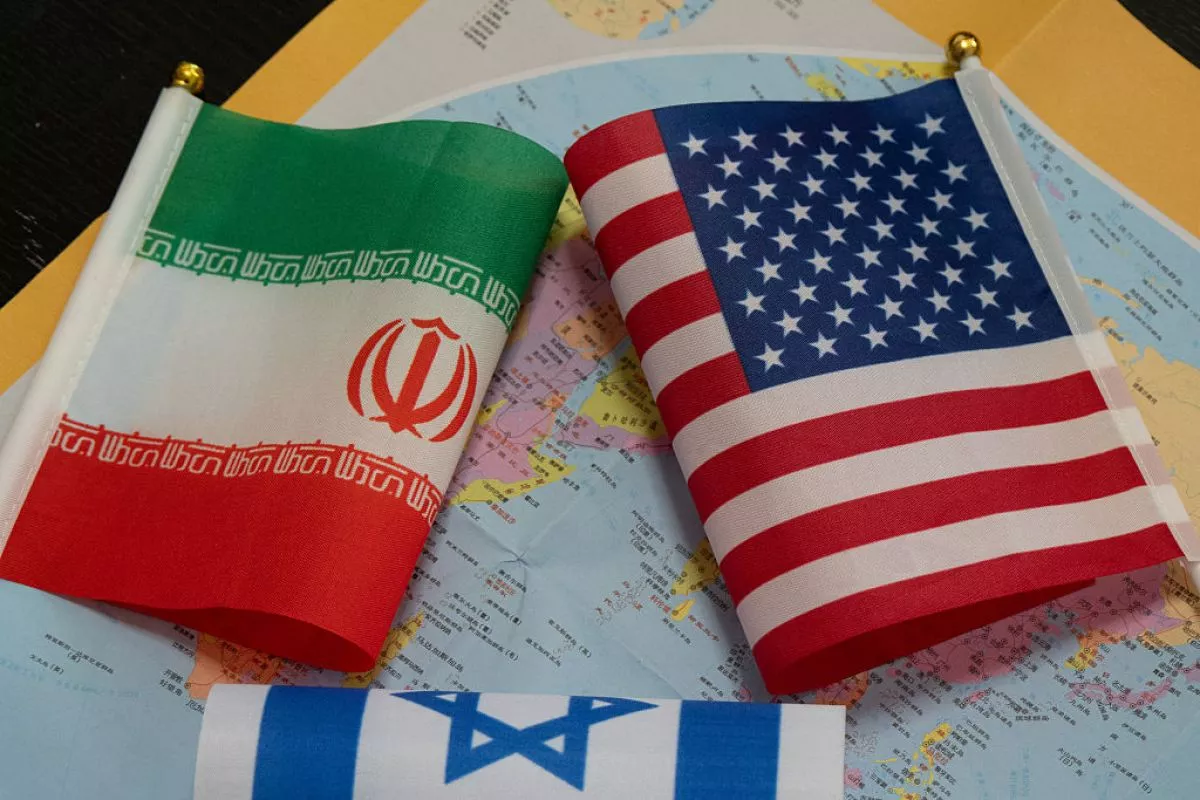
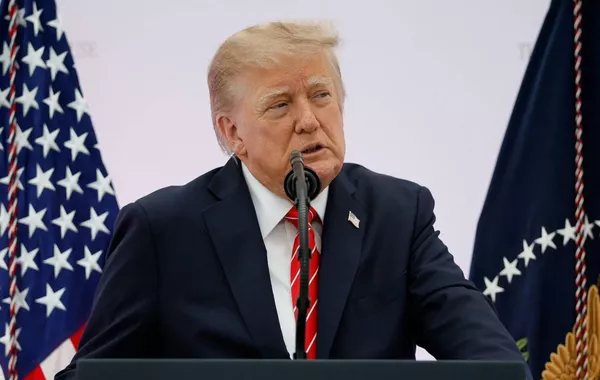
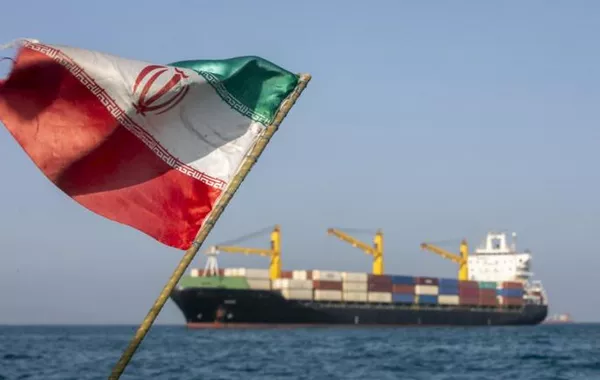
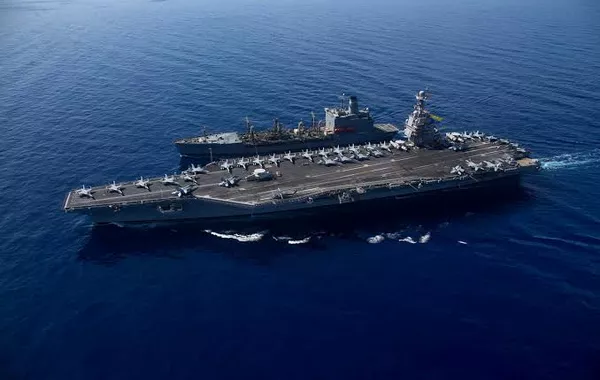
The US and Iran have agreed to a two-week ceasefire, with news of the deal emerging just an hour before the expiration of an ultimatum earlier set by U.S. President Donald Trump. Under the agreement, Washington has stepped back from plans for large-scale strikes on Iranian infrastructure, while Tehran is expected to temporarily reopen the Strait of Hormuz.
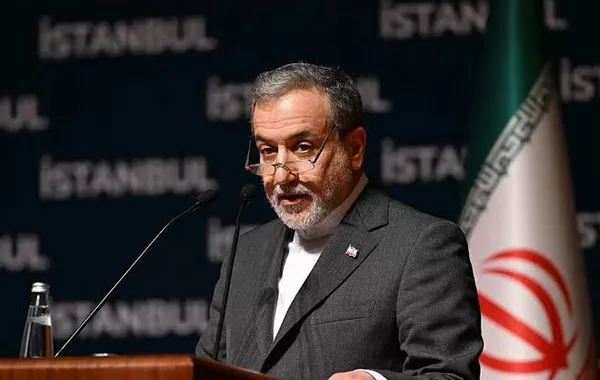
To understand what lies behind these developments and how the situation may evolve, Russian political analyst Marat Bashirov, professor at the Higher School of Economics, shared his insights on the fragile deal and its broader geopolitical implications, The Caspian Post reports via Russian news website.
“First of all, there is no real ceasefire - mutual attacks have continued even today,” says Bashirov. “At best, this is only an intention, and in my view a temporary one. For such agreements to hold, they would require broader backing - on one side, Israel alongside the United States, and on the other, China together with Iran.”
However, Bashirov notes, several conclusions can already be drawn - the situation is unfolding along multiple tracks.
“First, there is mounting pressure on Trump driven by a sharp rise in fuel prices and rapidly depleting reserves. In the European Union, for example, supplies of certain fuels are estimated to last no more than two weeks. According to current projections, a critical threshold could be reached as early as April 20, after which energy deliveries may drop sharply. People switching to bicycles would not be the worst outcome - the real danger lies in potential shutdowns of industrial production,” he explains.
The professor highlighted that Trump’s decision to agree to a two-week ceasefire with Iran was influenced in part by pressure from key allies such as South Korea and Japan.
“But that doesn’t mean he’s particularly concerned about the situation in these countries,” says Bashirov. "Trump’s main concern is that, if things deteriorate, he can simply say: ‘It’s not my fault.’ How will that be achieved? Here’s how: Lebanon is not included in the framework of these negotiations. That means Israel will continue its operations, Hamas will keep retaliating, and Yemen’s Houthis will persist in attacking Israel’s southern borders. For them, the deadlines of the ultimatum and the two-week ceasefire are meaningless. Accordingly, everything essentially returns to the same cycle. And frankly, I’m not confident that Israel will stop targeting Iranian leaders. Meanwhile, this gives Trump a way to step out of the situation without taking direct responsibility.”
Bashirov said that the second track of this story involves China effectively defending its right to secure oil supplies from the Middle East.
“One of Iran’s key motivations is fulfilling its commitments to China,” Bashirov explains. “China has been the backbone of Iran’s technological and military resilience, providing support in air defense systems and intelligence. Iran has relied on a decentralized, autonomous military structure, which has proven effective. They don’t operate under a fully centralized command. Individual missile divisions, batteries, or even mobile launch units have the ability to act independently, giving Iran a flexible and resilient defense posture.”
Decisions on the timing and location of missile launches are made on the spot, based on the tactical situation. Iran has built an extensive network of underground missile bases operating on a “pop up - launch - hide” principle.
“This happens extremely quickly,” says Bashirov. “Detecting them is nearly impossible, especially at night when satellites can’t see anything.”
photo: mk.ru
Bashirov said that China is the main beneficiary of the two-week ceasefire - even if it lasts only one week - as it secures its strategic interests and continued access to Middle Eastern oil.
“First, China demonstrated its effectiveness. Second, it can now transport oil without the threat of U.S. interference. And the third factor China clearly promoted is the toll for passage through the Strait of Hormuz. They executed this very cleverly: the transit fees will be collected by Iran and Oman - Iran controlling the northern shore of the strait, Oman the southern. The revenue is split evenly: 50% to Iran, 50% to Oman. Iran and Oman will act as joint administrators of the strait - two shores, two countries, managing passage together,” the expert said.
“Why Oman? Because it has a functioning banking system. Iran, on the other hand, is under strict U.S. and EU sanctions. Its banks are disconnected from the SWIFT international payment network, making it impossible for Iran to receive large-scale international payments. Oman’s banks, however, can operate freely in dollars, euros, and yuan, without sanction restrictions. Oman will keep its 50% share of the transit fees, while the remaining 50% will be transferred to Iran using alternative channels - through barter, Omani companies, purchases of Iranian oil, cryptocurrency, European workaround systems like INSTEX, or directly in Chinese yuan,” the political analyst noted.
How do you see events unfolding from here?
“This was the first real clash in a multipolar world,” says Bashirov. “Its doctrine is simple and clear: ‘This is ours, that is yours.’ There are also nuances: ‘Here we compete, here we cooperate,’ and ‘Here we fight (without nuclear weapons) - no rules, only the law of the strong.’
For example, Trump essentially said: ‘Venezuela is ours.’ Meanwhile, we assert our own strategic interests without claiming anyone else’s territory. Our vast territory is a major advantage. China, in turn, had to confront the U.S. in open competition on Iranian soil.
Regarding the second aspect - ‘here we compete, here we cooperate’ - this is like when we proposed to the U.S. joint development of gas fields in Alaska. It’s a mix of rivalry and collaboration, depending on where mutual benefits lie.”
“And if no agreement is reached, military force comes into play - the third aspect: ‘here we fight’,” explains Bashirov. “This is what is happening in Iran right now, but without the use of nuclear weapons.”
According to the expert, Iran has suffered significant damage, though it has been mostly to civilian infrastructure.
“All of Iran’s military infrastructure has isolated power systems and independent energy sources. Civilian facilities, however, are struggling, which may be one of the reasons Iran agreed to these temporary arrangements,” he stressed.
Bashirov noted that while it hasn’t been publicly announced yet, Trump’s next move could be to propose joint development of oil and gas fields in the Gulf monarchies - including Saudi Arabia, UAE, and Qatar - as well as in Iran.
“This would serve Trump’s interest in disrupting the entire OPEC+ structure, the extended alliance of oil-producing nations,” Bashirov added.
By Svetlana Samodelova