US and Israel Face 'Game-Changer' Missiles Acquired by Iran
Iran's armoury of air defences is believed to have expanded to include "game-changer" anti-ship weapons from Russia and China that could provide surprise dangers for US airpower.
While it was unclear on Saturday exactly what Iranian capabilities had been disrupted by Israel and US attacks, supersonic sea-skimming cruise missiles could pose severe risks for America’s aircraft carrier group, experts have told The National. US Air Force commanders face the additional threat of newly-arrived advanced Verda shoulder-held surface-to-air missiles (SAMs).
Furthermore an adaptation undertaken by Russian scientists, through which missiles can "piggyback" on top of the Iran-developed Shahed-136 drones, to give them greater range and effect, could present even more of a threat.
SAM Threats
Iran is understood to have secretly signed an arms deal with Russia in December to supply it with 500 of the Verba launchers complete with 2,500 of the 9M336 infrared homing missile.
The weapon can travel at 1,850kph with a range of 6.5km carrying a 1.5kg warhead and is able to engage fighters, helicopters, drones and even cruise missiles, according to its maker KBM.
The portable Verba system makes them “really hard to detect”, said former military intelligence officer Dr Lynette Nusbacher. “The unique selling point of Verba is that you can have a lot of people with the launchers out there and network them so it's not just the operator who is seeking and firing at the target.”
Piggy-Back Missiles
Russian engineering offers new innovations such as attaching the Verba to the Shahed drone. That “increases the altitude at which the missile can engage targets and gives the Shahed drone the capacity to target adversary aircraft attempting to intercept it,” said the think tank Institute for the Study of War (ISW).
“Russia may have shared this air defence adaptation with Iran,” it added, noting that Iran has the long-range Shahed-149 Gaza drone with a reported maximum altitude of about 10,500 metres and a payload capacity of 500kg.
These can also be integrated with its S-300 missiles, or what remains of them after Israel’s June attacks, and potentially the advanced Russian S-400 SAMs, although it is unclear if these have been sold to Tehran.
Much of Tehran’s desire for foreign weapons comes from the failure of its home-produced weapons to intercept Israeli or American targets in June.
“Iran’s ongoing push to acquire air defence components abroad suggests that it recognises that its indigenous air defence systems are not effective against US and Israeli attacks,” ISW said.
“I don't think anybody thinks Iran's air defence is trivial, but the first mission of any air force is suppression of enemy air defences,” said Dr Nusbacher.
America’s anti-radar seeking missiles and EA-18 Growler electronic warfare aircraft are reportedly “very, very good” at detecting the signatures of air defence systems.
Also, the US would not fly any missions over Iran unless they were fully suppressed in order to “operate under conditions of absolute air supremacy”.
However military intelligence analyst Frank Ledwidge acknowledged that the Serbs had “famously and very skilfully shot down” US F-117 Nighthawk stealth fighters in 1999 using low-key technology.
Ship Killer
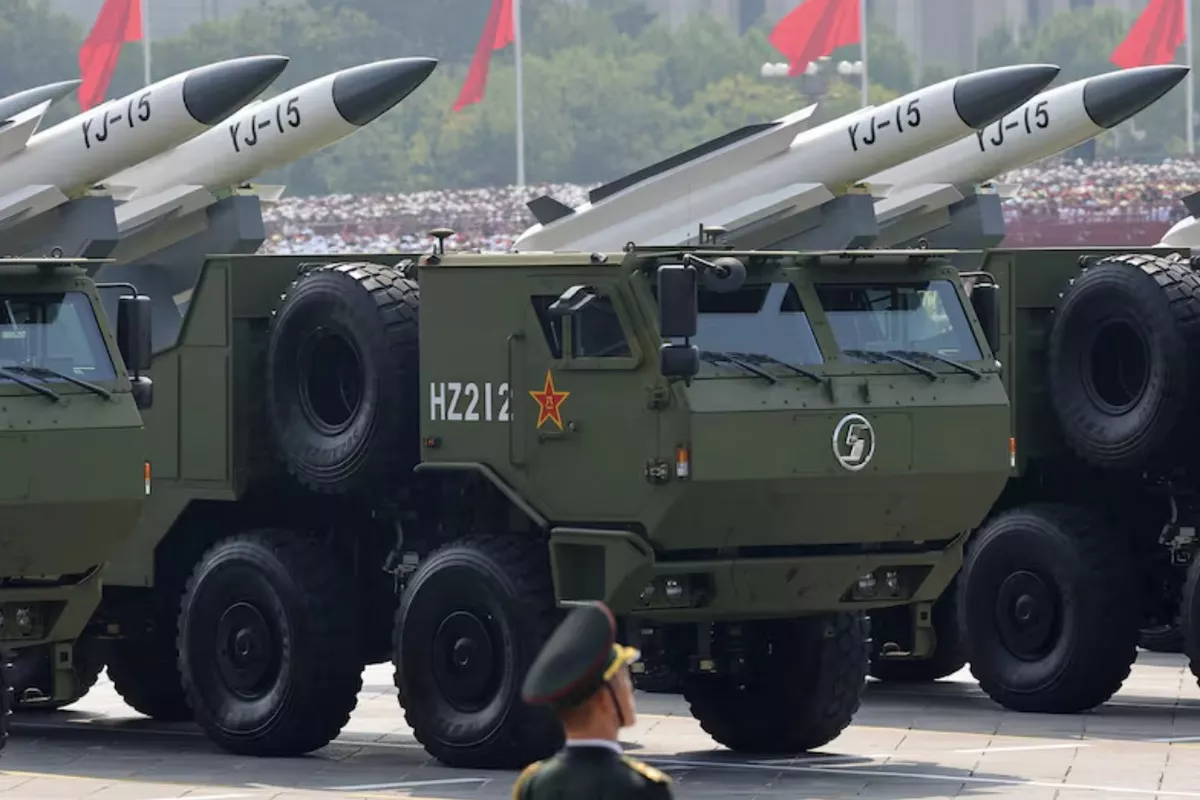
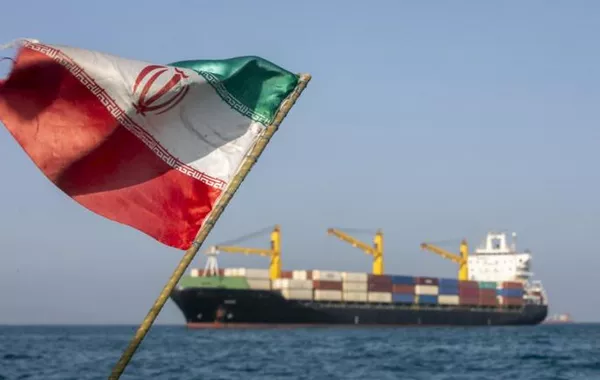
It is the YJ-12 “Eagle Strike” ship-killer cruise missile that will, if it has been supplied to Iran, cause the most concern among US commanders.
Carrying a 500kg warhead, the missile, whose export variant is called the CM-302, can perform evasive manoeuvres to avoid anti-missile threats while travelling at 5,000kph.
“We are talking about a game-changer missile system,” said Dr Alessandro Arduino of the Rusi think tank. “It is a supersonic cruise missile meaning that it goes at normal missile speed then nearby the target it increases the speed to supersonic making it is very difficult to intercept, especially if you have a barrage mixed with drones.”
The system can create “a serious threat especially if there is a aircraft carrier nearby”.
But it is unclear whether China will break the UN arms embargo on Iran, especially at a time when the area is under intense satellite surveillance, with America selecting targets to potentially smother Tehran’s defences.
See the original article here