Iran’s official news agency IRNA on Friday released the current draft outlines of a memorandum of understanding with the US, providing a clearer view of Tehran’s stance and showing both agreements and differences compared with the version of the proposed deal earlier reported by Axios.
The IRNA report outlined seven key areas covered by the draft memorandum. One area of overlap between the two accounts concerns the existence of a 60-day negotiating period following the signature of the memorandum, The Caspian Post reports, citing Anadolu agency.
Axios reported that the agreement would include a 60-day “extension” of the ceasefire while nuclear talks continue. The IRNA account also refers to 60 days of negotiations following the signature of the memorandum but says those talks would focus on only three issues: Iran's peaceful nuclear program, lifting US sanctions, and compensation for war-related damages.
The two reports differ, however, on the nature of the ceasefire arrangement.
Axios described a 60-day “extension of the ceasefire,” including in Lebanon. IRNA rejects that characterization, saying the memorandum calls for a “decisive end” to the war on all fronts, including Lebanon, and specifically states that the term “ceasefire extension” does not appear in the text.
According to IRNA, the US will undertake to compel Israel to end the war in Lebanon if the memorandum is signed.
The nuclear issue also represents a major point of divergence.
Axios reported that the agreement would establish a framework for addressing Iran's stockpile of enriched uranium, with further nuclear steps contingent on a follow-up deal.
The IRNA report says Iran would assume no new nuclear obligations under the memorandum and that its peaceful nuclear program would remain unchanged. It adds that any nuclear negotiations would begin only after the memorandum is signed and would focus on issues including Iran's right to enrich uranium and retain enriched materials as part of a final agreement.
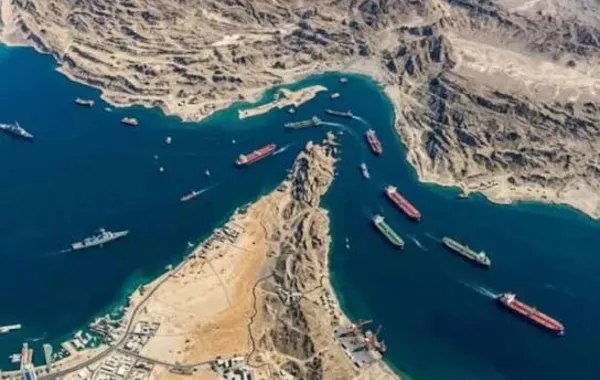
On the Strait of Hormuz, both reports foresee a return to normal maritime activity, but through different mechanisms.
Axios reported an “immediate reopening” of the waterway without tolls and restoration of normal shipping volumes. The IRNA account says Iran would not relinquish any authority over the strait and would not grant the US any role in its future management. Instead, maritime security and navigation would be handled by regional coastal states, with future arrangements discussed directly between Iran and Oman.
The semi-official Mehr news agency also published a report, saying that the draft stipulates reopening the strait within 30 days and “in coordination with Iran.”
The treatment of frozen Iranian assets is another area where the two reports overlap but differ in detail.
Axios reported that Iran could gain access “to some frozen funds” through a humanitarian mechanism discussed with Qatar.
The IRNA report states that some Iranian assets would be released immediately upon signing a deal to end the war, while the remainder would be released gradually during the subsequent negotiations. It adds that Tehran has received specific guarantees regarding the release process.
The draft published by Mehr calls for the release of $24 billion in frozen Iranian assets during the 60-day negotiating period, with half of the funds to be made available before final negotiations begin.
The issue of sanctions appears to have been deferred in both accounts, though in different ways.
Axios reported that US sanctions relief for Iran is tied to compliance with the agreement.
According to IRNA, the US has not undertaken final commitments regarding sanctions in the memorandum itself. Instead, negotiations over lifting all US sanctions and relevant international measures would take place after the 60-day talks and following the signature.
The draft published by Mehr goes significantly further, calling for suspension of sanctions on Iranian oil, petrochemical products, and derivatives, full access to Iran's financial resources, and eventual lifting of all primary and secondary US sanctions, as well as related measures imposed through the UN Security Council and the International Atomic Energy Agency's Board of Governors.
The IRNA report also introduces an issue not mentioned in the Axios account: compensation for war-related damages.
According to the report, compensation for damage caused to Iran by the US-Israeli aggression is included in the memorandum. The mechanism for their implementation will be agreed upon during negotiations to be held 60 days after the possible signing of the agreement. Tehran says it has secured guarantees from third parties regarding the issue.
The draft published by Mehr states that the US and its allies would be required to present plans for rebuilding Iran worth at least $300 billion.
Perhaps the clearest point of agreement between the two accounts concerns the limited scope of future negotiations.
While Axios reported that future talks would focus on nuclear issues and Iran's enriched uranium stockpile, IRNA says only three subjects will be discussed during the 60-day negotiations: Iran's peaceful nuclear program, the lifting of unilateral US sanctions, and compensation mechanisms.
The report explicitly states that no other issues will be included on the agenda, meaning matters such as Iran's missile capabilities would remain outside the scope of negotiations.
According to IRNA, if the memorandum is signed and the 60-day negotiations succeed, a final agreement would then be implemented gradually and through reciprocal steps agreed by both sides.
The Iranian-reported draft by Mehr also includes several provisions not mentioned in the Axios account, including a US commitment not to interfere in Iran's internal affairs, respect for Iranian sovereignty, and withdrawal of US forces from areas surrounding Iran.
It also includes a US pledge not to increase military deployments in the region and not to impose new sanctions during negotiations.
According to Mehr, the draft further states that any final agreement would be endorsed through a UN Security Council resolution and that a monitoring mechanism would be established to oversee implementation-provisions that were not mentioned in the Axios report.
Mehr noted that the text still requires review and approval by Iran's relevant authorities before it can be formally adopted.
A deal to permanently end the US-Israeli war on Iran could be signed as soon as this weekend, President Trump said Thursday, in a day dominated by whiplash developments.
Iran said Thursday that the “main part” of the text of understanding with the US had been finalized, while accusing Washington of undermining progress through shifting positions.
US forces carried out a second day of strikes on Thursday against multiple targets in Iran, following the downing of an Apache helicopter above the Strait of Hormuz.
Iran’s Islamic Revolutionary Guard Corps (IRGC), for its part, said 18 major US military targets had been struck at the Ali Al Salem and Ahmad Al Jaber air bases in Kuwait, Sheikh Isa Air Base in Bahrain, and a base hosting American fighter jets in Jordan.
The latest escalation has heightened regional tensions following US strikes on Iran and Tehran’s subsequent announcement that it was closing the Strait of Hormuz to maritime traffic.