US Blockade Intensifies Pressure as Iran Vows Retaliation
As the war enters its seventh week, the U.S. naval blockade intensifies efforts to cripple Iran's economy, while Tehran warns of potential retaliation.
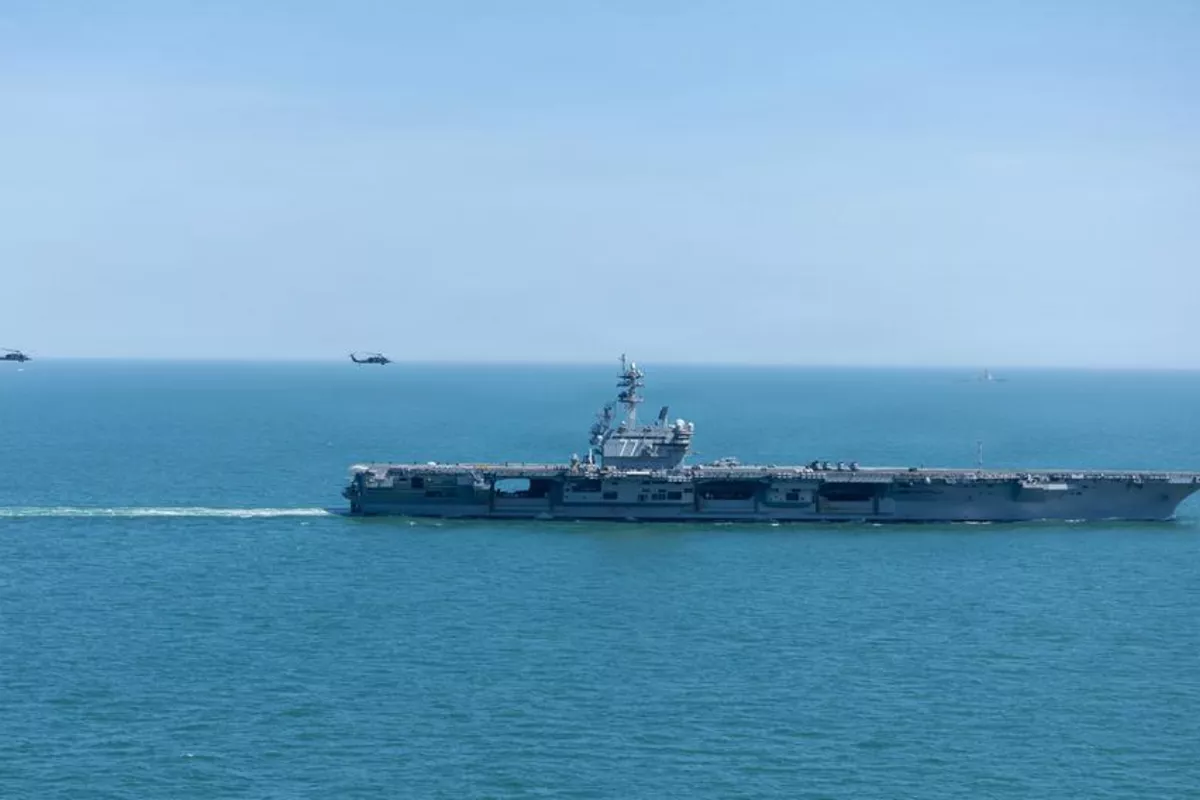
The U.S. military has been enforcing the blockade of Iranian ports and coastal areas since Monday evening local time. The effort consists of more than a dozen warships, over 100 aircraft, and a force of sailors, Marines and airmen numbering over 10,000, U.S. Central Command said in a statement Tuesday, The Caspian Post reports, citing foreign media.
In its first 24 hours, no ships skirted the blockade and six merchant vessels made U-turns back into an Iranian port on the Gulf of Oman, the command said.
“In less than 36 hours since the blockade was implemented, U.S. forces have completely halted economic trade going into and out of Iran by sea,” said CENTCOM commander Adm. Brad Cooper in a statement.
Though Iran has responded angrily to the blockade, it has not resulted in a return to fighting, which began in late February when the U.S. and Israel launched a series of strikes that killed many of Iran’s top leaders.
However, Iran warned Wednesday that it is prepared to treat the blockade as a violation of the ceasefire reached early last week, raising the prospect of renewed conflict.
Ali Abdollahi, commander of Iran’s Khatam al-Anbia Central Headquarters, also vowed the country’s military will “not allow any exports or imports” in the Persian Gulf region, the Sea of Oman or the Red Sea, state media reported.
Iran’s economy is heavily reliant on seaborne trade.
The combined loss of imports and disruption of exports could cost Iran about $13 billion a month in economic damage, or about $435 million daily, estimated Miad Maleki, an Air Force veteran and sanctions expert. He previously served as a senior official in the Treasury Department and is now a senior fellow at the Foundation for Defense of Democracies.
Oil and gas account for about 80% of Tehran’s export earnings and nearly one-quarter of Iran’s gross domestic product, Maleki added on X.
Washington hopes that the economic pressure will make Tehran more willing to accept U.S. terms for ending the war, which would include halting Iran’s uranium enrichment efforts.
President Donald Trump expects a new round of peace talks with Iran “could be happening over the next two days” in Pakistan’s capital of Islamabad, he told the New York Post in a phone call Tuesday.
The Associated Press on Wednesday reported progress toward extending the ceasefire, which is set to expire next week. The outlet cited “regional officials” as saying both countries had given an “in principle agreement” to extend the pause in fighting to allow for more diplomacy.
A U.S. official later told Axios that Washington has not formally agreed to a ceasefire extension, though there is “continued engagement” between the two sides.
The results hinge on whether Tehran thinks it can outwait the rest of the world, which also relies significantly on sea trade into and out of the Gulf. That trade fell sharply at the outset of the conflict in February, as merchant ships faced the threat of Iranian missiles, attack drones and sea mines.
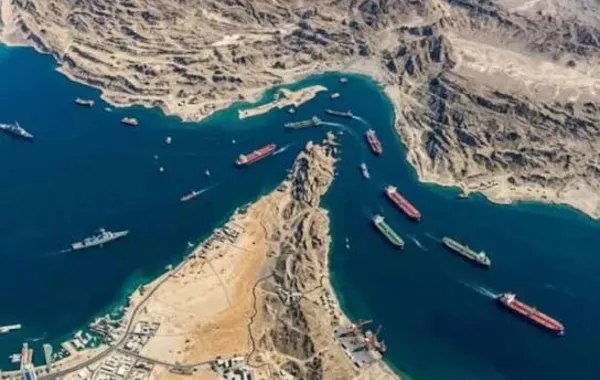
While U.S. forces are now preventing any ships from entering or exiting Iranian ports and coastal areas, they are not impeding vessels passing through the strait to or from non-Iranian ports, CENTCOM said.
The command sought to reassure the shipping industry about the safety of passing through the choke point Saturday by sending two U.S. Navy warships into the Persian Gulf through the elbow-bend between Iran and Oman, which is barely wider than 20 miles at its narrowest point.
But maritime data firm Kpler reported Tuesday that shipowners remained wary, with uncertainty about the blockade’s enforcement and other concerns about passing through the strait.
“For now, the operating environment remains high risk, limiting any meaningful recovery in flows,” Kpler said in a post on X.
Nils Haupt, a spokesman for German shipping company Hapag-Lloyd, said in an email Wednesday that the company had not received official word from U.S. officials about how its vessels could pass safely.
“Currently there are more questions than answers,” Haupt said. “It seems the strait remains closed for the time being, which makes situation for container carriers more difficult.”